
Last updated November 4, 2026
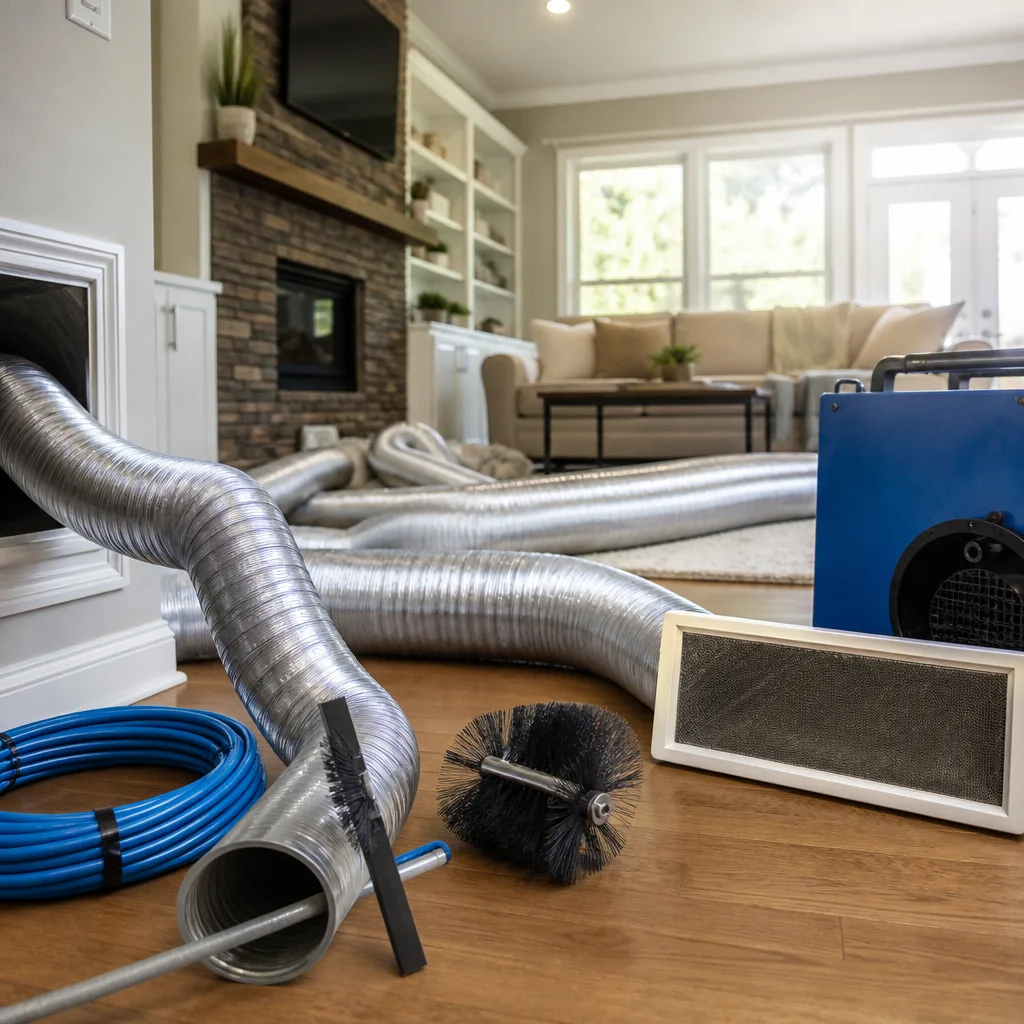 Whole-home duct cleaning
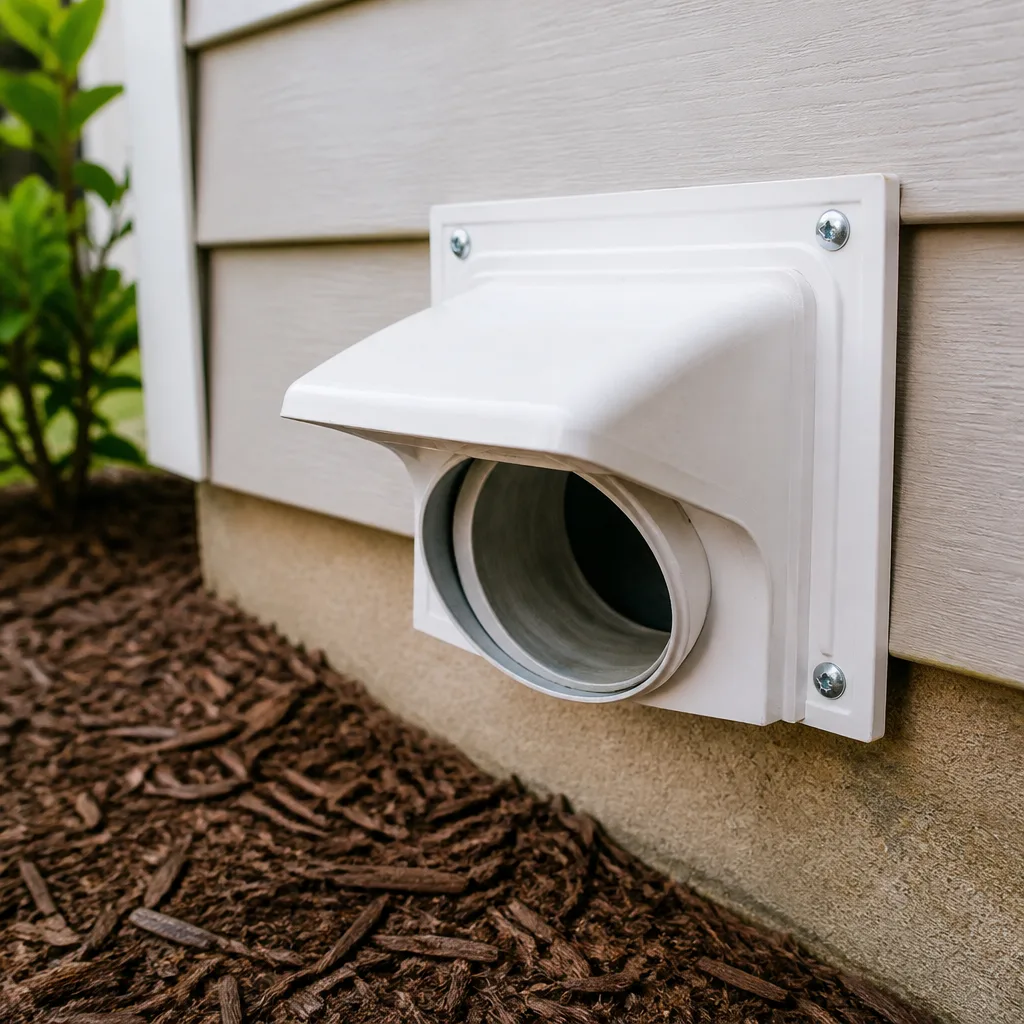 Dryer vent cleaning
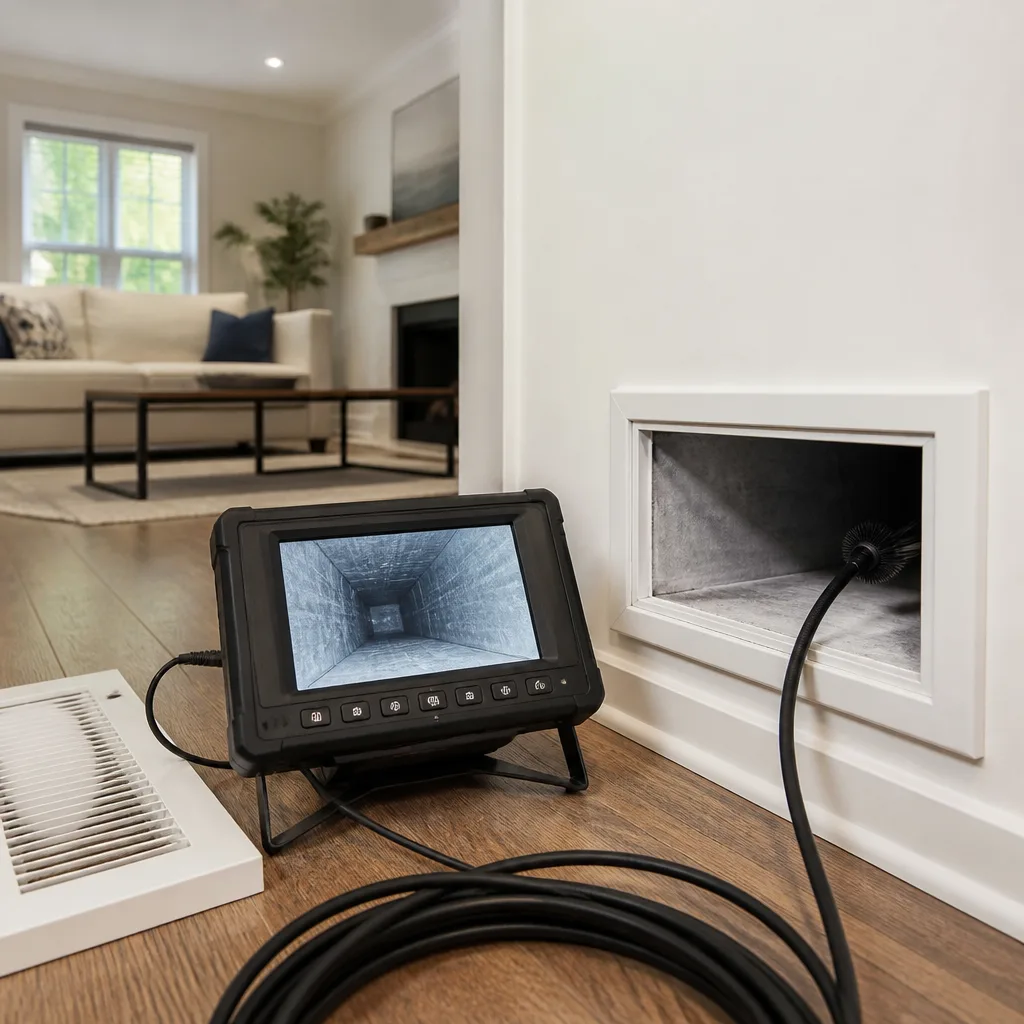 Camera inspection
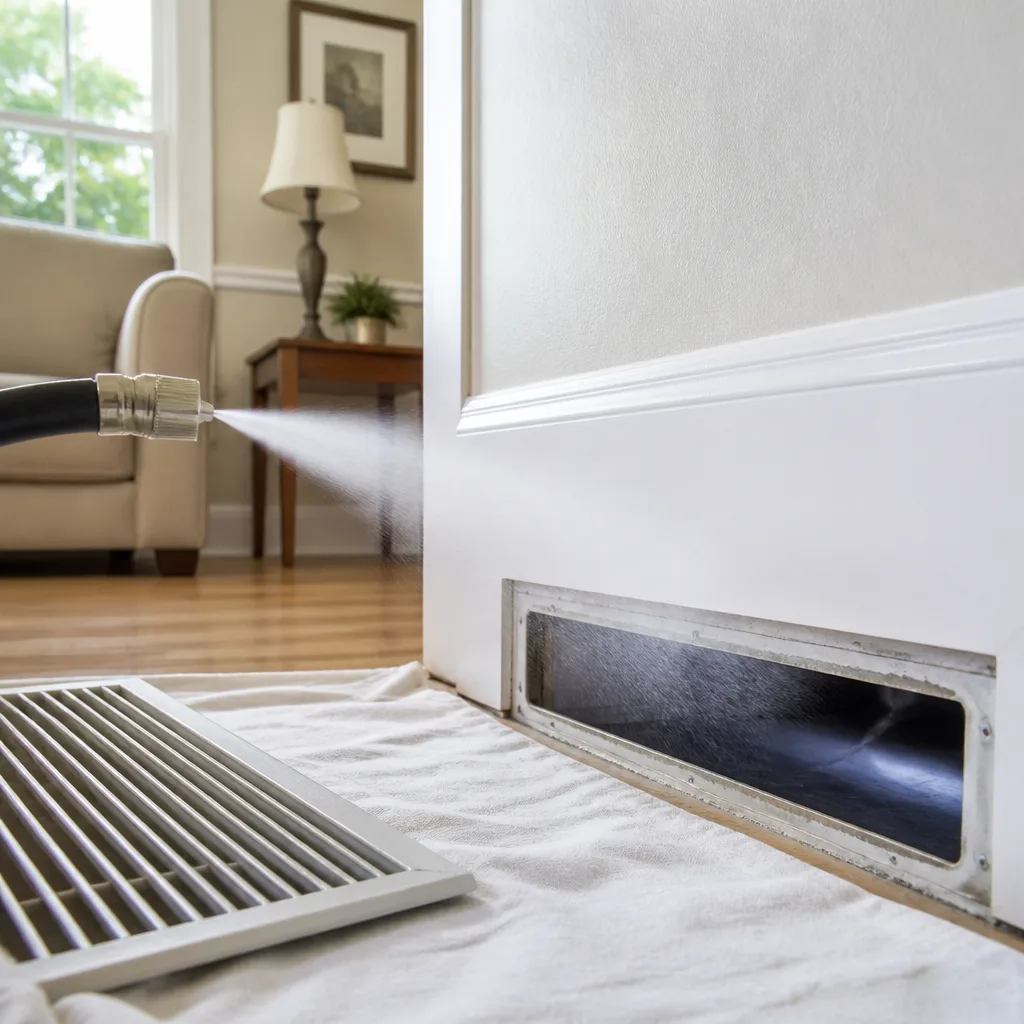 Sanitizing & deodorizing
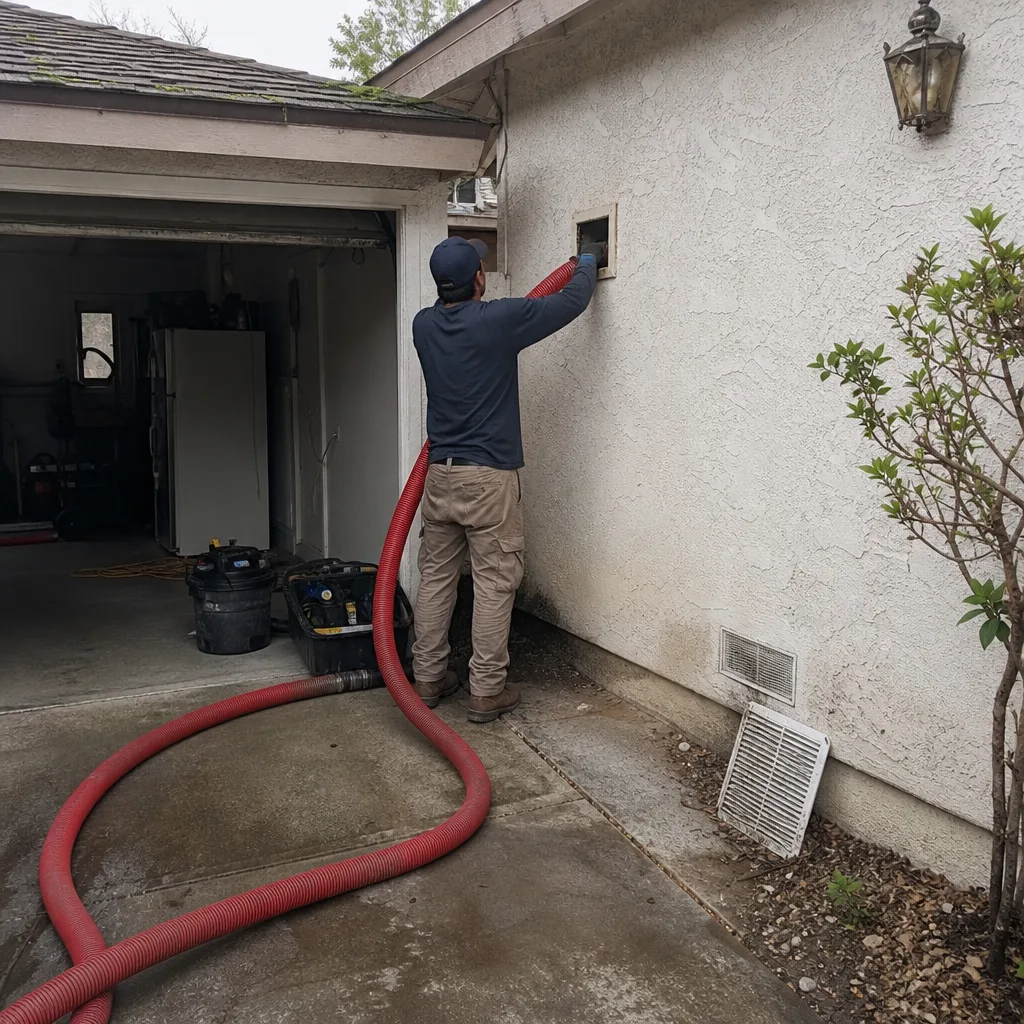
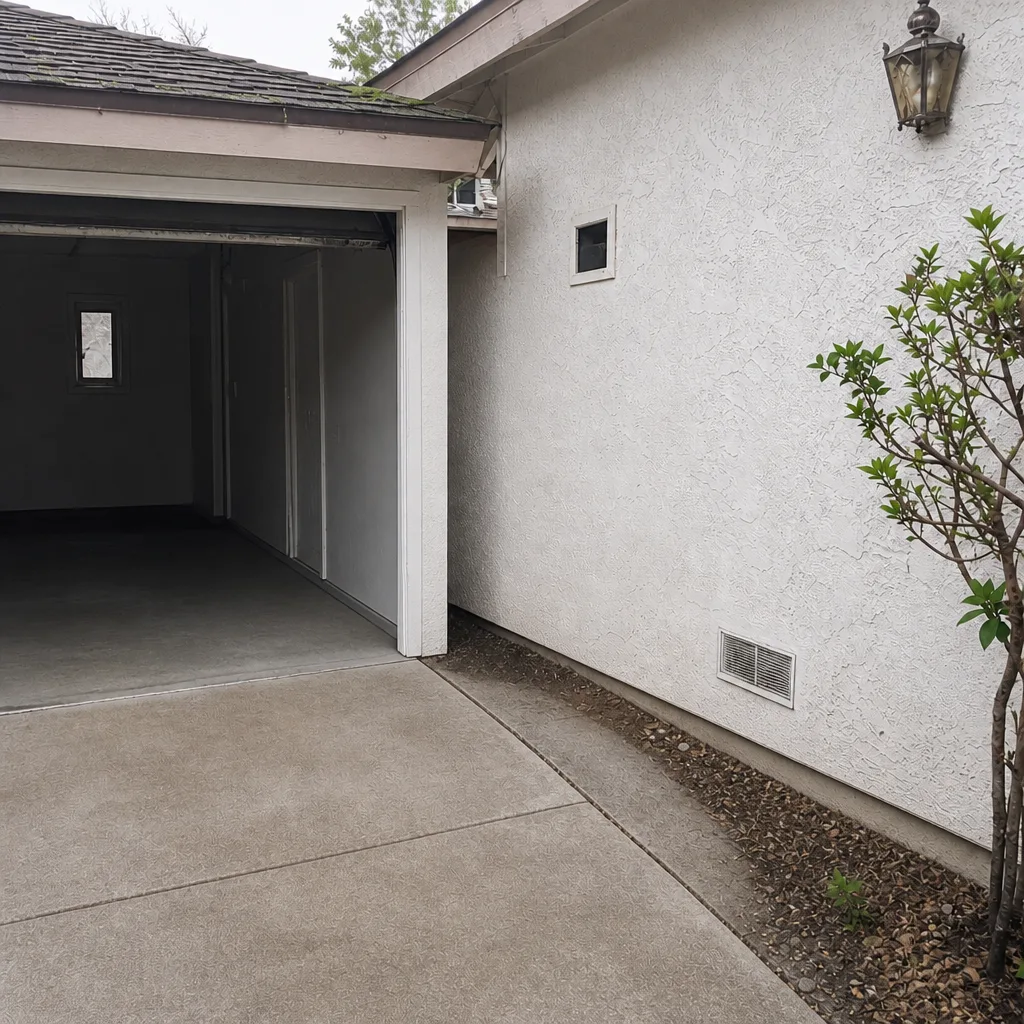
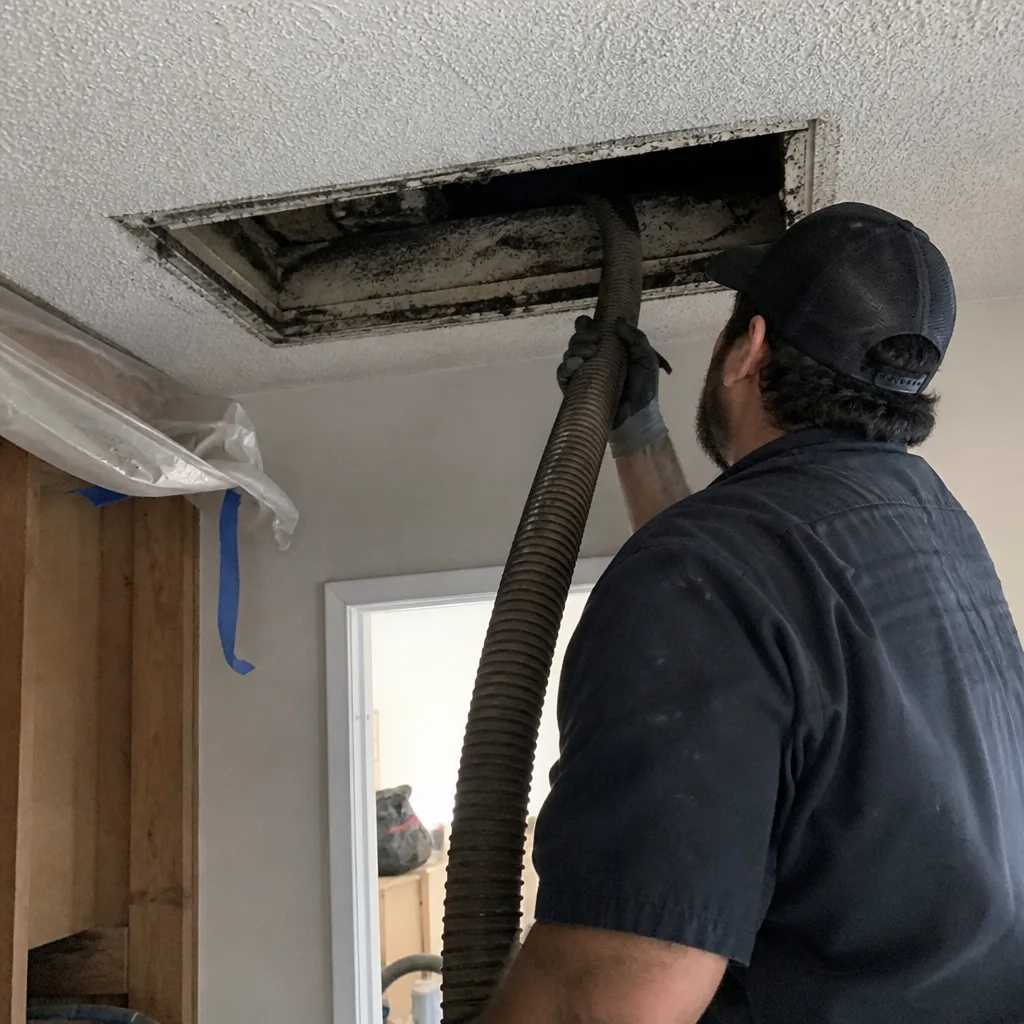
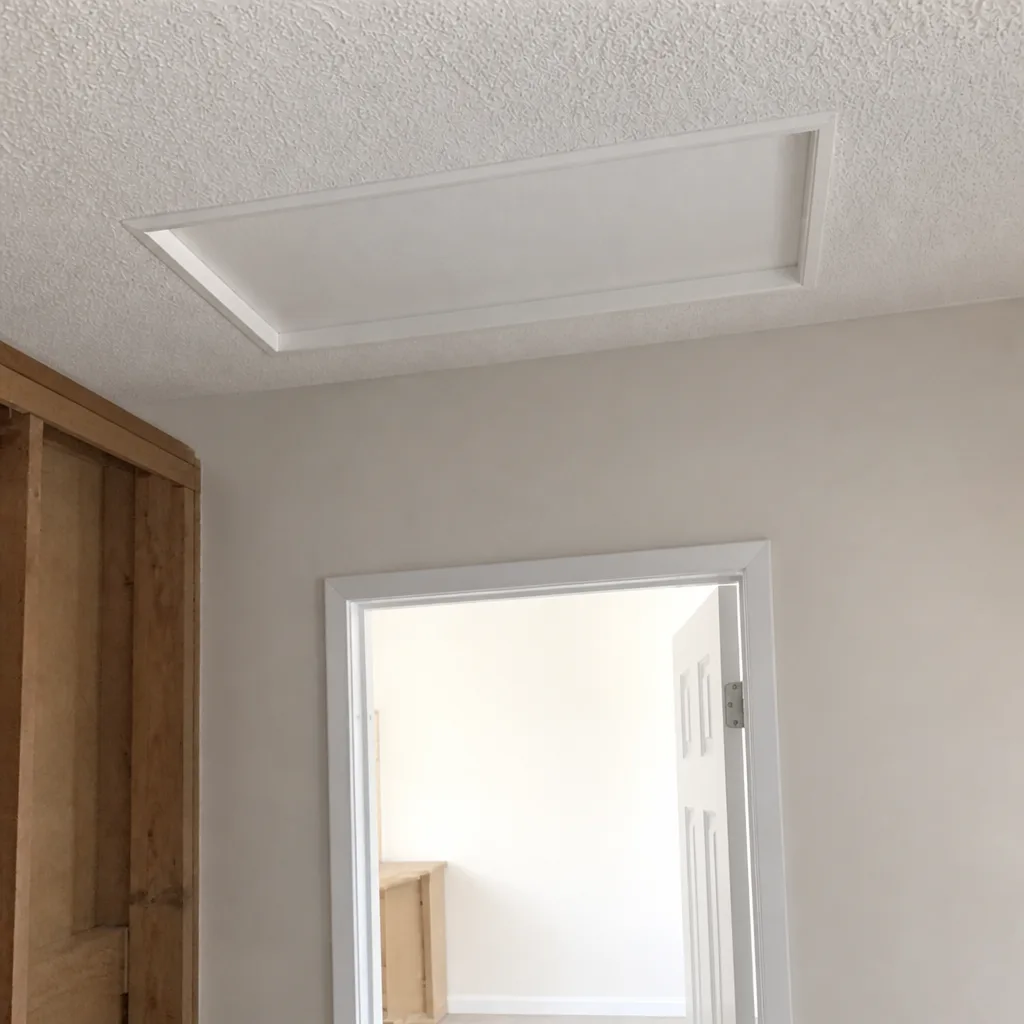
Whole-system duct and dryer vent check with before-and-after photos - you see exactly what came out of your vents
That "$99 whole-house special" is a bait ad - the real number appears once they are in your hallway, or the "clean" is a shop-vac at the register. We photograph the inside of your ducts before and after instead.
DIY vs Professional Air Duct Cleaning: The Upland Homeowner’s Decision Guide
Every consumer-grade duct cleaning kit sold online operates at roughly 100 to 150 CFM of suction. A professional negative-air machine runs at 2,000 to 4,000 CFM. That is not a marginal difference. It is the difference between disturbing debris and actually extracting it, and it explains why most DIY attempts in Upland homes leave the ductwork dirtier than when the job started. This guide walks through the physics of real duct cleaning, what a homeowner can safely do themselves, the failure modes of consumer equipment, and how to tell whether a professional you hire is bringing professional-grade capability or just charging professional prices for consumer-grade work.
Quick Answer
DIY air duct cleaning in Upland is generally not worth attempting beyond register and grille cleaning, because consumer tools lack the negative-air pressure needed to capture dislodged debris rather than push it into living space. A professional clean using commercial equipment from Rotobrush, Nikro, or Abatement Technologies costs more up front but addresses the full duct system on a 4-year cycle, while annual DIY attempts often disturb settled contaminants without removing them. The one legitimate DIY task is cleaning supply registers and return grilles, which we explain step by step below.
Styles & brands we work with
- Whole-home duct cleaning
- Dryer vent cleaning
- Camera inspection
- Sanitizing & deodorizing
Table of Contents
- Why Suction CFM Is the Whole Game
- What Consumer Tools Can and Cannot Do
- The One Legitimate DIY Job: Registers and Grilles
- When DIY Attempts Cause Real Harm
- The Honest Cost Comparison
- How to Know You’re Hiring a Real Professional
- Common Mistakes to Avoid
Why Suction CFM Is the Whole Game
Air duct cleaning is, at its core, a physics problem. The contaminants in a residential duct system sit adhered to the interior surfaces of supply and return ductwork. Dust, lint, pet dander, and construction debris settle and stick over years of conditioned air moving through the system. Removing that material requires two things to happen at once: you must mechanically agitate the debris off the duct walls, and you must maintain enough negative air pressure in the duct to pull the loosened debris into a collection system before it finds its way back into the house.
CFM, cubic feet per minute, measures the volume of air a vacuum system moves. A consumer shop vacuum rated at 100 to 150 CFM sounds impressive in product marketing, but it cannot hold negative pressure across a duct run of twenty to forty feet. The moment the homeowner opens a register and feeds a brush or hose into the duct, the dust that gets knocked loose moves in the direction of least resistance. With a weak vacuum, that direction is often back through the register opening and into the bedroom or hallway.
A professional negative-air machine running at 2,000 to 4,000 CFM reverses the pressure dynamics. It pulls the entire duct system into negative pressure while the cleaning tools agitate the interior. Debris cannot escape into living space because the air is moving toward the machine, not toward the room. This is not an incremental upgrade over a shop vac. It is an entirely different method of extraction.
In Upland, where summer cooling season runs long and HVAC systems cycle constantly, the volume of fine dust that accumulates in ductwork is significant. The warm, dry inland climate produces airborne particulates that settle in returns and supply ducts. A cleaning method that cannot create true negative pressure leaves those particulates in place or, worse, kicks them into circulation where the blower pushes them through every room.
What Consumer Tools Can and Cannot Do
The home improvement aisle sells a range of products marketed for duct cleaning: long flexible brushes, drill-attachment rods with spinning heads, and hoses that connect to a shop vacuum. These tools can reach a few feet into a duct from a register opening, and they will knock some visible debris loose. That is the extent of what they can do.
Here is what consumer-grade duct cleaning tools cannot do:
- They cannot reach the main trunk line. Supply and return trunks run through attics, crawlspaces, and wall cavities. The average residential duct run in Upland homes is fifteen to thirty feet from the register to the trunk. A consumer brush rod reaches perhaps six to eight feet. The debris in the trunk line, which is the majority of the system’s surface area, never gets touched.
- They cannot create negative pressure across the full system. A shop vacuum attached to one register can only pull from that register. The rest of the system remains at ambient pressure, so loosened debris in other branches stays put or migrates.
- They cannot capture what they disturb. Without negative pressure, the act of brushing a duct dislodges material that then drifts back into the airflow path. The first time the system turns on, that dust gets blown into living space. A homeowner can finish a DIY cleaning session and have worse air quality than before they started.
- They cannot access the blower cabinet, evaporator coil, or plenum. The most contaminated parts of an HVAC system are often the components closest to the mechanical equipment. The coil, in particular, runs wet during cooling season and collects a layer of dust and microbial growth. Consumer tools simply cannot reach or clean this area.
The marketers of consumer kits rely on the idea that any cleaning is better than none. The physics says otherwise. A partial, low-pressure cleaning that disturbs settled debris without extracting it converts a stable, localized problem into a distributed airborne one.
The One Legitimate DIY Job: Registers and Grilles
There is one duct-related task a homeowner can do well, and it actually matters. Supply registers and return grilles sit at the interface between the duct system and the living space. They collect dust and lint on their visible face and on the back side of the louvers. Cleaning them is straightforward, requires no specialized equipment, and directly improves airflow and appearance.
Here is the step-by-step method we recommend for Upland homeowners:
- Turn the HVAC system off at the thermostat. Working with the system running pushes dust around and draws what you are cleaning right back into the return. Shut it down before you start.
- Remove each register or grille carefully. Most models secure with two Phillips-head screws or a simple spring clip. Set the screws aside in a small dish so none roll away. A supply register in an Upland hallway or bedroom will typically be floor- or wall-mounted; returns are usually larger and mounted high on a wall or in a ceiling.
- Take the registers outside or to a utility sink. Do not clean them in place. The point is to remove the dust from the house, not push it around the room.
- Wash with warm water and a mild degreaser. Dish soap works fine for most household dust. A nylon-bristle brush gets into the louver gaps. For registers with stubborn grime from cooking oils or candles, a stronger degreaser speeds the job. Rinse thoroughly and dry completely before reinstallation.
- Wipe the register opening with a damp microfiber cloth. Reach only as far as your fingers can go. The goal is to remove the dust rim that forms at the register boot, not to push debris deeper into the duct. Work gently and stop when the cloth comes back clean.
- Vacuum the immediate opening. A standard household vacuum with a crevice tool can pull loose debris from the first few inches of the boot. This is not duct cleaning. It is edge cleaning, but it removes the visible accumulation behind the register face.
- Reinstall the registers and grilles. Snug the screws but do not overtighten, which can strip drywall anchors or crack older plastic grilles.
This task, done once or twice a year, keeps the visible portion of the system clean and gives a homeowner a chance to notice anything unusual: musty odor from a supply register, mold staining around a boot, a damper that no longer moves. What it does not do is clean the duct system. The register is the doorway. The duct behind it is a different job with different equipment requirements.
When DIY Attempts Cause Real Harm
The most common failure of DIY duct cleaning is ineffectiveness. The more serious problem is damage, and it happens more often than most homeowners expect. Here are the specific failure modes we have learned to look for in Upland homes.
Flex duct puncture. A large share of residential ductwork in Upland is flexible duct: an inner plastic or foil liner wrapped in fiberglass insulation and covered by a foil jacket. Flex duct is strong enough to carry air, but it was never designed to withstand the tip of a spinning brush or the edge of a rigid vacuum hose being forced through a bend. A puncture in the inner liner means conditioned air leaks into unconditioned space, which shows up as higher summer cooling bills and rooms that never quite hold temperature. A puncture in the outer jacket means the fiberglass insulation gets exposed to moving air, and then the system distributes insulation particles into the house. Neither problem is visible from inside the home, and both can go undetected for years.
Disturbing settled debris into living space. This is the most common outcome of a consumer vacuum duct-cleaning attempt. Years of dust, skin cells, pet dander, and lint sit settled in the low points of return ducts. A low-CFM vacuum pulled through the register boot cannot hold that material in suspension long enough to extract it. Instead, the debris lifts off the duct floor, floats in the airstream, and then resettles wherever the airflow stops. That may be the return grille, the filter, or the blower cabinet. If the material reaches the blower, it gets pushed into every room the system serves.
Moisture introduction. Duct interiors should stay dry. Some DIY guidance online suggests cleaning ducts with liquid spray cleaners, foggers, or steam. The reasoning sounds plausible: add a cleaning agent, loosen the debris, extract it. In practice, introducing moisture into a dark, low-airflow duct creates exactly the environment microbial growth needs. An internal duct surface that stays damp for even a few days can develop odor problems that did not exist before. Once organic material has grown in a duct system, cleaning it out properly requires the kind of equipment and process a consumer cannot replicate: negative-air containment, mechanical agitation, and in severe cases, antimicrobial treatment applied under controlled conditions.
Abandoned tool parts. A spinning brush head breaks off a drill attachment and lodges in the duct. A section of flexible rod detaches at a connector. A homeowner’s cloth tears and gets sucked partway down a boot. These things happen, and they create obstructions that reduce airflow and become collection points for future dust. A foreign object in a duct is harder to address than the original dust problem.
The pattern in all of these scenarios is the same. The DIY attempt starts with good intentions and a reasonable-sounding product, and it ends with a system that needs professional attention to undo what the attempt did.
The Honest Cost Comparison
The financial argument for DIY duct cleaning rests on a straightforward comparison: a consumer kit costs forty to one hundred dollars, while a professional whole-system cleaning in Upland runs several hundred dollars. On straight purchase price, DIY looks compelling. But that comparison ignores the cycle time and the scope of work, and it is the cycle time that flips the math.
A professional source-removal cleaning, done with negative-air equipment and full system access, is a recurring job on roughly a four-year cycle. The National Air Duct Cleaners Association recommends cleaning every three to five years for most households, and in a dry, dusty inland climate like Upland’s, the four-year mark is a reasonable planning assumption. Amortized over four years, a professional cleaning costs about the same per year as three or four DIY kit purchases.
But the DIY kits do not deliver the same service. They deliver register edge-cleaning and a few feet of reach into accessible boots. The trunk line, the return drops, the coil, the blower, and the plenum go untouched. So the homeowner who cleans annually with a consumer kit pays a recurring cost every year and never actually cleans the system. They pay the same total money over four years as a single professional cleaning, and at the end of four years their ducts are still carrying the same accumulated contamination.
There is also the cost comparison between partial cleaning and no cleaning. A low-pressure DIY attempt that disturbs settled debris can push fine dust into the living space, and that dust ends up on furniture, bedding, and in the HVAC filter. The homeowner may then pay more to replace filters more often, or they may spend on portable air purifiers to address symptoms caused by the very dust their cleaning attempt mobilized.
None of this means every professional quote is a fair price or a real service. In the current Upland market, homeowners pay widely varying amounts for duct cleaning, and the price does not reliably track the quality of the work. Some operators charge professional prices and run consumer-grade equipment. That problem is the subject of the next section, and it is the reason we recommend homeowners evaluate the equipment, not the price tag, when they choose a contractor.
How to Know You’re Hiring a Real Professional
The duct cleaning industry has a split, and it matters more than most homeowners realize. One group runs commercial-grade negative-air machines, uses agitation tools designed for the job, and treats the work as source removal: the contaminants leave the system entirely. The other group runs a vacuum hose from a truck-mounted or portable unit, pokes a brush into a few registers, and calls the job done. The price difference between the two groups is not always obvious, and that is the trap.
Here is how to evaluate a duct cleaning company honestly, in Upland or anywhere else.
- Ask about the air mover. A real duct cleaning operation uses a negative-air machine rated at 2,000 CFM or higher. Brands like Nikro and Abatement Technologies make the equipment used in commercial, hospital, and remediation work. A company that names its equipment brand without hesitation is a company that owns the equipment it says it uses. A company that talks around the question or uses generic phrasing like “powerful truck-mounted vacuum” without specs may be running something closer to a large shop vac.
- Ask about containment. In serious indoor air quality work, the cleaning zone gets sealed off and placed under negative pressure so that nothing escapes into the living space. Abatement Technologies is the industry standard for this kind of containment, and the presence of that equipment on a residential job is a meaningful signal. A company that runs a negative-air machine but skips containment is doing half the job.
- Ask about access. A proper cleaning accesses the system at the plenum and the return trunk, not just through the visible registers. If the company’s process is “we put a hose in each vent,” that is a vent cleaning, not a duct cleaning. The difference matters, and it is visible in the work.
- Ask about agitation. The air mover creates the vacuum. The agitation tools do the cleaning. A professional crew runs rotating brushes, compressed-air whips, or similar mechanical agitation through the full length of each duct run. Without agitation, even a strong vacuum only removes the loose surface dust and leaves behind the adhered layer that makes up most of the contamination.
- Ask about the post-cleaning inspection. A legitimate operator can show you the inside of your ducts after the work. Some use a camera; some use a mirror or photographic equipment. Either way, the after-photo or after-video is the proof. If a company cannot or will not show you the result, the most likely reason is that there is nothing worth showing.
The consistent thread here is equipment specificity. A company that owns commercial-grade gear is proud of it and will tell you exactly what it runs. We run Rotobrush and Nikro systems for residential duct cleaning, and Abatement Technologies equipment for containment and negative-air setups. That is not marketing language. It is a description of the machines on the truck, and any homeowner can ask to see them when the crew arrives. You can see the difference in our equipment, and that offer is a better trust signal than any claims about how friendly the technicians are.
Common Mistakes to Avoid
- Using a consumer duct cleaning kit and expecting source removal. A drill-attachment brush and a shop vac reach a few feet into a register boot. They cannot reach the trunk line, cannot hold negative pressure across the system, and cannot capture loosened debris. The result is disturbed dust, not clean ducts.
- Paying for a “duct cleaning” that is actually a vent cleaning. Many operators, especially those advertising very low per-vent prices, run a hose through each register and call the job done. The visible registers look cleaner for a few weeks. The duct system behind them is untouched. Ask what the company does for trunk lines, returns, and the coil before you pay for anything.
- Trusting a price without asking about equipment. In the Upland market, quoted prices for duct cleaning vary widely, and price does not reliably predict quality. A three-hundred-dollar cleaning from an operator running a consumer-grade vacuum is a worse value than a five-hundred-dollar cleaning from a company pulling a Nikro negative-air machine off the truck. Ask what equipment they run and how they access the system.
- Skipping the HVAC filter after a professional cleaning. The filter is part of the system, and a clean duct system paired with a clogged or cheap filter is a system that re-contaminates quickly. This is also the moment to consider whether upgraded whole-home filtration makes sense. We install and service Honeywell and Aprilaire air quality systems, which handle the ongoing filtration side of the equation after the ducts themselves are clean. Clean ducts and a plan to keep them clean is the goal.
- Ignoring dryer vents while cleaning the air ducts. The dryer vent is a separate system from the HVAC ducts, but it carries its own contamination load and a fire risk that the HVAC system does not. Dryer vents are a fire hazard, not a maintenance afterthought. If you are investing in one system, at least assess the other. We offer dryer vent cleaning as a dedicated service for exactly this reason.
- Attempting to seal or repair duct leaks with duct tape. Duct tape degrades quickly in the warm attic conditions typical of Upland homes, loses adhesion, and falls off. Proper duct repair uses mastic sealant or foil-backed tape, applied over a clean surface, and often requires replacing damaged flex duct sections rather than patching them. The job behind the job, repairing the structure that lets contamination enter and conditioned air escape, is a separate service from cleaning. We offer air duct cleaning and air duct repair as distinct scopes, because they solve different problems.
- Cleaning ducts in a home with a known moisture problem and expecting the odor to go away. If there is ongoing moisture in the duct system from a leaking coil, a missing drain trap, or a crawlspace humidity issue, a cleaning will temporarily reduce odor and then the problem will return. The moisture source has to be addressed first, or the cleaning is just a temporary masking. A professional inspection should flag this before the cleaning starts, not after the job is already paid for.
See the difference
 Before
 After
 Before
 After
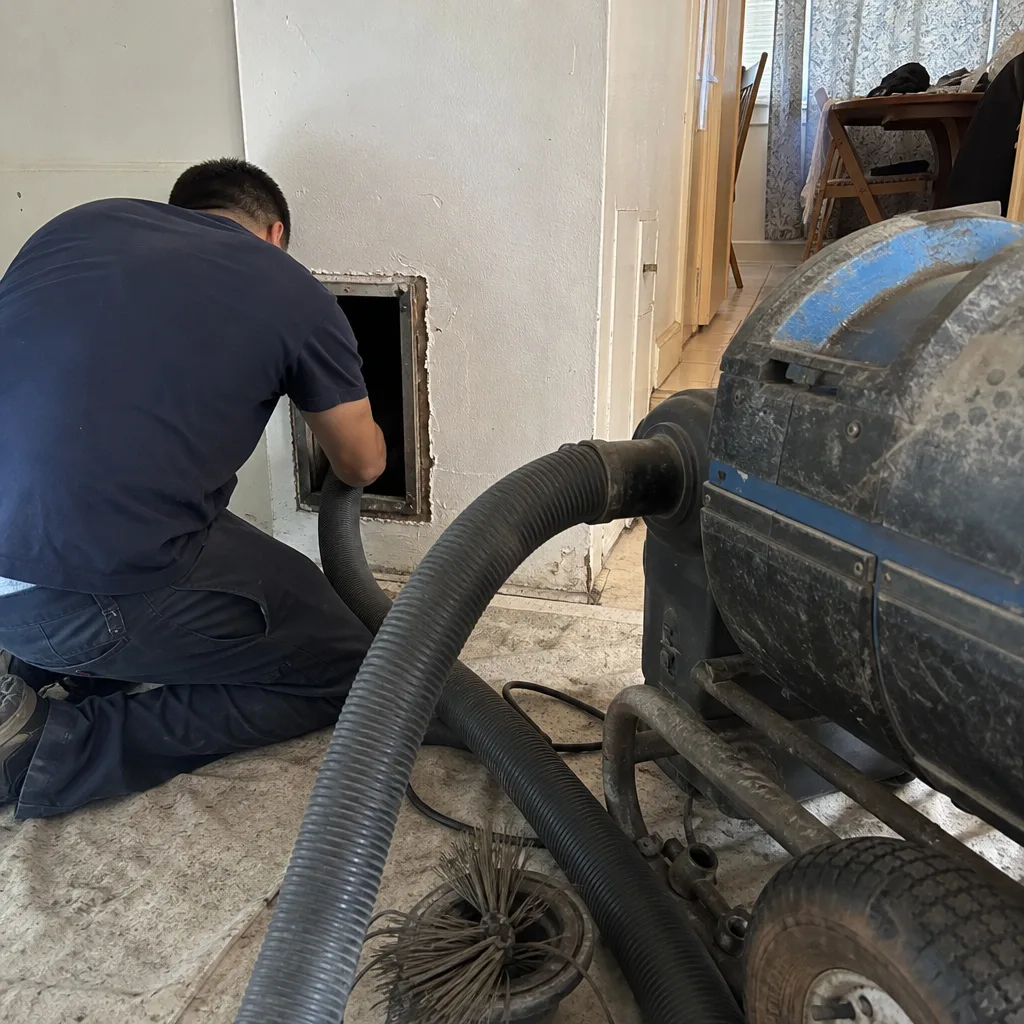 Before
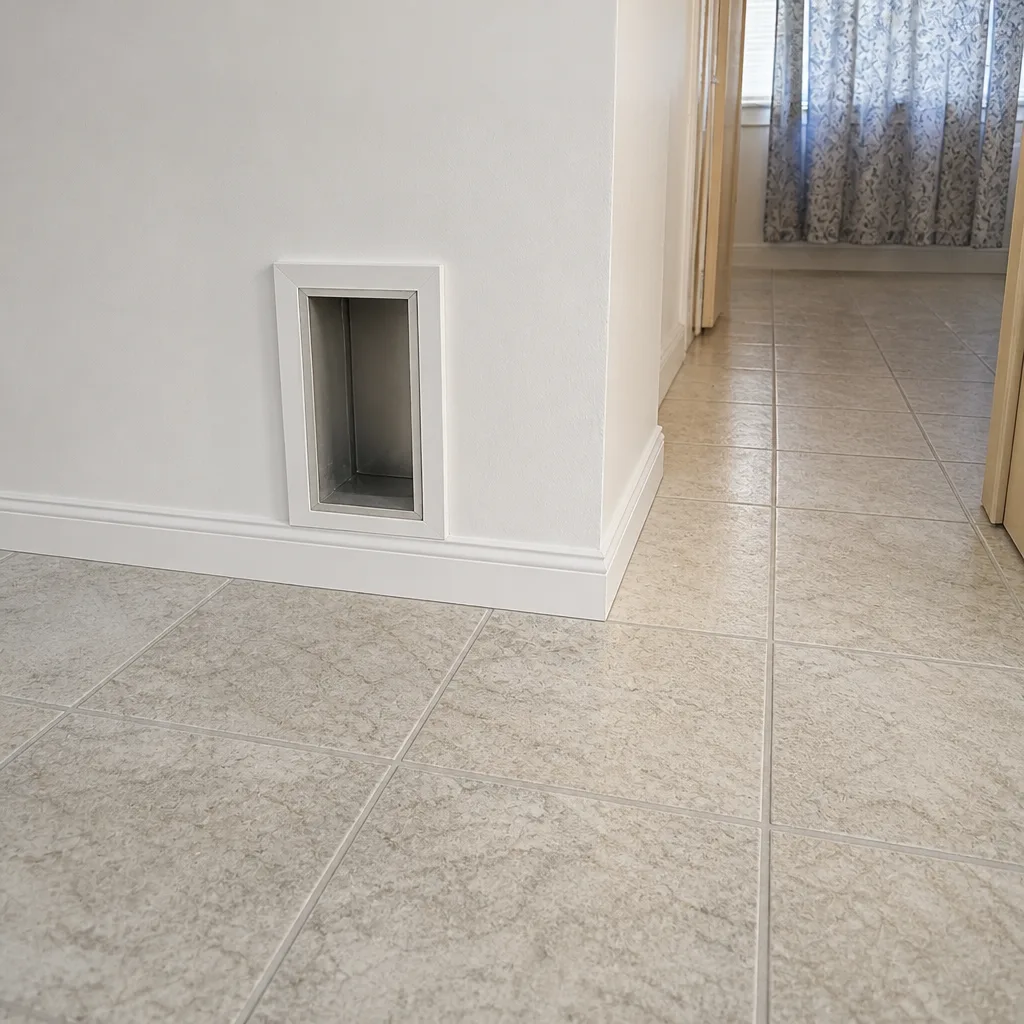 After
When to Call a Professional
Some situations should not wait through another season of DIY deliberation. Call a duct cleaning professional if you see visible dust being pushed from your supply registers when the system starts, if rooms in your Upland home develop a musty odor whenever the HVAC runs, if family members notice allergy symptoms that worsen inside the house and improve away from it, or if you have completed a remodel that produced drywall dust and sawdust which the system has been circulating. If the flex duct in your attic shows signs of sagging, crushing, or visible damage at the connections, that is a repair issue, not a cleaning issue, and it should be evaluated before the next cooling season. Duct Cleaning Upland offers free estimates in Upland. Call (855) 382-4830. We answer 24/7. Fast dispatch from 7am to 7pm, Sunday through Friday.
Frequently Asked Questions
Is DIY air duct cleaning worth it in Upland?
For most Upland homeowners, DIY air duct cleaning is not worth it beyond register and grille cleaning, because consumer equipment cannot generate the negative-air pressure required to extract debris from the full duct system rather than stirring it into living space. The one DIY task that delivers real value is washing and vacuuming the visible registers, which we describe step by step above. For anything beyond that, the physics of the system works against consumer tools.
How much does professional air duct cleaning cost in Upland?
Professional air duct cleaning in Upland typically costs between three hundred and seven hundred dollars for a whole-home system, with the final price set by the size of the home, the number of systems, and the condition of the ductwork. The estimate should be free and should be provided in writing before any work starts. Be wary of quotes far below this range, which often indicate a vent-cleaning scope rather than a full system cleaning. Call (855) 382-4830 for an exact quote. Estimates are free.
Why are some duct cleaning quotes so much cheaper than others?
The low-price operators in the Upland market are generally running a different scope of work. A quote based on per-vent pricing with a very low per-vent rate usually means the crew will run a vacuum hose through each register and spend twenty to forty minutes in the home. A full source-removal cleaning with negative-air equipment, trunk access, and mechanical agitation takes several hours and costs accordingly. The two services share a name but not a method.
How do I know the duct cleaning was actually done?
Ask for before-and-after photos or video of the duct interior. A legitimate professional can show you the inside of the trunk line and the branch ducts after the job, and the difference between before and after is visible. If a company cannot provide after-photos, or if the “after” photo is just a clean register face, the work probably did not reach the ducts themselves. You can see the difference in our equipment, and you should see the difference in your ductwork.
How often does air duct cleaning really need to be done in Upland?
Most industry guidance recommends professional air duct cleaning every three to five years for a typical household. In Upland, where the dry inland climate produces fine airborne particulate and the cooling season runs long, a four-year cycle is a reasonable planning target. Homes with pets, recent remodeling, or residents with respiratory sensitivities may need cleaning more often. Homes with upgraded filtration from Honeywell or Aprilaire may stretch the interval.
Can I just replace my air filter more often instead of cleaning the ducts?
A better filter catches more airborne material before it enters the return side of the system, but it does not remove the debris already settled inside the ductwork, and it cannot clean the supply side at all. The best sequence is to clean the ducts first, then install quality filtration to keep them clean longer. That is the full-system approach: we clean the system, then install and service Honeywell and Aprilaire filtration equipment so the cleaning lasts.
The Bottom Line
DIY duct cleaning in Upland fails for a reason that has nothing to do with homeowner effort. The equipment simply is not available at the consumer level. A shop vacuum and a brush attachment can reach a few feet into a register boot, and that is all. The rest of the system, the trunk lines, the returns, the coil, the blower, remains untouched no matter how thorough the attempt. Meanwhile, a professional cleaning with negative-air equipment from Rotobrush, Nikro, or Abatement Technologies creates the pressure conditions that make source removal possible in the first place. The legitimate DIY contribution is register and grille cleaning, which is a real task and worth doing. Everything beyond that is a professional job, and the good news is that the equipment makes the difference visible. If you want clean ducts and a plan to keep them clean, Duct Cleaning Upland is here to help. Call (855) 382-4830 for a free estimate. We answer 24/7. Fast dispatch from 7am to 7pm, Sunday through Friday.
Written by the team at Duct Cleaning Upland, serving Upland since 2012.