
Last updated November 4, 2026
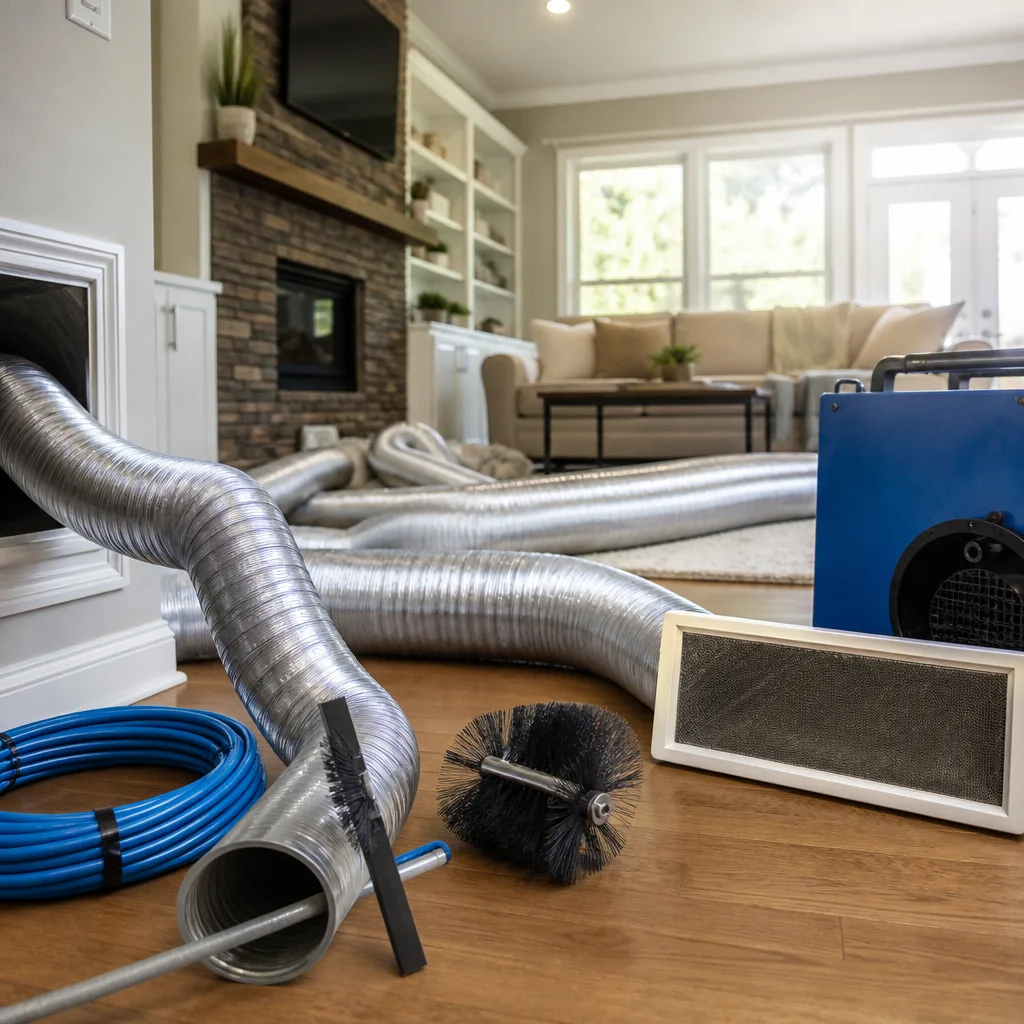 Whole-home duct cleaning
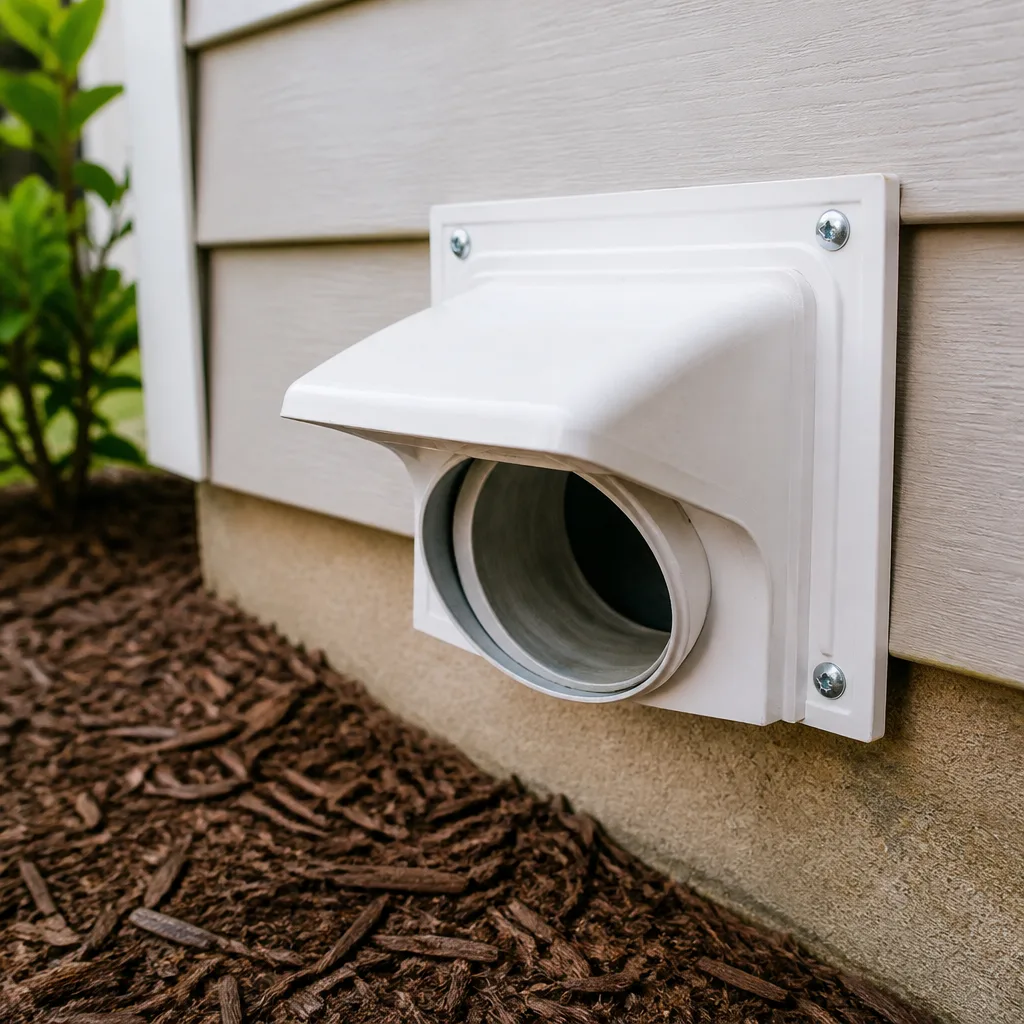 Dryer vent cleaning
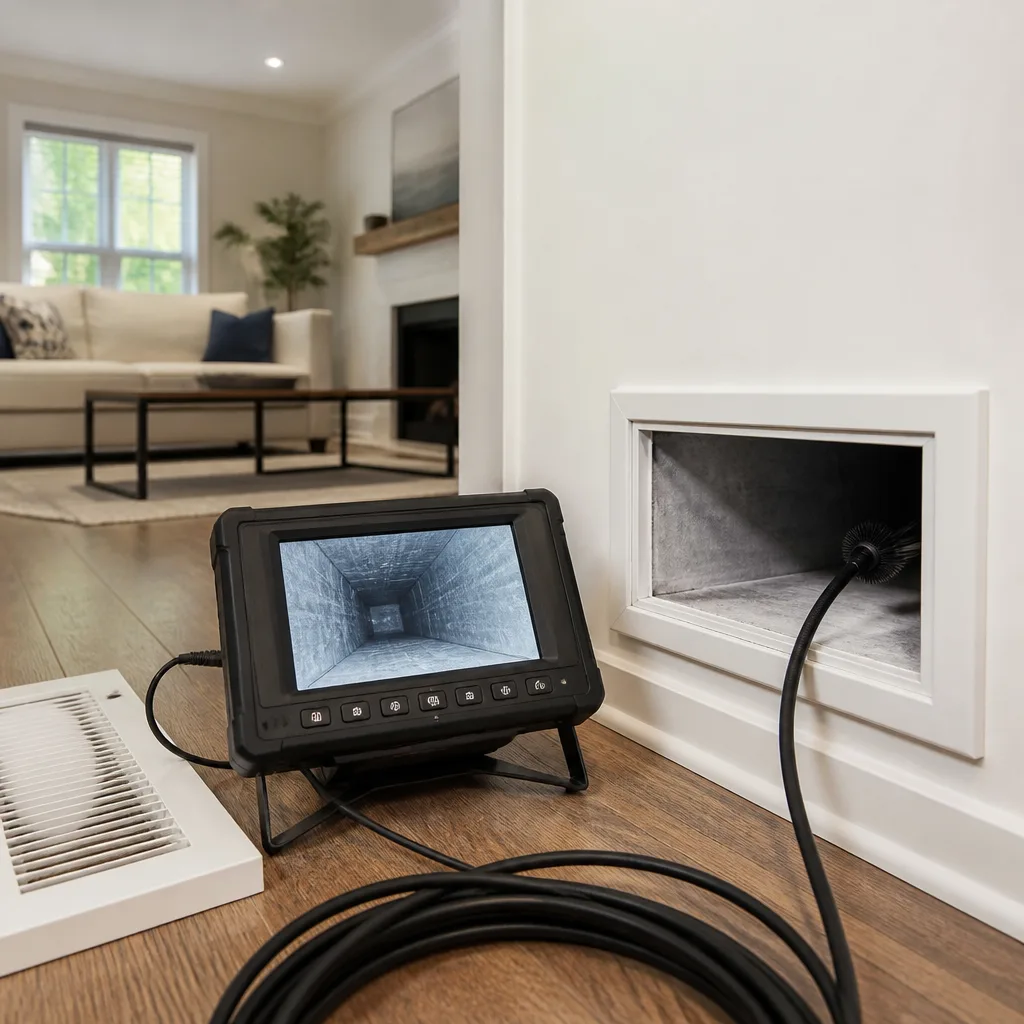 Camera inspection
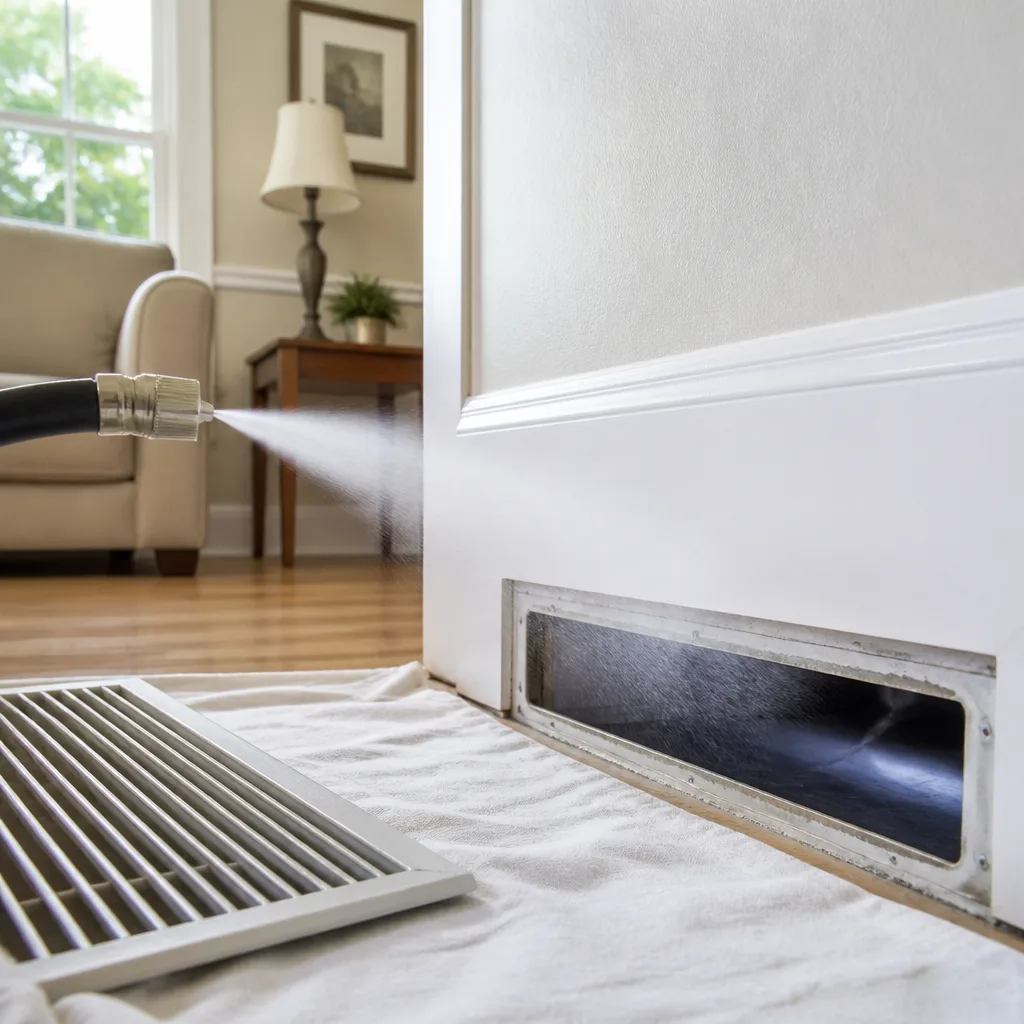 Sanitizing & deodorizing
Whole-system duct and dryer vent check with before-and-after photos - you see exactly what came out of your vents
That "$99 whole-house special" is a bait ad - the real number appears once they are in your hallway, or the "clean" is a shop-vac at the register. We photograph the inside of your ducts before and after instead.
Air Duct Cleaning Maintenance Schedule: What to Do and When
The 3-to-5-year cleaning interval you’ve seen repeated across the internet was derived from general NADCA guidance, not from homes in Upland running AC six months a year with MERV-8 filters and a golden retriever. That matters because a maintenance schedule built on national averages will fail a household with local conditions. This guide explains how to build a duct maintenance schedule that matches how your home actually operates, from Santa Ana wind seasons to filter grade, and what to do between professional cleanings so the clock doesn’t reset to zero six months after the truck leaves.
Quick Answer
Air ducts in Upland should be professionally cleaned every 2 to 4 years for most households, with the exact interval driven by four variables: pet load, renovation activity, HVAC runtime, and filter MERV rating. Homes with multiple pets, recent construction, or MERV-8 filters on systems running daily often need cleaning every 18 to 24 months. Between cleanings, you should swap filters every 60 to 90 days, vacuum return grilles monthly, and do a quick visual duct check every spring and fall. For a free assessment of where your system falls on that curve, call Duct Cleaning Upland at (855) 382-4830.
Styles & brands we work with
- Whole-home duct cleaning
- Dryer vent cleaning
- Camera inspection
- Sanitizing & deodorizing
Table of Contents
- The Real Baseline: Why 3 – 5 Years Is a Starting Point, Not a Rule
- The Four Variables That Move Your Schedule
- Maintenance Tasks Between Professional Cleanings
- Santa Ana Season and Upland Particulate Loads
- The 90-Second DIY Duct Check
- What a Real Post-Cleaning Benchmark Looks Like
- The Variable Interval Matrix
- Common Mistakes to Avoid
The Real Baseline: Why 3 – 5 Years Is a Starting Point, Not a Rule
The 3-to-5-year figure comes from industry-wide guidance aimed at a national average: a house with one or two occupants, a moderate climate, and a system that runs roughly half the year. That average doesn’t describe Upland. Our cooling season runs long, our wind events push particulate through return air paths, and a lot of local homes have pets and older ductwork. A baseline is useful as a reference, but it’s a midpoint on a curve, not a prescription.
In practice, we’ve seen two opposite failure modes. Some households go ten years without a cleaning and assume the silence means the system is fine. Others get sold a cleaning every year by an operator who treats the visit as a subscription rather than a maintenance decision. Both are wrong. The ducts need attention when the debris load reaches a level that affects airflow, air quality, or equipment strain. That level arrives at different speeds depending on what your home does to the air moving through it.
The right way to use the 3-to-5-year range is as a sanity check, not a deadline. Start there, then adjust based on the variables in the next section. A two-adult household with no pets, MERV-13 filtration, and a well-sealed return path may genuinely go five years between cleanings. A household with two indoor dogs, a cat, MERV-8 filters, and a system running from May through October in Upland heat may need attention every 18 to 24 months. Both are correct schedules. They’re just different houses.
The Four Variables That Move Your Schedule
Four household conditions determine how quickly ducts re-contaminate after a professional cleaning. Understand these, and you can predict your own interval instead of guessing. Here’s how each one works in Upland homes specifically.
1. Pet Load
Pets shed continuously, and HVAC systems pull that shed material into return air, through the filter, and into the supply side of the ductwork. A single indoor cat produces far less airborne debris than two large dogs, but the real variable is how much dander, hair, and dust the animals carry. Upland homes with tile or hardwood floors actually see faster duct deposition from pets than carpeted homes, because there’s no textile to trap the material before the return air does. If you have multiple shedding animals, lean toward the 2-to-3-year end of the schedule. If you also run your system year-round, consider 18 to 24 months.
2. Renovation and Construction Activity
Drywall dust, sawdust, and flooring particulates don’t just settle on surfaces, they get pulled into the duct system whenever the HVAC runs during or after a project. A kitchen remodel or a room addition in an Upland home can deposit a visible layer of fine dust through every run of ductwork in weeks. Even if the contractor sealed off the work area, particles fine enough to stay airborne for hours will migrate. If you’ve done any renovation in the last 24 months that produced drywall dust, flooring debris, or sanding dust, your next cleaning should come sooner than the baseline, regardless of how the ducts looked before the project.
3. HVAC Runtime
Runtime is the single biggest accelerator Upland homeowners deal with. A system that runs 10 hours a day during a six-month cooling season moves more air through the ducts in one year than a coastal home’s system does in three. More air movement means more particle deposition, even if the filter is catching a reasonable share. Homes on the north side of the 210 that get more shade still run heavy AC from June into October. If your system cycles on in May and doesn’t stop until late October, you’re a 2-to-3-year household, not a 4-to-5-year household.
4. Filter MERV Rating and Replacement Discipline
MERV-8 filters catch larger particles and let finer material through. That fine material is exactly what deposits on duct walls and coil surfaces. MERV-11 and MERV-13 filters catch substantially more, which extends the interval between cleanings, but only if they’re changed before they load up. A clogged MERV-13 is worse than a clean MERV-8, because it chokes airflow and forces the system to pull air through gaps around the filter frame. The schedule that matters here is not the filter’s rated lifespan on the package, it’s what the filter looks like after 60 days in your specific home. We’ll cover that in the maintenance section below.
Maintenance Tasks Between Professional Cleanings
What you do between cleanings determines how fast the clock runs. These tasks won’t replace a professional cleaning, but they will meaningfully extend the interval and keep the system breathing the way it should. Here’s the schedule we recommend for Upland homes.
- Replace the HVAC filter every 60 to 90 days. In cooling season, check it at 45 days. If it looks loaded, replace it regardless of the calendar. MERV-11 or higher is worth considering for most Upland homes given the particulate load from wind events and summer runtime. A Honeywell or Aprilaire media filter installed at the system will do more than a basic 1-inch filter, and those systems are designed for exactly this kind of continuous runtime.
- Vacuum return grilles monthly. Return grilles collect a visible mat of dust and hair on the intake side. That material restricts airflow and, when disturbed, gets pulled into the system. A quick pass with a brush attachment once a month takes under two minutes.
- Keep supply registers clear of furniture, rugs, and drapes. Blocked supply registers increase static pressure and push conditioned air through fewer openings, which changes airflow patterns in the supply trunks and accelerates deposition in the sections that do get flow.
- Keep the immediate area around the air handler clear. Storage boxes, laundry piles, and general clutter near the indoor unit create dust reservoirs right at the intake. Give the unit a few feet of clear air space.
- Watch for visible dust on registers between cleanings. If supply registers start showing a gray film or fine dust streaks on the wall above them, that’s an early signal the duct interior is loading up. Note when you first see it and add that timeline to your next cleaning decision.
- Check the condensate drain seasonally. A slow condensate drain raises humidity inside the system, which makes dust stick rather than pass through. It won’t clean the ducts, but a clear drain keeps the system dry between cleanings.
Every one of these tasks is cheap and quick. Together, they buy time. But none of them removes what’s already deposited inside the duct runs, supply plenums, or return drops. Only source removal does that.
Santa Ana Season and Upland Particulate Loads
Santa Ana wind events are the most predictable particulate driver in the Inland Empire. They push dry, dusty air through foothill communities, and Upland sits directly in that path. The fine material these winds carry ends up indoors through open windows, door gaps, and the normal operation of the HVAC system. It’s not dramatic, but it’s continuous during a multi-day event, and a lot of it ends up in the return air stream.
We recommend an inspection at the end of each Santa Ana season, usually late fall. Take a flashlight and look at the return register and inside the return drop. If you see a fine gray film that wasn’t there in spring, that’s wind-driven particulate that made it past the filter or entered through leak points in the return path. The same particles also load the blower wheel and evaporator coil. A return-side inspection after the wind season tells you whether the summer’s heavy runtime pushed the system past its cleaning threshold for the year.
This is also the right moment to check the weatherstripping and door seals on the return path. Gaps in the return plenum, especially in an attic or closet return, pull unfiltered air directly into the system every time the blower runs. Sealing those gaps is part of the “job behind the job” that separates a real air duct cleaning from a cosmetic one. If your return path has never been inspected for leaks, the wild card isn’t the filter, it’s the air sneaking around the filter.
The 90-Second DIY Duct Check
You don’t need any equipment to figure out whether you’re ahead of or behind schedule. Here’s a quick visual check you can do with a flashlight and a phone camera in under two minutes. It works best after the sun goes down and the house lights are off, so the flashlight beam is the only light source in the duct.
- Turn the system off at the thermostat. You don’t want airflow moving dust while you’re looking.
- Remove a supply register, ideally one near the end of a supply run. The longest run accumulates the most material because air velocity drops toward the end of the trunk.
- Shine the flashlight into the boot and along the first two or three feet of the run. Look for a gray film, visible dust accumulation, or debris sitting on the bottom of the run.
- Use your phone camera with the flash on, aimed down the run at a low angle. The photo often shows what the eye misses, especially fine film on the top and sides of the duct.
- Repeat the check at a return grille if accessible. The return side is where most debris enters, and the return drop usually loads faster than supply runs.
- Compare what you see to a known clean surface. If the interior looks like a dusty shelf you’d wipe with a finger and leave a streak on, the ducts are past due. If it’s a light film with no visible accumulation, you’re likely mid-cycle.
The check won’t tell you what’s on the coil or in the plenums, but it’s a reliable signal for the accessible runs. If you see significant material, schedule a cleaning. If you’re not sure whether what you’re seeing is normal, call and ask. We’d rather answer a question than have a system run loaded for another season.
What a Real Post-Cleaning Benchmark Looks Like
A professional cleaning should leave you with more than a receipt. It should leave you with evidence that the debris was removed, not just disturbed and redistributed inside the runs. Here’s what separates a real reset from a cosmetic pass, based on the way we work and the equipment we run.
We use Rotobrush and Nikro systems on every duct cleaning. These are powered agitation and vacuum systems built for source removal, not consumer-grade vacuums adapted to a job they were never sized for. The agitation is what breaks the debris bond on duct walls. The vacuum is what removes it from the system. Both have to happen at the correct air volume or the material just moves from one section of the duct to another. The equipment is visible when we arrive, and you can see the difference in how it’s set up. There’s no mystery box on the truck.
On remediation-level jobs, where the debris load is heavy or the home has moisture-related contamination, we run Abatement Technologies equipment for negative-air containment. That’s the standard for serious indoor air quality work, and it’s what keeps dislodged particulate from drifting into living space during the cleaning itself. Most residential duct cleaners don’t carry this gear, and the ones that do use it for a reason: without containment, a deep cleaning of a heavily loaded system becomes a dust event inside the house.
After the cleaning, ask for before-and-after photos of the duct interior. We take them at the access points we opened, before work starts and after the final pass. A legitimate cleaning will show a visible difference in the runs. You should also feel a difference in airflow at the registers, particularly if the system was heavily loaded. If the cleaning is genuinely thorough, the dust will not reappear on supply registers within weeks. That re-accumulation is the most common sign that a previous cleaning didn’t fully remove the source material. We also install and service Honeywell and Aprilaire filtration systems, so the conversation after a cleaning includes a plan to keep the ducts clean, not just a handshake and a truck pulling away. Clean ducts and a plan to keep them clean. That’s the actual service.
The Variable Interval Matrix
Here’s a practical scheduling framework that accounts for the variables we’ve covered. Find the profile that matches your household and use the recommended interval as your planning baseline. Then adjust based on what you see at the registers and in the duct check.
| Household Profile | Filter Grade | HVAC Runtime | Recommended Interval |
|---|---|---|---|
| No pets, no recent renovation | MERV-11 or higher, changed on schedule | Moderate (seasonal only) | 4 – 5 years |
| No pets, no recent renovation | MERV-8 | Heavy (6+ months of AC) | 3 – 4 years |
| One indoor pet | MERV-11 | Heavy | 2 – 3 years |
| Multiple pets or one heavy shedder | Any | Heavy | 18 – 30 months |
| Recent renovation (drywall, flooring, sanding) | Any | Any | Clean within 6 – 12 months of project completion |
| Allergy-sensitive occupants | MERV-13 or media filter | Heavy | 2 – 3 years, with media filter checked quarterly |
The matrix isn’t a rulebook. It’s a starting point that reflects what we’ve seen in Upland homes where systems run hard, wind events load the air, and pets share the square footage. If your cleaning history doesn’t match the recommendations, use the 90-second duct check to see whether the ducts are telling you something the calendar isn’t.
Common Mistakes to Avoid
- Treating 3 – 5 years as a fixed rule. The national average glosses over the variables that actually move your schedule. An Upland home with two dogs and a six-month cooling season is not an average household.
- Replacing filters on the package schedule without checking them. A MERV-11 filter in a house with pets and Santa Ana particulate may be loaded at 45 days. The package interval assumes a clean-air environment.
- Skipping the return side entirely. Most DIY checks and even some “maintenance” visits focus on supply registers. The return side is where contamination enters. Ignore it and you’ll wonder why cleanings don’t last.
- Assuming a cheap cleaning reset the clock. A low-cost operator without source-removal equipment can disturb debris and leave the system looking clean at the registers while the runs stay loaded. If dust returns to the registers within a month, the cleaning didn’t do what it claimed.
- Ignoring a return path leak because the filter is clean. A clean filter doesn’t matter if air is bypassing it. Return leaks pull unfiltered air into the system and accelerate re-contamination no matter how disciplined your filter changes are.
- Not considering dryer vent cleaning as part of the annual plan. Dryer vents are a fire hazard, not a maintenance afterthought. A dedicated dryer vent cleaning should be part of the household schedule, independent of the duct cleaning interval.
- Waiting until you can smell it. Musty odor is a late-stage signal. By the time it’s noticeable, the moisture or debris issue has been active for months. Visual checks and airflow changes are earlier indicators.
See the difference
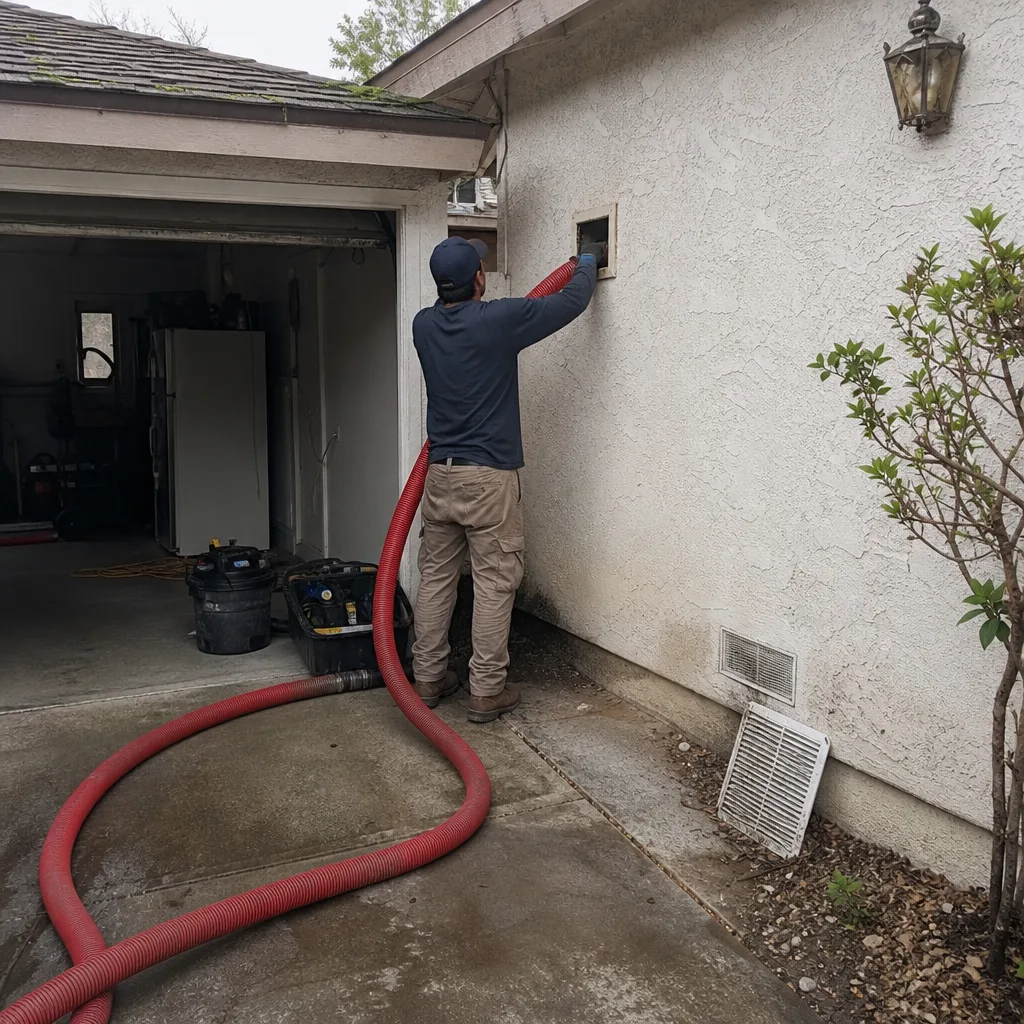 Before
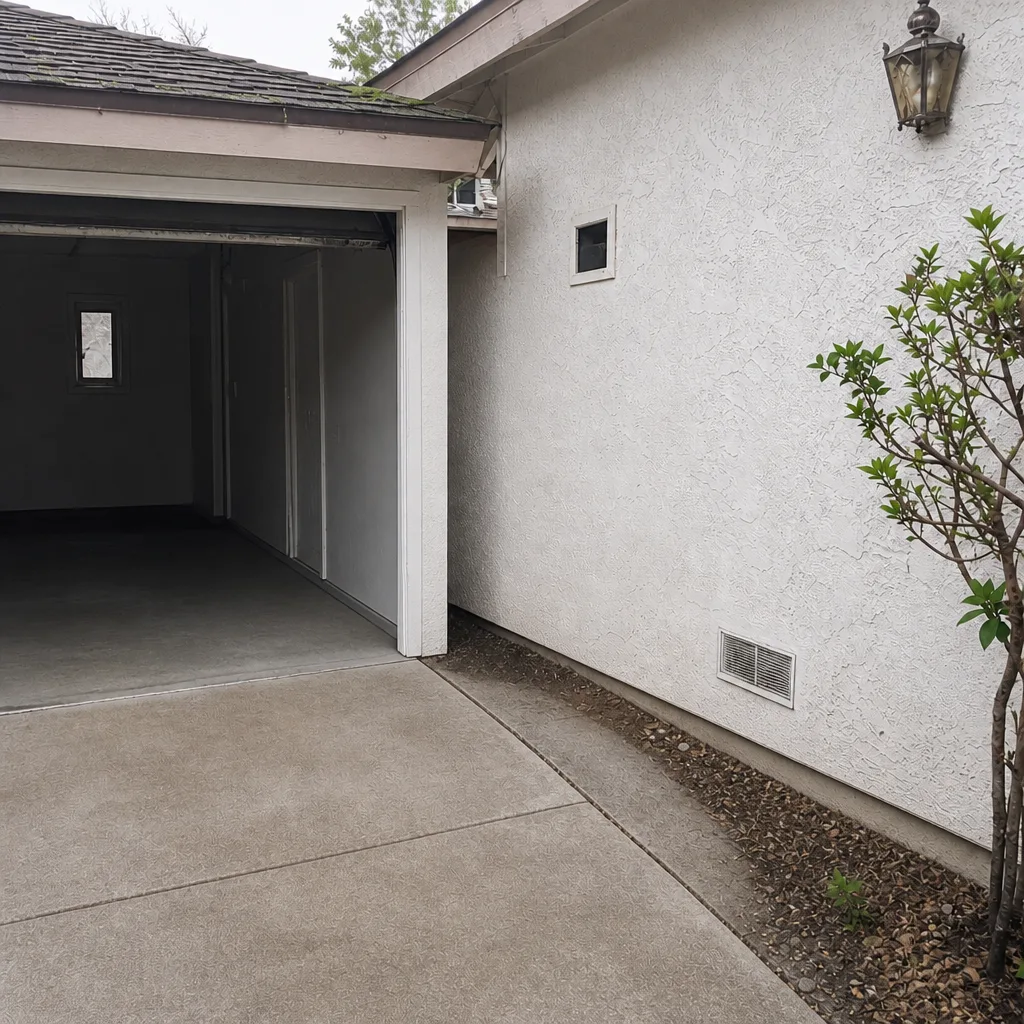 After
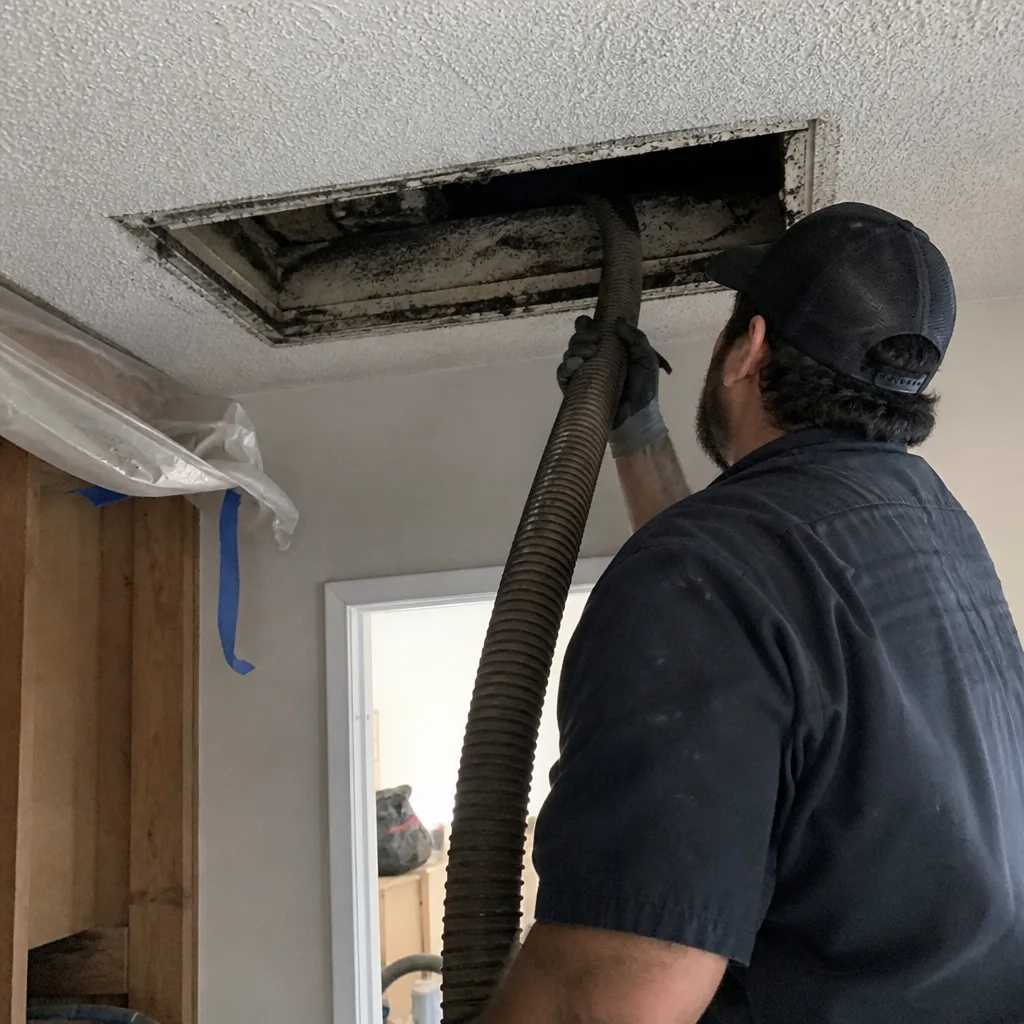 Before
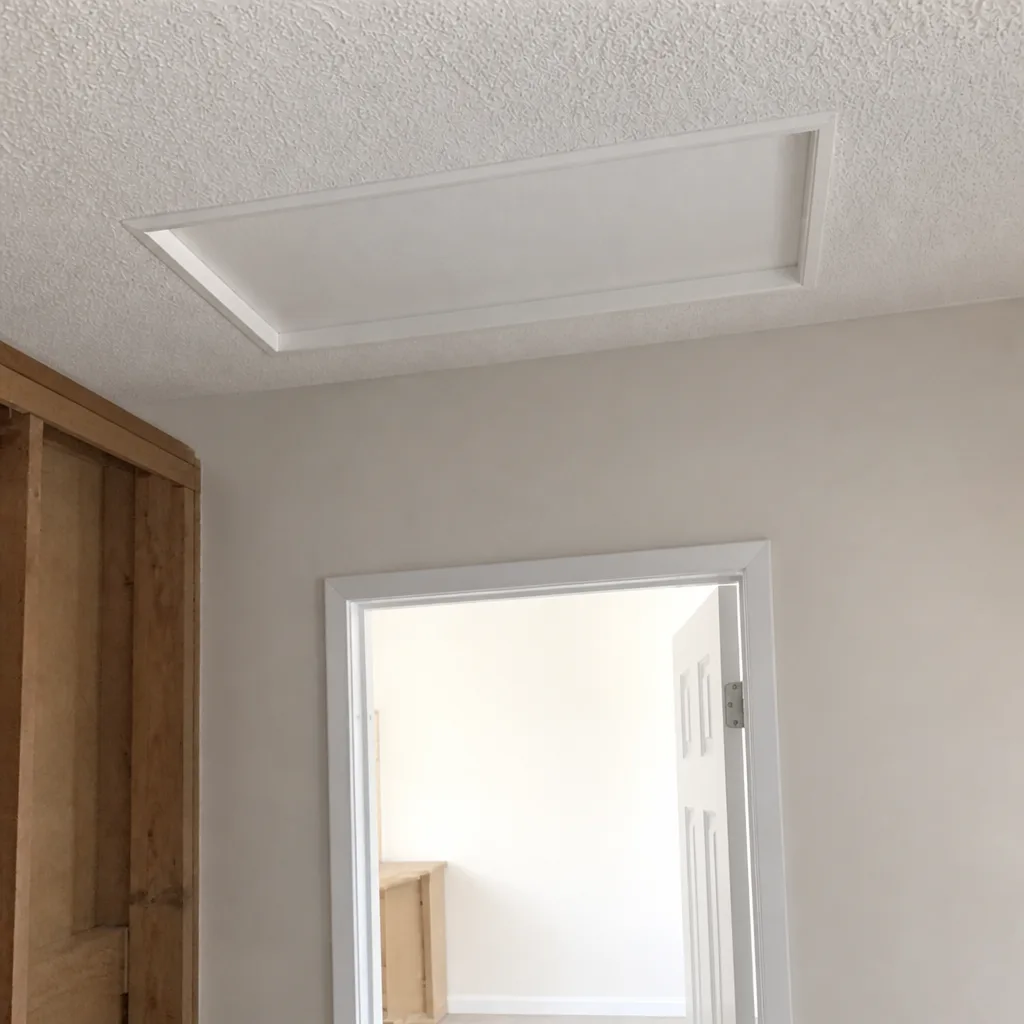 After
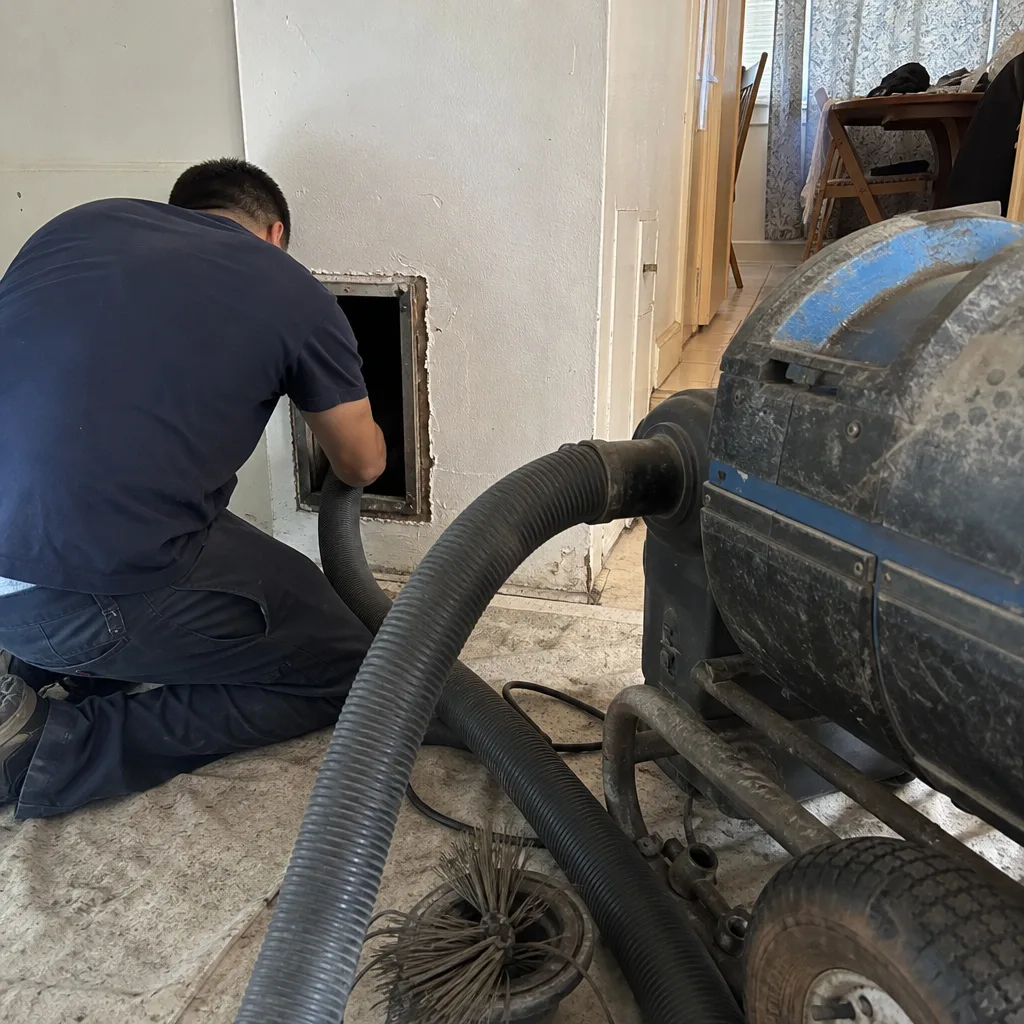 Before
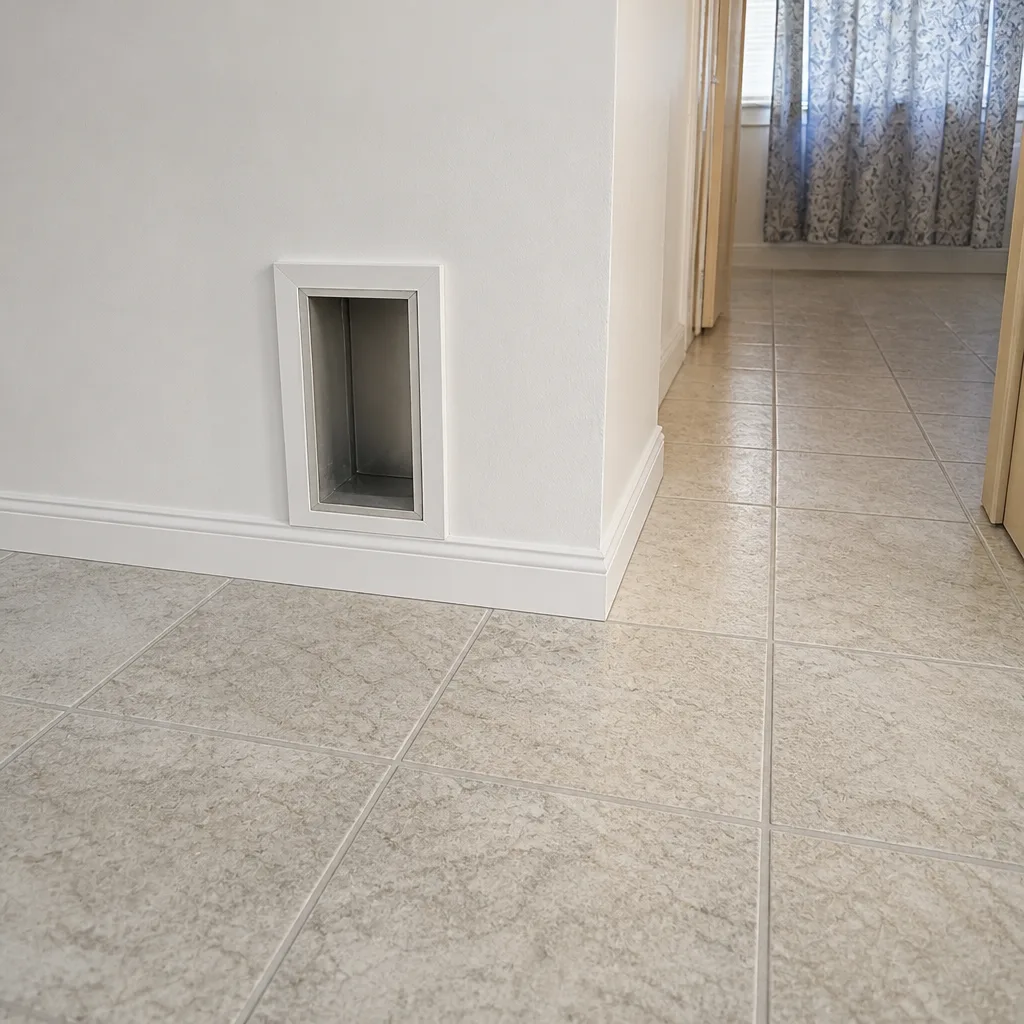 After
When to Call a Professional
Call a professional when you see visible dust accumulation inside the supply runs or return drop, when supply registers show dust streaks within weeks of cleaning, when airflow feels weaker at the farthest registers than the closest ones, or when household allergy symptoms spike during cooling season. Musty odor from the registers, especially when the system cycles on, is a sign of moisture in the duct environment and should be addressed sooner rather than later. If you’ve completed a renovation that produced drywall or flooring dust, don’t wait for the next scheduled interval, book a cleaning within a year of the project. Duct Cleaning Upland offers free estimates in Upland, call (855) 382-4830. We answer 24/7. Fast dispatch from 7am to 7pm, Sunday through Friday.
Frequently Asked Questions
Most Upland homes should have their air ducts cleaned every 2 to 4 years, with the exact interval driven by pet load, HVAC runtime, filter grade, and renovation history. Homes with multiple pets or MERV-8 filters on systems that run six months a year often need cleaning every 18 to 24 months. Homes with no pets, good filtration, and moderate runtime can go 4 to 5 years.
Between cleanings, replace your HVAC filter every 60 to 90 days, vacuum return grilles monthly, keep supply registers clear of obstructions, and do a visual duct check in spring and fall. These tasks slow re-contamination and help you spot early warning signs before they become expensive problems.
Yes. Santa Ana events push fine particulate through Upland and the Inland Empire, and that material enters homes through windows, gaps, and the normal operation of the HVAC system. Homes with leaky return paths accumulate wind-driven dust faster than sealed systems. A post-wind-season visual check is a good practice.
You should have before-and-after photos of the duct interior, visible airflow improvement at registers, and no dust re-accumulation on supply registers within a month of the cleaning. If dust returns quickly, the previous cleaning may have disturbed debris without fully removing it. A legitimate cleaning uses source-removal equipment and shows visible evidence.
Yes. Pets shed continuously, and HVAC systems pull that material into the return air stream and through the ductwork. Homes with multiple indoor pets typically need duct cleaning every 18 to 30 months, especially if the system runs heavily during Upland’s long cooling season. Filter grade matters less than pet count when the shedding is constant.
It does. MERV-8 filters let fine particulate through, and that material deposits inside the ducts. MERV-11 or MERV-13 filters catch more, which slows duct loading and extends the interval between cleanings, provided they’re replaced before they clog. A loaded high-MERV filter restricts airflow and forces air through gaps, which defeats the purpose. Installing a Honeywell or Aprilaire media filter at the system gives the best filtration for continuous Upland runtime. Call (855) 382-4830 for an exact quote, estimates are free.
The Bottom Line
A useful duct cleaning schedule isn’t a number you copy from a general guideline. It’s a function of how your home loads the system: pets, renovation, runtime, filter grade, and Upland’s wind-driven particulate. The 3-to-5-year rule is a midpoint, not a prescription. Between professional cleanings, consistent filter changes, grille maintenance, and a seasonal visual check will extend the interval and give you early warning when the system is loading up. When it’s time, demand evidence: before-and-after photos, visible airflow change, and a plan to keep the ducts clean afterward. That’s the difference between a maintenance decision and a wasted invoice.
Written by the team at Duct Cleaning Upland, serving Upland since 2012.