
Last updated November 4, 2026
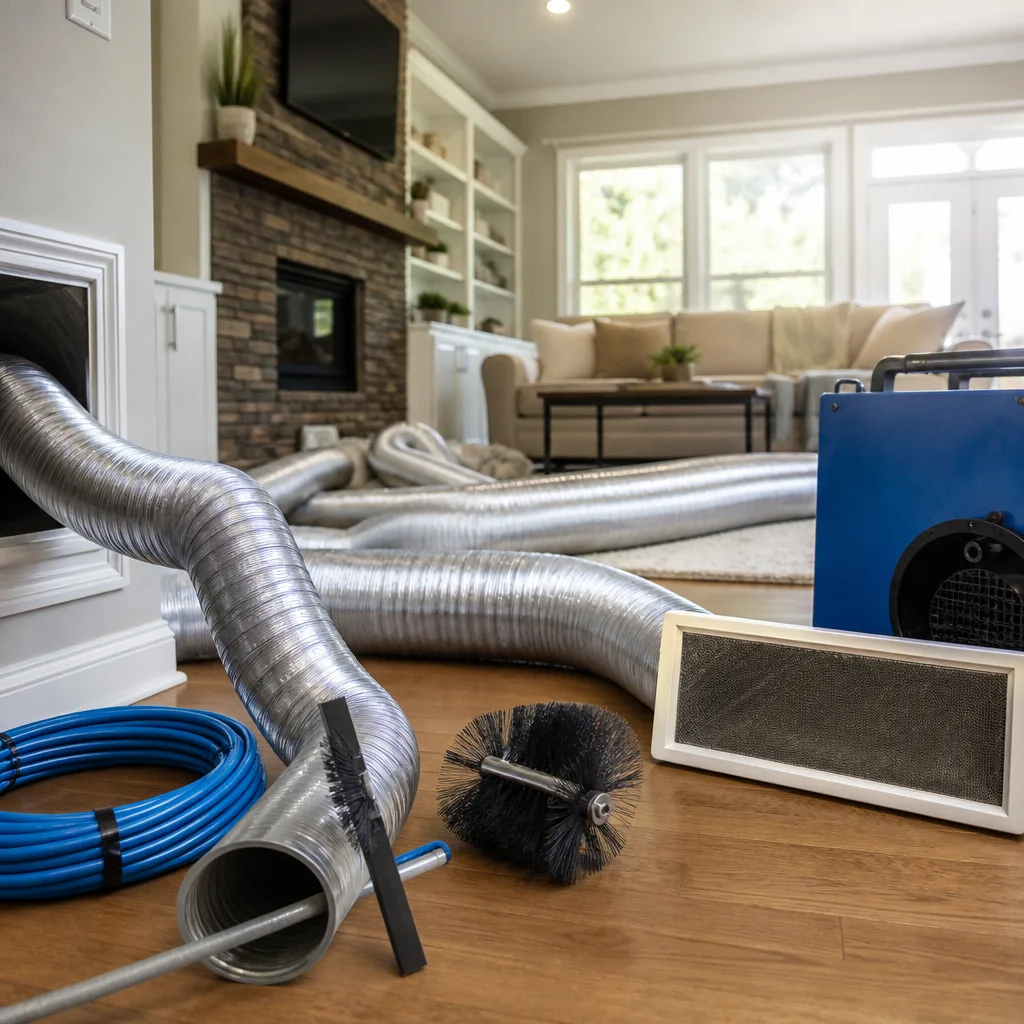 Whole-home duct cleaning
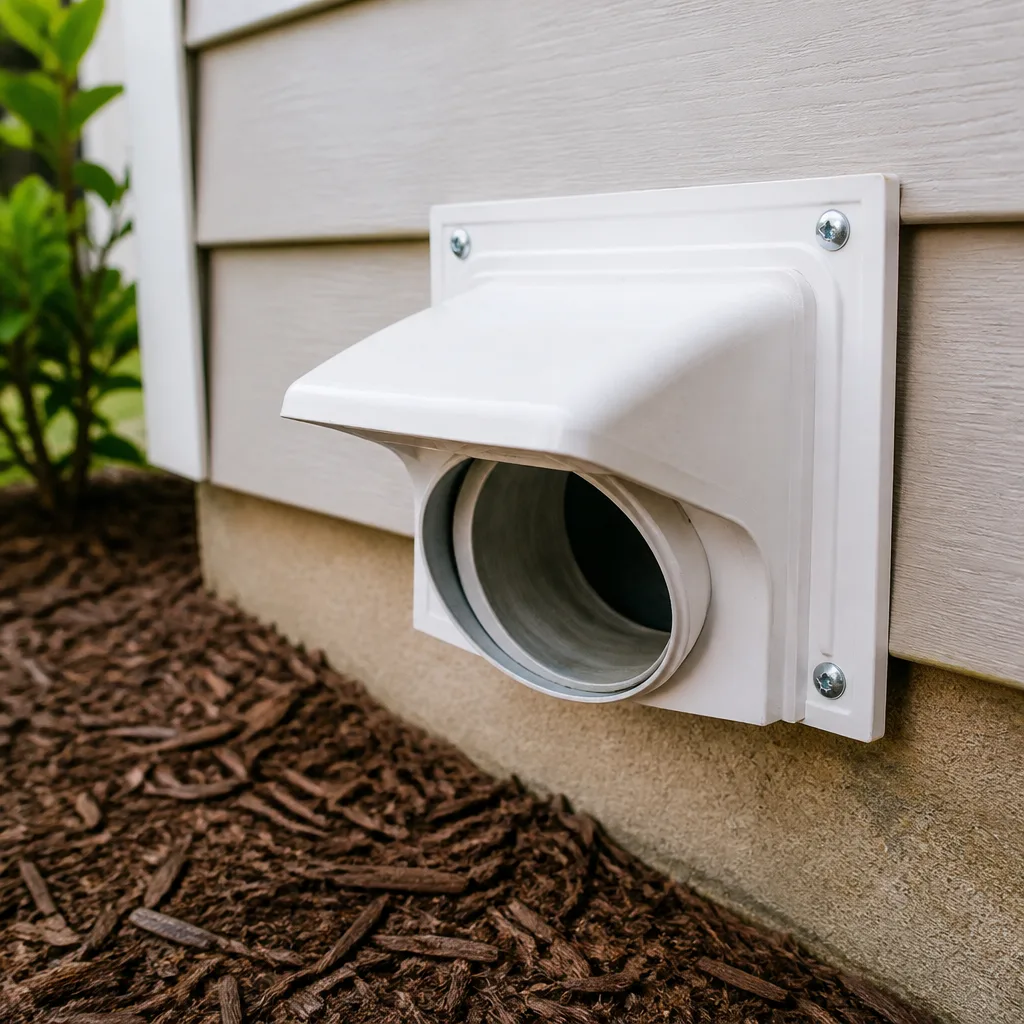 Dryer vent cleaning
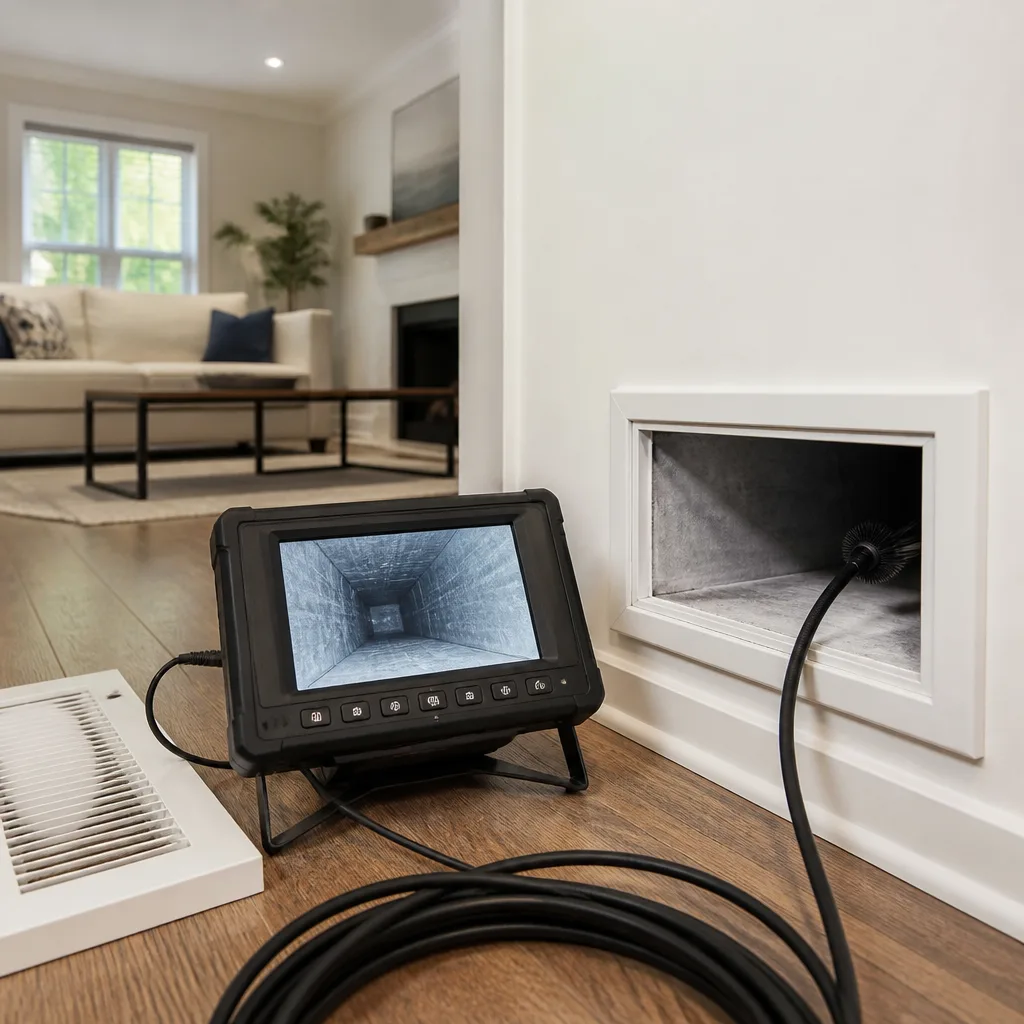 Camera inspection
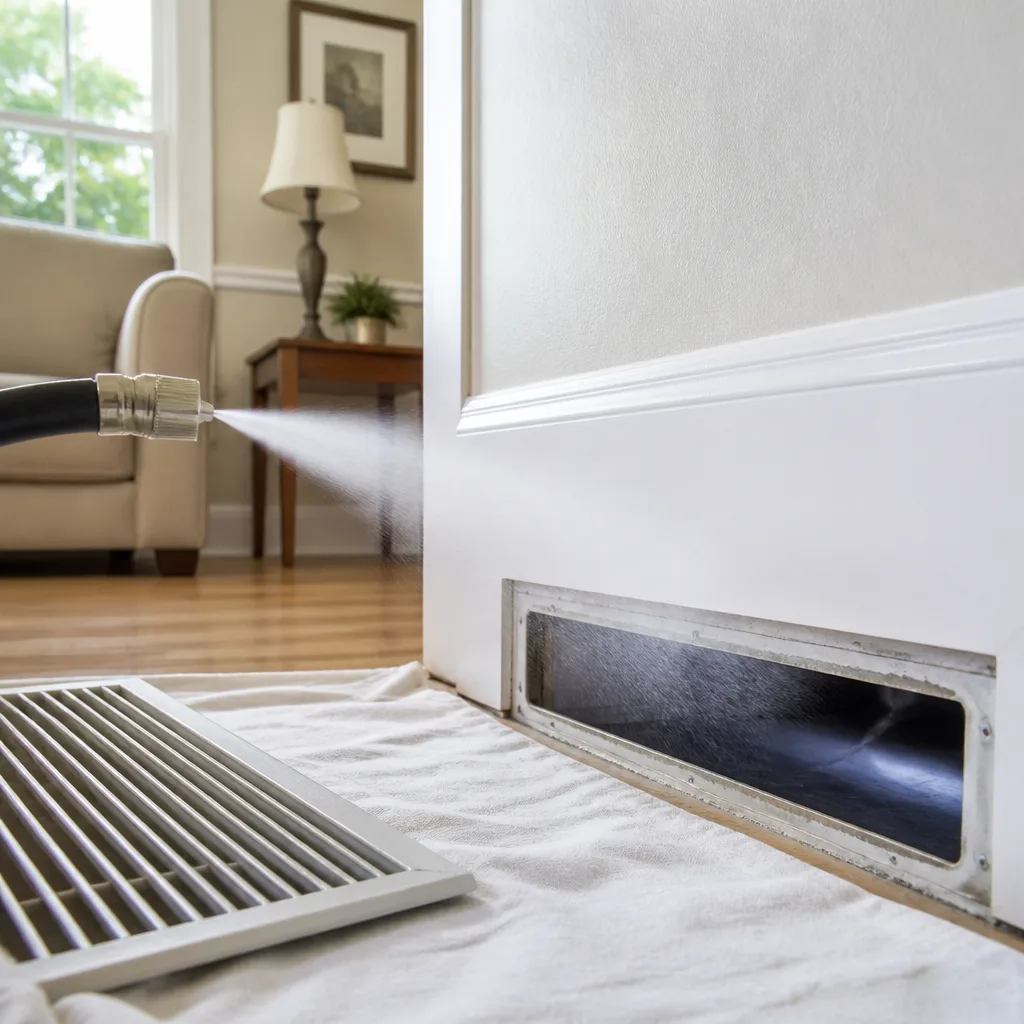 Sanitizing & deodorizing
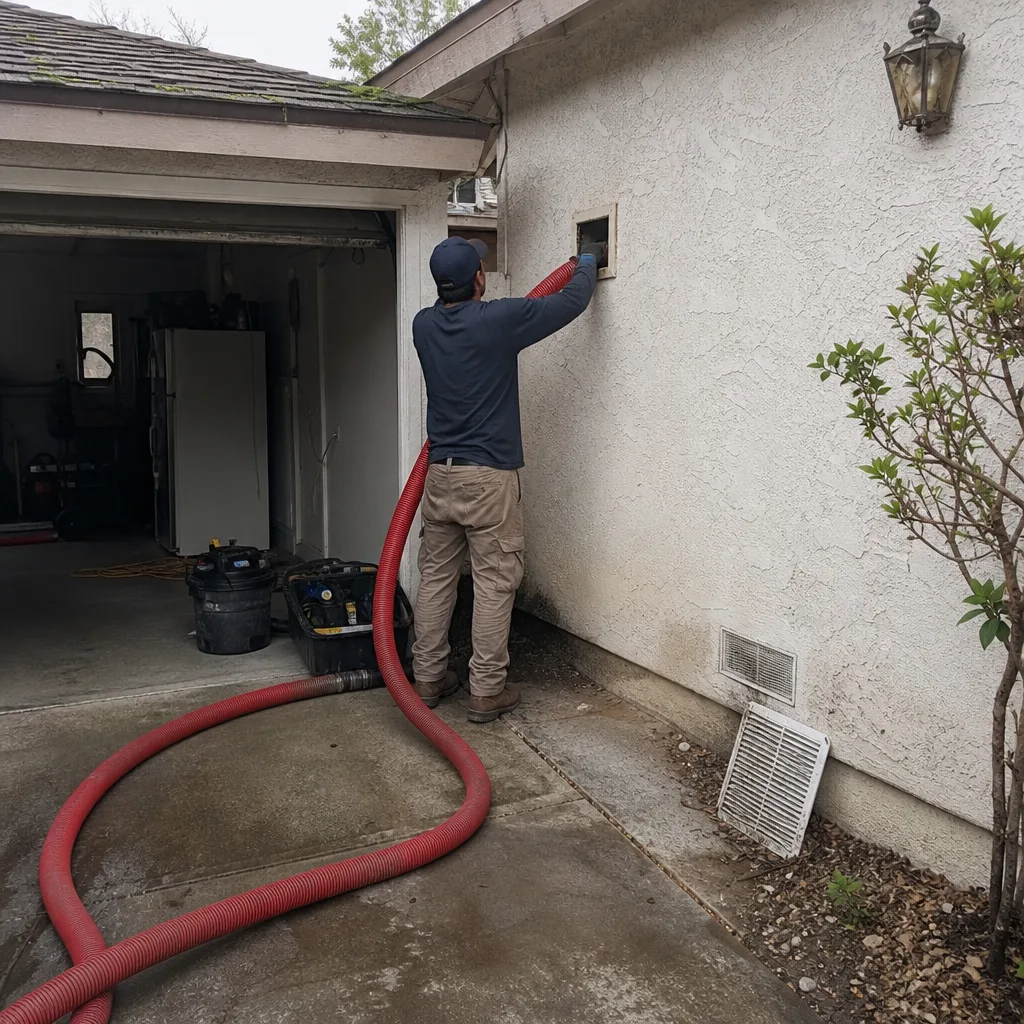
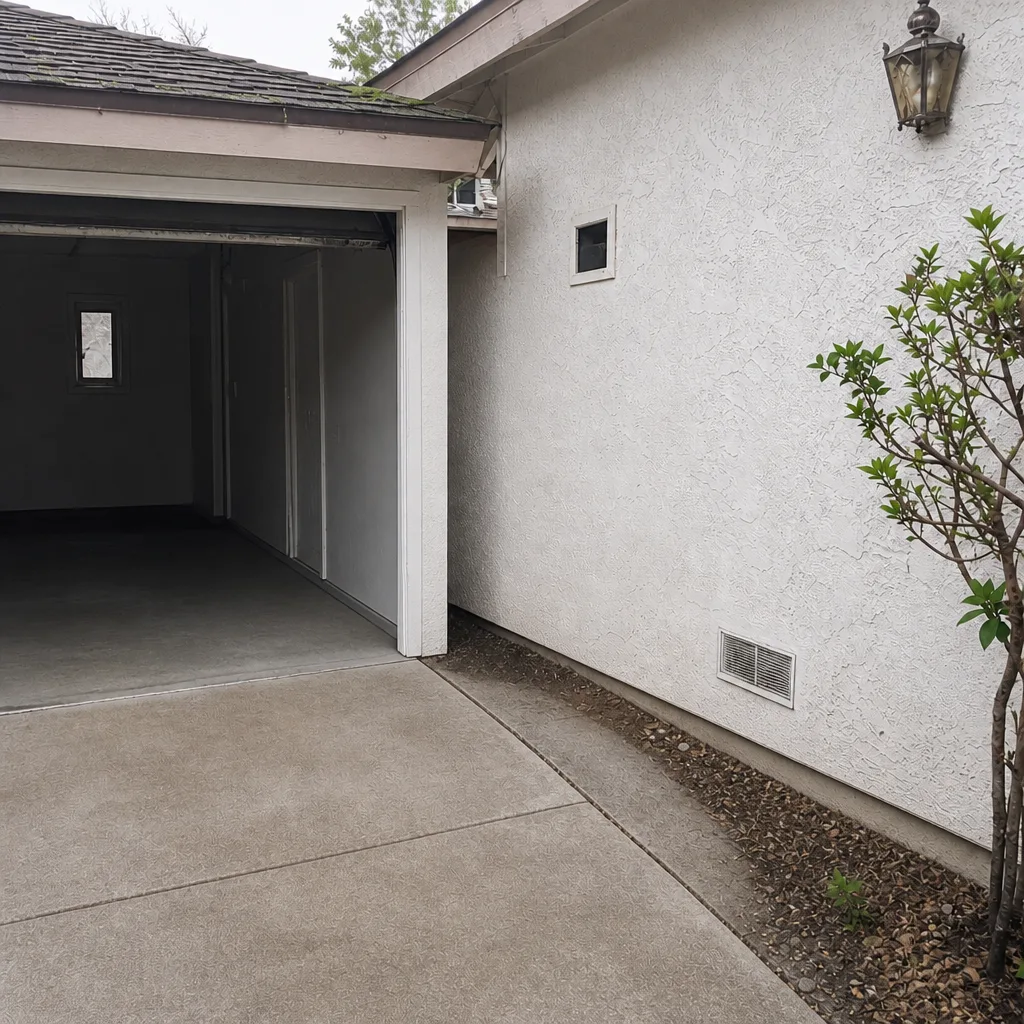
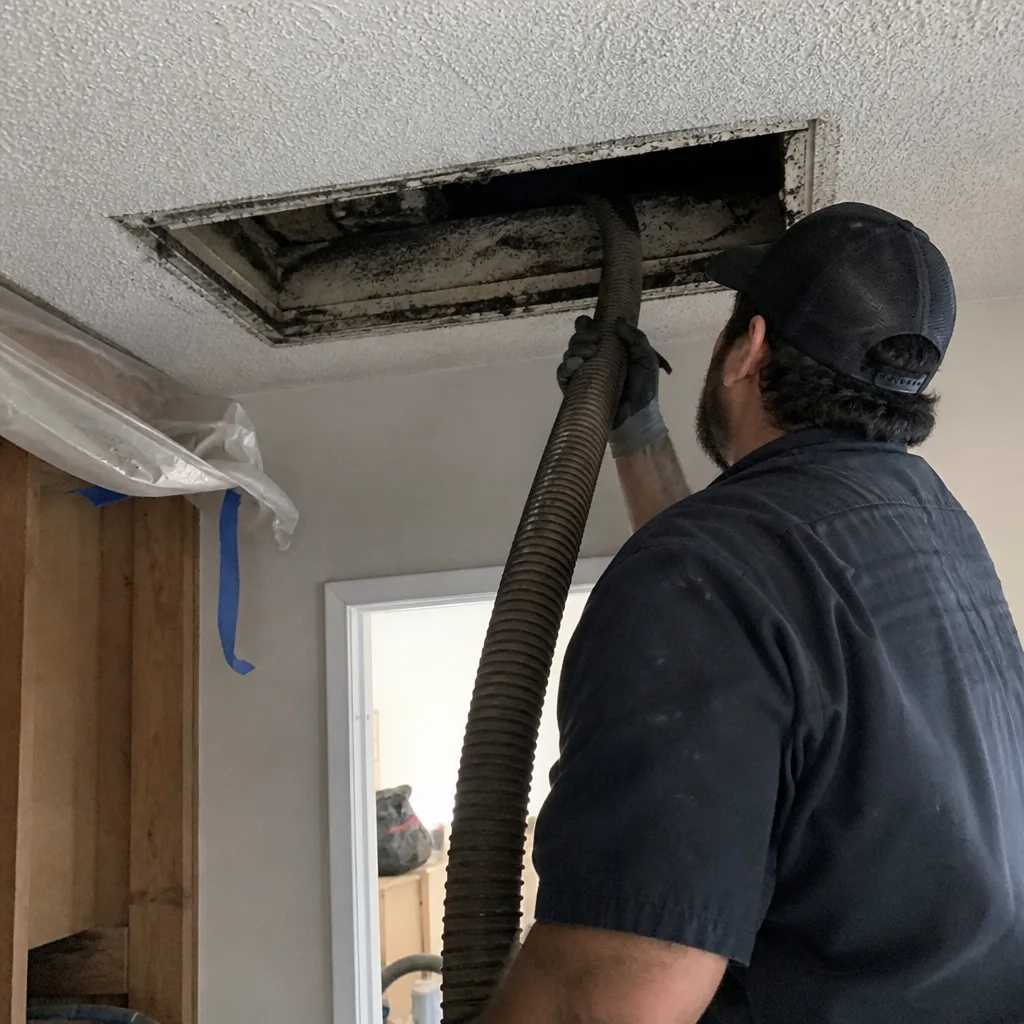
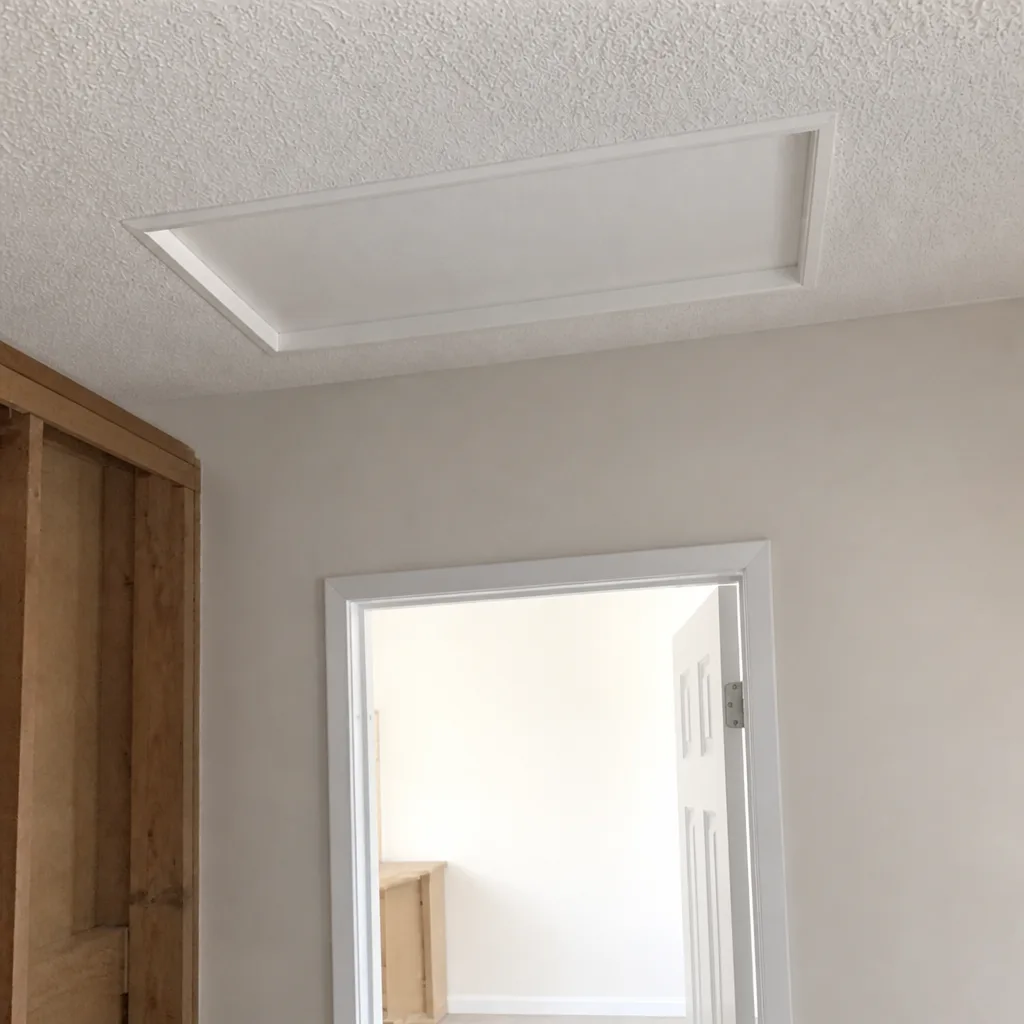
Whole-system duct and dryer vent check with before-and-after photos - you see exactly what came out of your vents
That "$99 whole-house special" is a bait ad - the real number appears once they are in your hallway, or the "clean" is a shop-vac at the register. We photograph the inside of your ducts before and after instead.
Air Duct Cleaning Warning Signs: An Upland Homeowner’s Reference Guide
Most Upland homeowners wait for a smell or a visible cloud of dust before they think about their ducts. By that point, the contamination has usually been circulating for months. The truth is, your HVAC system tells you it’s struggling long before the air in your living room gets noticeably dirty. A 15% jump in your SCE bill during a month with nearly identical weather is often a more reliable early warning than any odor, because it means your system is working against a restriction. This guide walks through the performance shifts, sensory cues, and visual checks that point to specific duct problems, so you know what’s urgent, what can wait, and what a trained eye would actually look for in an Upland home.
Quick Answer
The most common air duct cleaning warning signs in Upland are uneven room temperatures, a filter that clogs faster than it used to, longer HVAC runtime cycles, a musty odor when the system first starts, and visible dust buildup around the return air grille. Any one of these by itself is a reason to schedule an inspection. Two or more showing up together usually means the duct system needs cleaning and possibly repair.
Styles & brands we work with
- Whole-home duct cleaning
- Dryer vent cleaning
- Camera inspection
- Sanitizing & deodorizing
Table of Contents
- Performance-Based Warning Signs Most Homeowners Miss
- Sensory Indicators and What Each One Points To
- Visual Inspection Points You Can Check Yourself
- Upland-Specific Triggers Worth Knowing About
- Emergency vs. Schedule-Within-30-Days: A Triage Framework
- Why Most Warning Signs Get Misread
- Common Mistakes to Avoid
- When to Call a Professional
- Frequently Asked Questions
Performance-Based Warning Signs Most Homeowners Miss
Duct problems rarely announce themselves with drama. They show up as small inefficiencies that most people write off as an aging system or a hot summer. But in our experience working across Upland, the performance signs are the most reliable early indicators because they’re measurable. You can compare a bill, time a cycle, or look at a calendar. Here are the ones that matter, and what each one specifically points to inside the duct system.
Uneven Room Temperatures
One bedroom feels fine while another runs five or six degrees warmer. That is not an HVAC quirk. It usually means airflow to the warmer room is restricted. The cause is often a collapsed flex duct in the attic, a disconnected joint, or a section of ductwork that has filled with construction debris, pet hair, or years of accumulated dust. When a system has to push air through a partially blocked run, that room gets less conditioned air than the thermostat thinks it’s delivering. We see this a lot in Inland Empire tract homes where duct runs are long and flex duct gets compressed or kinked during remodels or pest activity.
Filter Replacement Frequency Increasing
If you used to change your filter every three months and now a one-inch filter looks loaded after four weeks, the duct system is circulating more particulate than it should. A filter is a capture device, not a cleaning system. When it clogs faster, it means the air moving through the return side is carrying more dirt. That dirt is already in your ducts. The filter is doing its job and telling you something: the source is upstream. A professional air duct cleaning removes that reservoir instead of asking the filter to keep absorbing it.
Longer Runtime Cycles
Your AC runs longer to reach the same setpoint. That points to reduced airflow across the evaporator coil, which reduces efficiency. A dirty coil from dirty ducts makes the system work harder. So does a restricted return side. In either case, the compressor runs more minutes per hour, and your SCE bill reflects it. This is not a failure that fixes itself. Cleaning the ducts and the accessible components restores the airflow the system was designed for.
Dust Settling Quickly After Cleaning
You dust on Saturday and by Tuesday the furniture has a film again. That is not normal household dust generation. It is recirculation. The HVAC system is pulling air through dirty ductwork and redistributing fine particulate throughout the house every time it runs. Homes in Upland with older duct systems and routine landscaping activity tend to see this more because the return side pulls in fine dust and distributes it before the filter can catch it all.
Sensory Indicators and What Each One Points To
Odors and sounds are the signs homeowners usually notice first, but they are also the easiest to misread. The key is timing and persistence. A smell that appears only at system startup points to something different than a smell that never goes away. Here is how to rank what you are noticing, from mild to serious.
Musty Odor Only on Startup
When the system kicks on and you smell something musty for the first thirty seconds, that is usually microbial growth on the evaporator coil or in the condensate pan. The moisture from normal AC operation creates a damp environment. When dust collects there, it becomes a food source. The smell dissipates as the system runs because the airflow moves past it. This is a moderate concern, but it will not resolve on its own. The coil and the adjacent duct sections need cleaning.
Persistent Musty or Stale Odor
If the smell never goes away while the system runs, the source is more likely inside the ductwork itself. This could be mold growth inside a duct, a pest that has died in the system, or significant moisture intrusion from a duct leak pulling humid attic air into the return side. Persistent odor is a stronger indicator. It means the contamination is in the air path, not just on a component. This is a schedule-within-30-days situation, and in some cases sooner depending on what an inspection finds.
Burning Smell on Startup
A brief burning or hot-dust smell when the system first kicks on after a period of inactivity is often accumulated dust on the heat exchanger or heat strips burning off. It typically fades within a minute or two. If it recurs regularly, the ducts are carrying enough particulate to deposit on heated surfaces. If the smell persists, shut the system off and have it looked at. Persistent burning odor is not a duct cleaning issue; it is an electrical or mechanical issue that a technician needs to inspect.
Chemical or Solvent Smell
Any chemical smell coming from the vents should be taken seriously. It can indicate a refrigerant leak, a cracked heat exchanger, or off-gassing from something that found its way into the ducts, like a spilled household product near a return. This is not a cleaning situation. This is a stop-using-the-system and have a trained professional inspect the components immediately situation.
Visual Inspection Points You Can Check Yourself
You do not need to open the ducts to learn something useful. A few simple visual checks around the house give you real information, and they are safe to do without any special tools. Here is what to look at, in order of usefulness.
- Return air grille and filter. Pull the filter and look at the return side. If there is a thick mat of gray dust and pet hair built up on the grille blades and the filter frame, that is what is being pulled into your system. Heavy buildup here means the inside of the return duct likely carries the same load.
- Supply register airflow. Hold a single-ply tissue near each supply register while the system runs. It should flutter upward at roughly the same rate from room to room. If one register barely moves the tissue while another pushes it hard, you have a flow restriction somewhere in that run. That is a mechanical issue, not just dust.
- Dust pattern around supply registers. Look at the wall or ceiling around each register. A gray shadow or streak pattern radiating outward from the register means particulates are being blown into the room and sticking to the surface. Clean ducts do not leave a pattern.
- Accessible flex duct in the attic or crawlspace. If you can safely access the space above your ceilings, look at the flex duct you can see. Sagging sections, crushed areas, kinked bends, or visible tears in the outer jacket are airflow killers. In Upland’s older suburban homes, flex duct from the original build is often still in place and past its service life.
These checks will not tell you everything, but they tell you enough to know whether a professional inspection is worth scheduling. And in our experience, when a homeowner notices two or three of these signs, the system usually has multiple issues at once.
Upland-Specific Triggers Worth Knowing About
Every market has conditions that make certain duct problems more common. Upland is no different. The combination of an inland valley climate, older housing stock, and the way many IE homes are constructed creates a few repeat patterns we see often.
Post-Remodel Drywall Dust
Upland has a lot of homes built in the 1960s through 1980s that are being renovated. Drywall dust is an HVAC killer. It is fine enough to pass through a standard filter, abrasive enough to wear on the blower motor bearings, and it coats everything inside the ducts. If you have had any interior work done, even a small bathroom remodel, and the HVAC system was running while sanding happened, that dust is in the system. This is one of the most preventable sources of long-term duct contamination, and almost no one thinks about it until the system starts acting up.
Pest Activity in Attic Air Handlers
Inland Empire tract homes frequently place the air handler and a good portion of the ductwork in the attic. That attic is warm, dark, and accessible to rodents and insects. Rats and mice chew through flex duct jackets, nest in insulation, and leave droppings in the air path. If you hear scratching in the attic, see droppings near the air handler, or find chewed duct insulation during a visual check, the duct system needs attention. A pest exclusion fix and duct cleaning go together. Cleaning alone without closing the entry point just resets the clock.
Landscaping Dust and Fine Particulate
Our dry summers and the Santa Ana winds push fine dust into the air. Homes with nearby open space, new construction, or ongoing landscaping projects tend to pull more of it through the return side. If your filters load faster in late summer and fall, part of the cause is local air quality. That does not make the problem less real. It makes regular duct inspection more relevant in Upland than in coastal markets with more consistent humidity.
Emergency vs. Schedule-Within-30-Days: A Triage Framework
Not every warning sign deserves the same response. Dismissing a serious sign can cost you, but panicking over a minor one leads to unnecessary work. Here is a simple triage framework we use when talking to Upland homeowners.
Emergency – Shut the System Off and Call
- Persistent burning smell while the system runs.
- Chemical or solvent odor from the vents.
- Visible mold growth inside a duct or on the grille.
- A supply register blowing visible dust or debris into a room.
These conditions involve either a potential safety issue or active contamination being distributed through the living space. Shut the system off and call. We answer 24/7 at (855) 382-4830. Fast dispatch from 7am to 7pm, Sunday through Friday.
Schedule Within 30 Days
- Musty odor on startup, but not persistent.
- One or two rooms consistently warmer than the rest.
- Filter loading noticeably faster than it did last season.
- A new or ongoing rodent problem in the attic near the air handler.
- A recent remodel with drywall sanding while the system ran.
These are real problems that will get worse with time, but they are not immediate safety hazards. A month of delay will not meaningfully change the outcome. What matters is that you do not let another season pass, because the restriction gets worse, the microbial growth advances, and the cleanup scope grows.
Why Most Warning Signs Get Misread
The reason most duct system warnings go unaddressed is that homeowners are looking for the wrong thing. They expect clouds of visible dust or obvious mold. But by the time contamination is that visible, the system has been compromised for a long time and the remediation is more involved. The real skill in reading a duct system is understanding that small, subtle performance shifts are the earliest and most specific signals.
An energy bill that climbs without a weather explanation is a data point. A room that never cools is a mapping clue. A filter that loads fast is a particulate count. A musty startup smell is a moisture fingerprint. Each one points to a defined category of problem. None of them require guessing. What they require is someone who knows what each signal means and has the equipment to act on it. That is the difference between walking through a checklist and actually diagnosing a system.
We run commercial-grade equipment in residential homes because the job deserves it. The Rotobrush and Nikro systems we operate are purpose-built duct cleaning machines, not consumer vacuums. When containment matters, Abatement Technologies equipment allows for negative-air pressure setups that keep what we remove from re-entering the living space. That is not marketing language. It is a mechanical difference you can see when the equipment arrives.
Common Mistakes to Avoid
- Ignoring a higher SCE bill because the thermostat setting hasn’t changed. Your system does not consume more power for no reason. A restriction in the ductwork or a dirty coil is the most common explanation, and both are correctable.
- Assuming a musty smell means mold, so it must be a huge job. Often it is dust and moisture on the coil, which is a standard cleaning situation. Do not panic. But do not ignore it either, because the longer it sits, the more likely microbial growth becomes.
- Changing the filter more often instead of cleaning the ducts. A clogged filter is a symptom of upstream contamination. You are treating the indicator instead of the source, and you are paying for filters that are doing a job they were never designed to do.
- Running the system during a remodel. The single most avoidable source of severe duct contamination in Upland is drywall sanding with the HVAC running. Seal off returns or keep the system off during dusty work.
- Buying a cheap whole-house duct cleaning deal and expecting it to be thorough. A proper cleaning requires real equipment and time. If the price is low enough that the economics don’t make sense, the job is not a real cleaning. It is a cosmetic pass with a vacuum attached to a van.
- Ignoring rodent signs in the attic because the system still works. Pest damage to flex duct causes leaks that pull hot attic air into the return side. You pay for cooling that never reaches the rooms. Duct Upland homes with attic air handlers are especially vulnerable.
- Dismissing uneven room temperatures as an old system issue. An aging AC unit may struggle to keep up across the whole house equally, but a five-degree difference between adjacent rooms usually points to a duct restriction or leak, not a compressor problem.
When to Call a Professional
If you have found two or more of the warning signs above, or if you have a single sign that falls into the emergency category, call. A professional inspection answers the question quickly and gives you a clear scope. There is no obligation just to have someone look. Duct Cleaning Upland offers free estimates in Upland. We walk the accessible ductwork, check the return and supply sides, and tell you what we find. If the answer is that you do not need cleaning yet, we will say that. If the answer is that you need cleaning plus a structural repair, we will show you why. Call (855) 382-4830. We answer 24/7. Fast dispatch from 7am to 7pm, Sunday through Friday.
Frequently Asked Questions
Most homes in Upland benefit from a professional air duct cleaning every three to five years, though homes with pets, recent construction, or a history of pest activity may need it more often. The timeline depends on what your system is pulling in and how much particulate it is circulating.
Cheap quotes usually come from operations that spend minimal time on the job, use consumer-grade equipment, and cannot access the full duct system. A real cleaning with commercial equipment like Rotobrush or Nikro takes hours, not fifteen minutes, and the price reflects the work actually being done.
Ask to see before-and-after photos of your own ducts. A reputable company will show you the interior of the ductwork before the cleaning and after, so you can see the difference. If a company refuses or cannot provide photos, that is a red flag.
Yes. Duct systems recirculate whatever is inside them, including dust, pollen, pet dander, and pest debris. If you are reacting more at home than you do elsewhere, the air path is a reasonable place to investigate.
Does dryer vent cleaning have anything to do with my air ducts?
They are separate systems, but both move air and both accumulate particulate. A clogged dryer vent is a fire hazard, and a dirty duct system is an efficiency and air quality issue. We handle both as dedicated services because both deserve full attention, not a quick add-on.
Air duct repair addresses structural problems that cleaning cannot solve: gaps, leaks, disconnected sections, and crushed flex duct. These are the issues that let dust and attic air into the system after it has been cleaned. A proper repair is the job behind the job, and it is the only way to keep clean ducts clean.
The Bottom Line
The earliest warning signs of a duct problem in Upland are almost never dramatic. They are a higher SCE bill, a room that stays warm, a filter that loads early, a musty puff at startup. Learn to read those signals and you will catch contamination before it becomes a visible problem. Ignore them and the scope grows. When you are ready to have the system looked at, call Duct Cleaning Upland at (855) 382-4830. We answer 24/7 with fast dispatch from 7am to 7pm, Sunday through Friday. The estimate is free, and we will tell you honestly what we find.
Written by the team at Duct Cleaning Upland, serving Upland since 2012.
See the difference
 Before
 After
 Before
 After
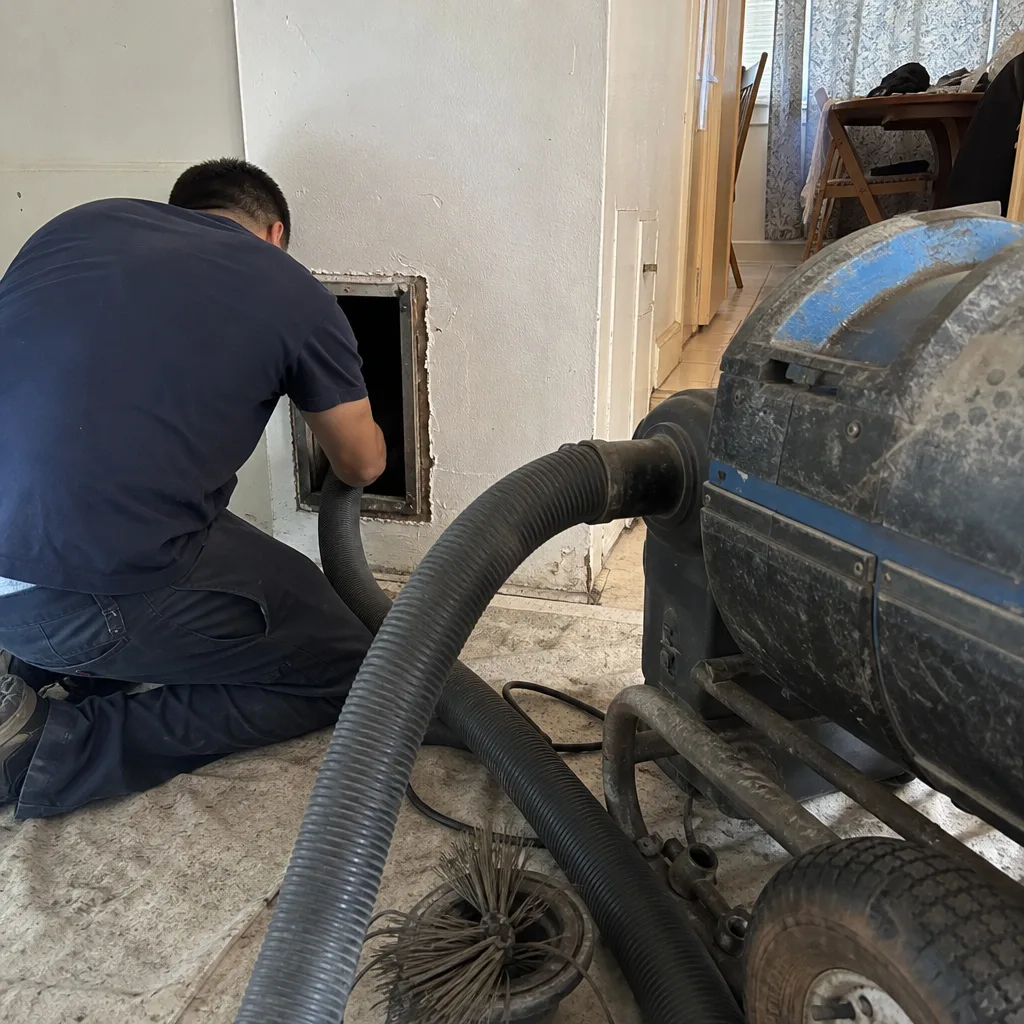 Before
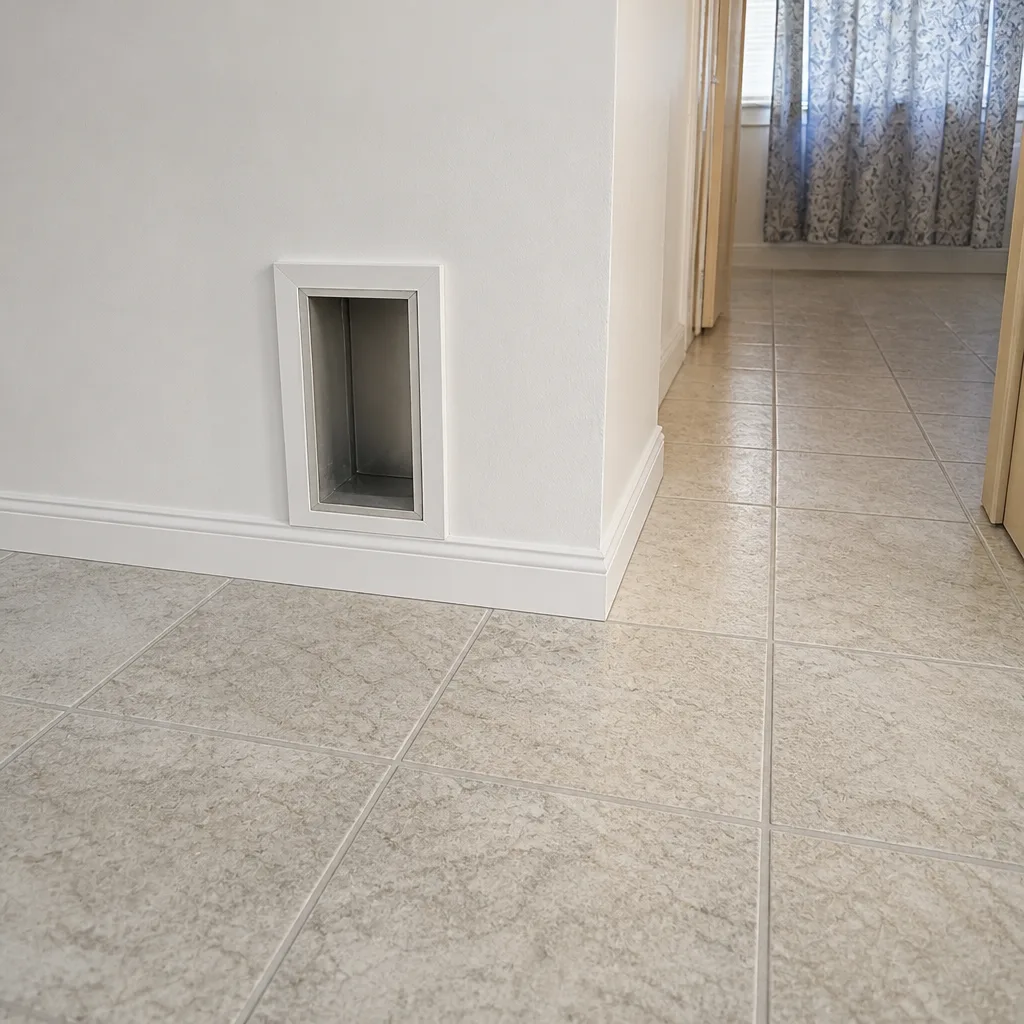 After