
Last updated November 4, 2026
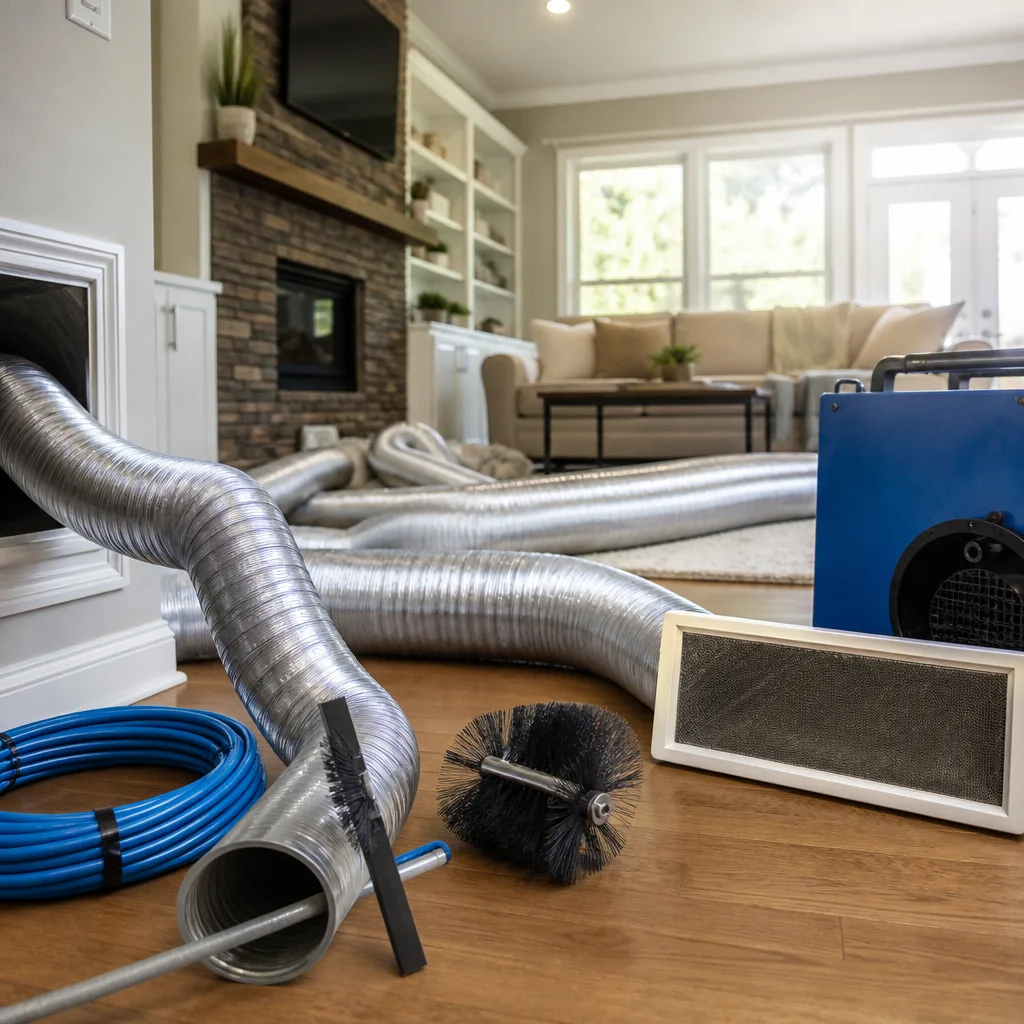 Whole-home duct cleaning
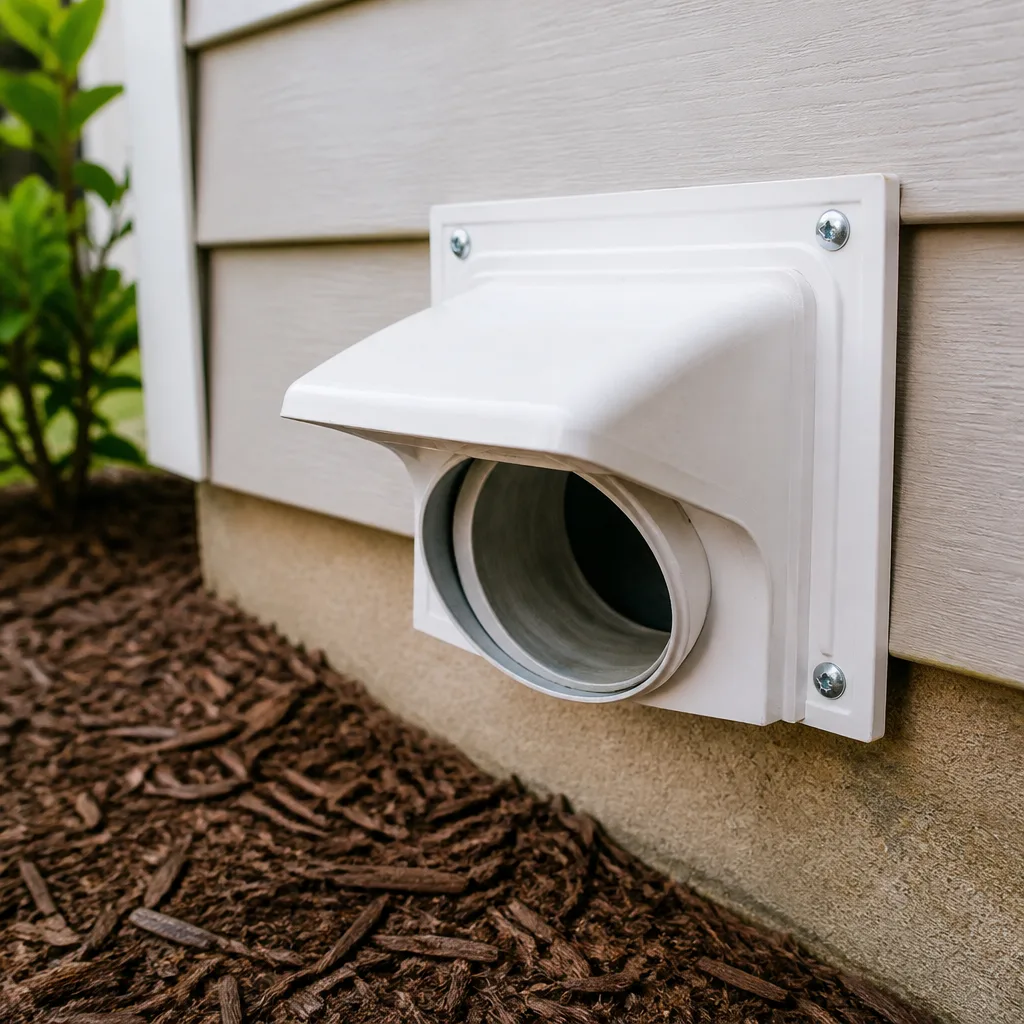 Dryer vent cleaning
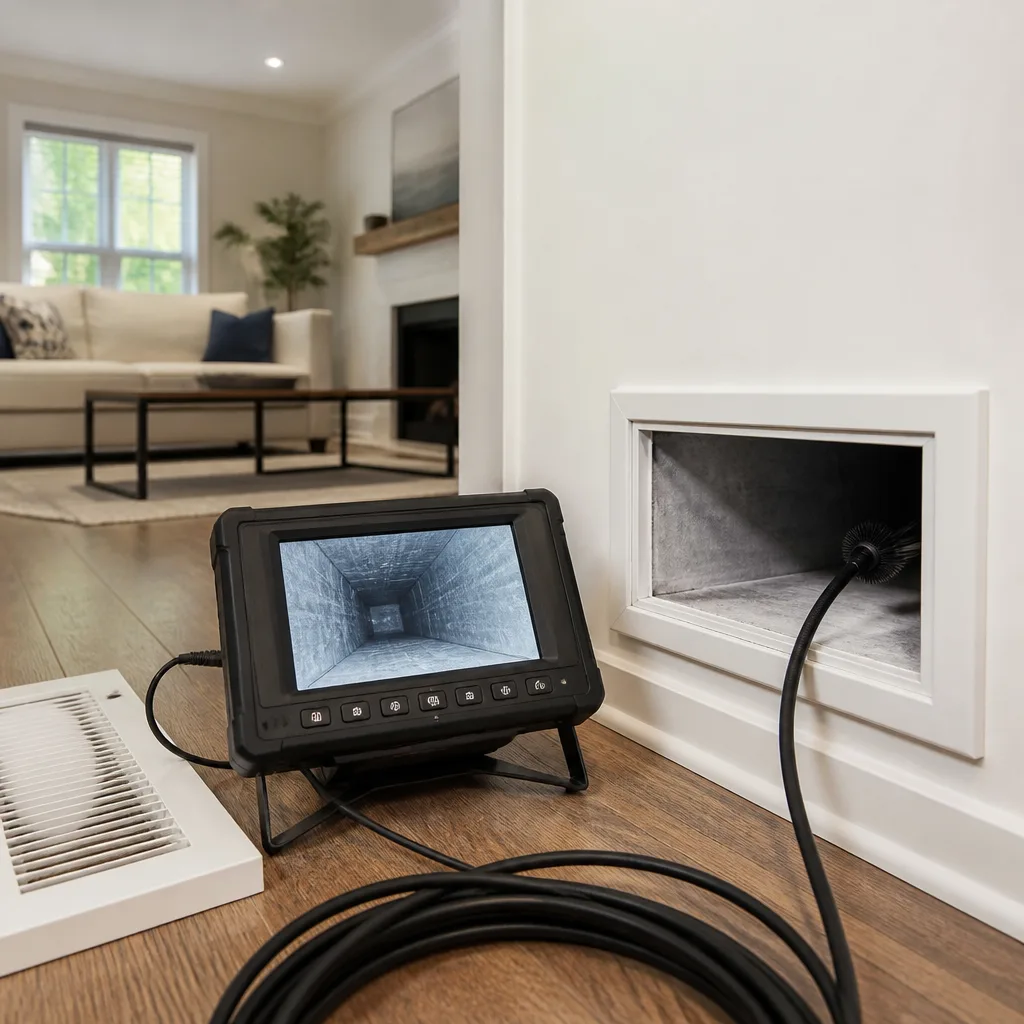 Camera inspection
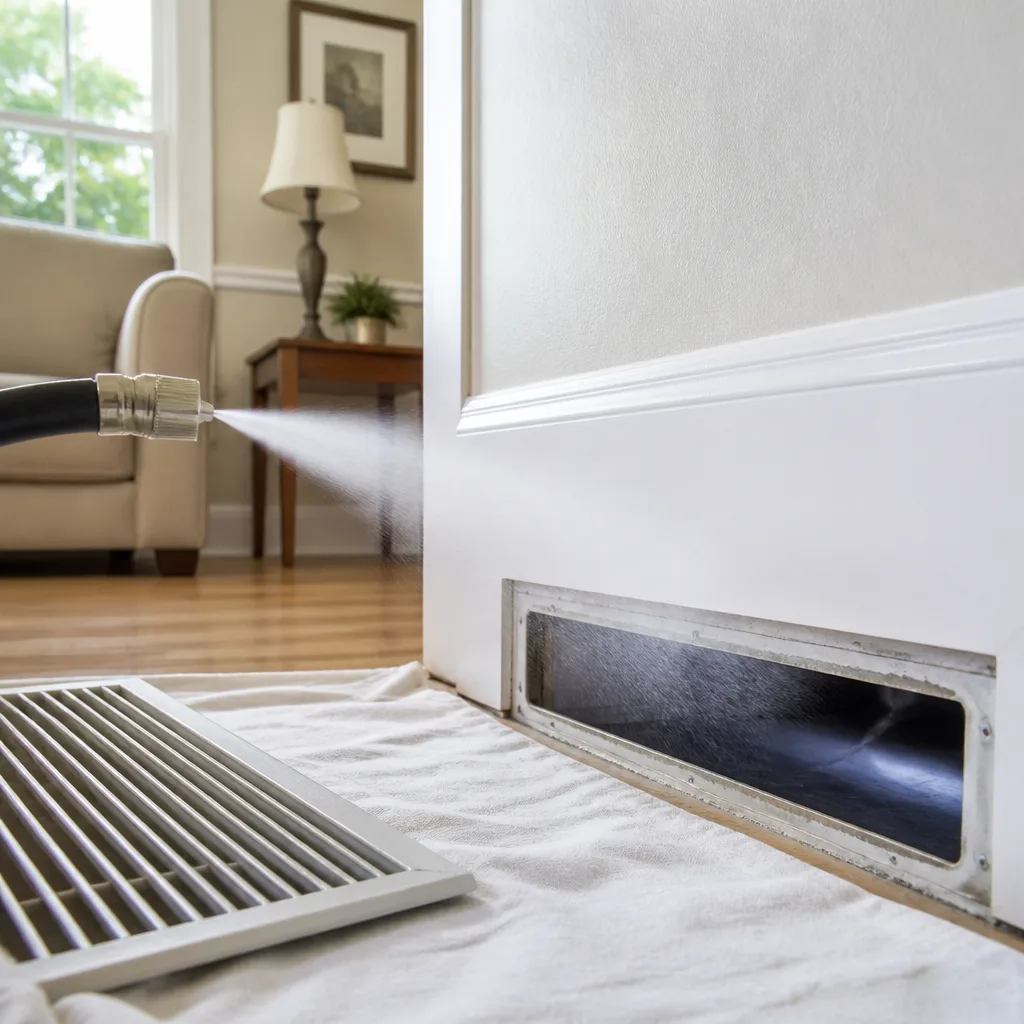 Sanitizing & deodorizing
Whole-system duct and dryer vent check with before-and-after photos - you see exactly what came out of your vents
That "$99 whole-house special" is a bait ad - the real number appears once they are in your hallway, or the "clean" is a shop-vac at the register. We photograph the inside of your ducts before and after instead.
Air Duct Cleaning Troubleshooting in Upland: Common Problems and How to Fix Them
Most homeowners in Upland call a duct company because of one of four symptoms: weak airflow from certain rooms, a smell that comes and goes with the HVAC cycle, dust that reappears days after cleaning surfaces, or allergy symptoms that spike indoors. What almost nobody realizes is that each of those symptoms points to a different mechanical failure inside the duct system, and the fixes cost very different amounts of money. Treating a static-pressure problem with a cleaning only works if the problem was actually debris, and treating a dead-animal odor with a filter change won’t touch it. This guide maps each symptom to its actual cause so you can describe your problem precisely before any technician shows up in Upland.
Quick Answer
Air duct problems in Upland fall into four diagnostic categories: airflow restrictions, odor sources, particulate infiltration, and pressure imbalances. The right fix depends on which category your symptom points to, which is why a visual inspection with a camera plus a static-pressure reading beats guessing every time. If airflow is weak in one room but fine in others, start with damper position and register obstructions before scheduling a cleaning; if the system smells musty only when the AC runs, the evaporator coil is the more likely culprit than the ducts themselves.
Styles & brands we work with
- Whole-home duct cleaning
- Dryer vent cleaning
- Camera inspection
- Sanitizing & deodorizing
Table of Contents
- The Symptom-to-Cause Diagnostic Tree
- Why Static Pressure Matters More Than Most Companies Admit
- How Upland’s Climate Creates Specific Duct Problems
- Weak Airflow: Five Causes and the Order to Check Them
- Odors from Vents: Sorting Musty from Moldy from Dead
- Visible Debris and Dust Reappearing After Cleaning
- When Cleaning Won’t Fix It: Repair, Coil, and Liner Solutions
- What to Tell a Technician Before They Quote
The Symptom-to-Cause Diagnostic Tree
Before anyone touches your ductwork, you can narrow the problem down to a category yourself. The question is not “do my ducts need cleaning?” but “which part of the system is failing, and what evidence would prove it?” Here is the diagnostic tree we use on every Upland call, and it is the same logic any competent technician should apply.
Symptom: Weak airflow from one or two rooms, but the rest of the house is fine
Most likely causes: a closed or partially closed damper, a crushed flex duct, a disconnected register boot, or a filter so loaded it is choking the whole system. The ducts may be completely clean. This is a mechanical issue first and a cleanliness issue second.
Symptom: Musty or stale odor that appears when the blower starts
Most likely causes: microbial growth on the evaporator coil, standing water in the drain pan, a dry P-trap allowing sewer gas into the return, or a dead rodent in the duct. A cleaning alone rarely solves a coil-surface problem, and no filter will remove a dead animal.
Symptom: Dust accumulating on furniture within days of wiping it down
Most likely causes: return-side duct leakage pulling attic or crawlspace air into the system, a poorly sealed filter rack that lets air bypass the filter, or deteriorated duct liner shedding fibers. The ducts may be visibly dirty, but the dirt is a symptom, not the root cause. Unless the leak is sealed, the dust will be back within weeks of any cleaning.
Symptom: Allergy flare-ups or respiratory irritation that improve when you leave the house
Most likely causes: fine particulate recirculating through a leaky return, pet dander and pollen drawn in from outside, or a filter that is doing nothing because air flows around it rather than through it. Cleaning addresses the accumulated debris; filtration and sealing prevent recurrence.
Symptom: Every room is weak, and the system runs long cycles
Most likely causes: a collapsed section of flex duct, an undersized return, a blower motor failing, or a coil so impacted with hair and dust that air simply cannot pass through. This is where static-pressure testing separates a professional diagnosis from guesswork.
The reason this tree matters is that three of the four symptoms above can exist in a system whose ducts are already reasonably clean. A technician who walks in with a vacuum and starts cleaning before asking what you are experiencing is treating his equipment list, not your house.
Why Static Pressure Matters More Than Most Companies Admit
Static pressure is the measure of resistance to airflow inside your duct system, and it is read with a manometer. Most generalist HVAC companies and almost every coupon-based duct cleaner never take this measurement, because it does not sell a cleaning. But it is the single most informative number in the whole diagnostic process.
Think of it this way: your blower is pushing air against every bend, every filter, every register, and every foot of duct. When that resistance is too high, the system works harder to move less air. The fan may be spinning fine. The filter may be brand new. But the pressure reading tells you the system is fighting itself somewhere, and a cleaning only helps if the thing it is fighting is accumulated debris. If the real problem is a crushed duct or an undersized return, a cleaning changes nothing, and the $400 to $800 is gone.
A proper static-pressure reading on a residential system in Upland should typically fall within the manufacturer’s spec for the installed blower. When the reading is high, the next step is isolating where: before the filter, after the coil, or in the branch runs. That process points to the actual repair, whether it is a filter upgrade, a duct resize, or a section of flex that needs replacing. We carry the equipment to measure this on every call, and we have seen more than a few Upland homes where the previous company had cleaned the ducts twice in three years while the real problem was a disconnected return pulling 140-degree attic air into a bedroom.
How Upland’s Climate Creates Specific Duct Problems
Upland’s climate shapes what ends up inside your ductwork. The summers are dry and long, which means fine dust and pollen stay airborne and get drawn into returns. The Santa Ana winds that move through the Inland Empire in the fall push particulate through every gap in a building envelope, and a duct system with even small return-side leaks becomes a collection point for everything the wind is carrying. Homes near the foothills above Euclid Avenue or off Campus see more of this than homes in denser central neighborhoods, but the pattern holds across the city.
What Upland does not have is the kind of persistent humidity that breeds mold inside ducts in other climates. That matters for diagnosis: if a homeowner here smells mold, the cause is almost never “humid ducts.” It is a wet coil, a plugged condensate drain, or a water intrusion point. Dry climate means dry ducts, and dry ducts mean the accumulated material inside is mostly dust, hair, skin cells, and fine particulate: exactly what a professional air duct cleaning is designed to remove.
The Santa Ana pattern also means seasonal spikes in indoor dust that are not the fault of your ductwork at all. If your windows are single-pane, if door sweeps are worn, or if the return is in a garage, outside air infiltrates constantly during wind events. Understanding this helps you set realistic expectations for what a cleaning will and will not accomplish.
Weak Airflow: Five Causes and the Order to Check Them
Weak airflow is the most common complaint that brings Upland homeowners to the phone, and it is also the symptom most frequently misdiagnosed as “dirty ducts.” Before you schedule anything, work through this sequence. It costs nothing and eliminates the cheap fixes first.
- Check the filter. Pull it out and hold it up to a light. If you cannot see the bulb through the media, it is restricting airflow across the whole system. Replace it and run the system for an hour before deciding anything else is wrong.
- Check every register and return grille. Are any painted shut? Obstructed by furniture or curtains? A single closed supply register can unbalance the whole system, but the most common culprit is a return blocked by a dresser or a pile of boxes.
- Check the dampers. Many Upland homes have manual dampers in the branch lines near the plenum. If one was closed years ago during construction and never reopened, that room will never get air no matter how clean the ducts are.
- Check the visible duct runs. In attics, flex duct gets crushed by stored boxes, stepped on by cable installers, or kinked around framing. A crushed six-inch flex reduces airflow to a fraction of its rated capacity.
- Then consider the ducts themselves. If all of the above check out, a camera inspection will show whether the restriction is internal: years of accumulated dust and hair, a collapsed liner, or debris from a renovation. This is the point where air duct cleaning becomes the right call, and not before.
The order matters because every step before the camera inspection is free and often solves the problem. A company that skips those steps and quotes a cleaning over the phone is guessing. A company that works through them with you is diagnosing.
Odors from Vents: Sorting Musty from Moldy from Dead
Odor is the symptom where guessing wrong costs the most, because the fixes range from a $25 filter change to a multi-thousand-dollar remediation job. The key is paying attention to when the smell appears and what it smells like. Three distinct odor profiles show up in Upland homes.
Musty, stale, or “dirty sock” smell when the AC runs: this almost always points to the evaporator coil, not the ducts. The coil sits in a dark, wet environment during cooling season, and organic material accumulates on its surface. When the blower pushes air across it, the smell travels through the ducts, which makes it very easy to blame the ducts. A coil cleaning is a different procedure from a duct cleaning, requires different equipment, and should be quoted separately. If a company offers to clean your ducts to fix this smell without looking at the coil, find another company.
Sharp, acrid, decomposing smell that gets stronger near one register: this is typically a dead rodent or bird in the duct run serving that room. No amount of duct cleaning fixes it; the animal has to be located and removed, and the affected section of duct or liner may need replacement. This is a time-sensitive call, and the longer the carcass sits, the more extensive the contamination.
Earthy, organic smell that is present even when the system is off: this can be a dry drain trap allowing sewer gas into the home through the condensate line, or a water leak that has saturated duct insulation or drywall nearby. The source is usually outside the ducts. A camera inspection of the condensate line and the duct interior will separate this from an actual duct-surface problem.
The takeaway: smell is directional evidence, and the direction it points is not always into the ductwork. A technician who wants to smell the system, inspect the coil, and look at the condensate pan before quoting a cleaning is doing it right.
Visible Debris and Dust Reappearing After Cleaning
You can see dust on the supply registers, or you wipe a surface and it is back in three days. The first question is where the dust is coming from, and the second is whether it is moving through the ducts or entering around them.
Debris inside supply registers is usually a sign of accumulated material in the branch ducts or at the plenum. It may be years of household dust, it may be construction debris from a renovation, or it may be deteriorating duct liner. A camera inspection shows which one it is, and a cleaning with agitation, not just vacuum, removes the first two. Deteriorating liner requires section replacement, which falls under Duct Cleaning Upland‘s repair scope, not a cleaning scope.
Dust reappearing on surfaces within days points to return-side leakage. Your return ducts run through the attic or crawlspace, and every seam and joint is a potential entry point for unfiltered air. When the system runs, the return side is under negative pressure, which means it pulls air in through those gaps along with whatever is in the attic: insulation fibers, dust, rodent droppings, you name it. That air never passes through your filter and never sees the inside of a cleaning brush. It simply enters the system after the filter and gets distributed to every room.
The fix is sealing, not cleaning. Aeroseal or mastic-sealed joints address the problem at the source. If a company cleans your ducts and never mentions the possibility of return leakage, the dust will be back, and you will be understandably frustrated with an industry that already has a credibility problem. This is why dryer vent cleaning and duct cleaning are both framed around airflow, not just appearance.
When Cleaning Won’t Fix It: Repair, Coil, and Liner Solutions
Part of being honest about duct cleaning is knowing when it will not solve the problem. A cleaning removes accumulated debris from reachable duct surfaces. It does not repair holes, it does not re-insulate, it does not clean the coil, and it does not resize an undersized return. Here are the most common situations in Upland where the actual fix is something other than a cleaning, and a homeowner should know the difference before agreeing to a scope of work.
Gaps and disconnections
A disconnected register boot or a separated section of flex duct means conditioned air is being dumped into the attic. The duct interiors may be spotless. Air duct repair addresses this at the structural level, and it is the only fix that stops the energy loss. This is the job behind the job: a camera inspection that finds a disconnection should change the entire quote, not add a line item for a cleaning that will not help.
Contaminated duct liner
Older homes in Upland may have fiberglass duct liner inside the sheet metal. When that liner degrades, it sheds fibers into the airstream and provides a rough surface for dust to cling to. Cleaning cannot restore it. The section must be replaced, and any company that tells you otherwise is selling you a recurring service call instead of a real fix.
Evaporator coil contamination
If the smell is coming from the coil (as described above), a duct cleaning will not touch it. Coil cleaning requires access to the air handler, appropriate chemical or steam cleaning, and often a drain pan treatment. It is a separate service with separate pricing, and a professional will tell you that directly.
Filter bypass
If the filter rack is loose or the filter is undersized, air flows around it. The result is a dirty blower, a dirty coil, and dust throughout the home, none of which is solved by cleaning the ducts. The filter rack needs to be corrected, and then the system can be cleaned properly. This is part of why we install Honeywell and Aprilaire filtration systems: a filter that actually seals and actually captures particulate changes the whole equation.
What to Tell a Technician Before They Quote
A precise quote requires precise information. When you call, the technician should ask you questions before quoting anything. But you can make the process faster and more accurate by having four pieces of information ready. They separate a precise job scope from a guesswork estimate.
- Which rooms are affected. Is the problem in one room, one floor, one side of the house, or everywhere? Airflow, odor, and dust complaints that are localized point to branch-line or register issues; whole-house symptoms point to the plenum, return, or coil.
- When the symptom appears. Does the smell happen only when cooling? Only when the fan first starts? Does the dust get worse after windy weather? Timing evidence narrows the source more than any other single observation.
- What the filter looks like. Pull it before the call. If it has been in place for a year and is caked, that is a clue. If it is new and the problem persists, that is a different clue entirely.
- What has already been tried. Have you had the ducts cleaned before? When, and by whom? What changed afterward? If a cleaning three years ago solved the problem temporarily and the same problem is back, the issue is likely recurrence from an unsealed leak, not a lack of cleaning.
If a technician is not interested in any of this and quotes a flat price over the phone without seeing the system or asking about symptoms, the scope is fiction. Real duct work in real Upland homes has too many variables for that to work.
Common Mistakes to Avoid
- Cleaning first and diagnosing second. If the symptom is weak airflow from one room and the real cause is a crushed flex duct, a cleaning does nothing. The diagnostic steps cost nothing and should always come first.
- Assuming a smell is always in the ducts. The evaporator coil, the condensate drain, and even the sewer line can produce odors that travel through the vents. A camera inspection of the ducts and a look at the coil settles it.
- Accepting a quote without seeing the equipment. Professional air duct cleaning requires professional air duct cleaning tools, like Rotobrush or Nikro systems that agitate and remove debris, not a shop-vac with a long hose. You can see the difference in our equipment when we arrive, and that difference is the job actually getting done.
- Ignoring return-side leaks. The negative-pressure side of the system is invisible and frequently the source of the dust you are seeing. Any thorough inspection includes the return runs, not just the supplies.
- Treating visible register dust as proof of dirty ducts. Register dust can originate upstream at the coil, in the liner, or in the return. Seeing it is an invitation to investigate, not a reason to hire the nearest cleaner.
- Believing a cleaning prevents all future dust. No cleaning stops Santa Ana winds from pushing particulate through a building envelope. Sealing, filtration, and realistic expectations are part of the picture.
See the difference
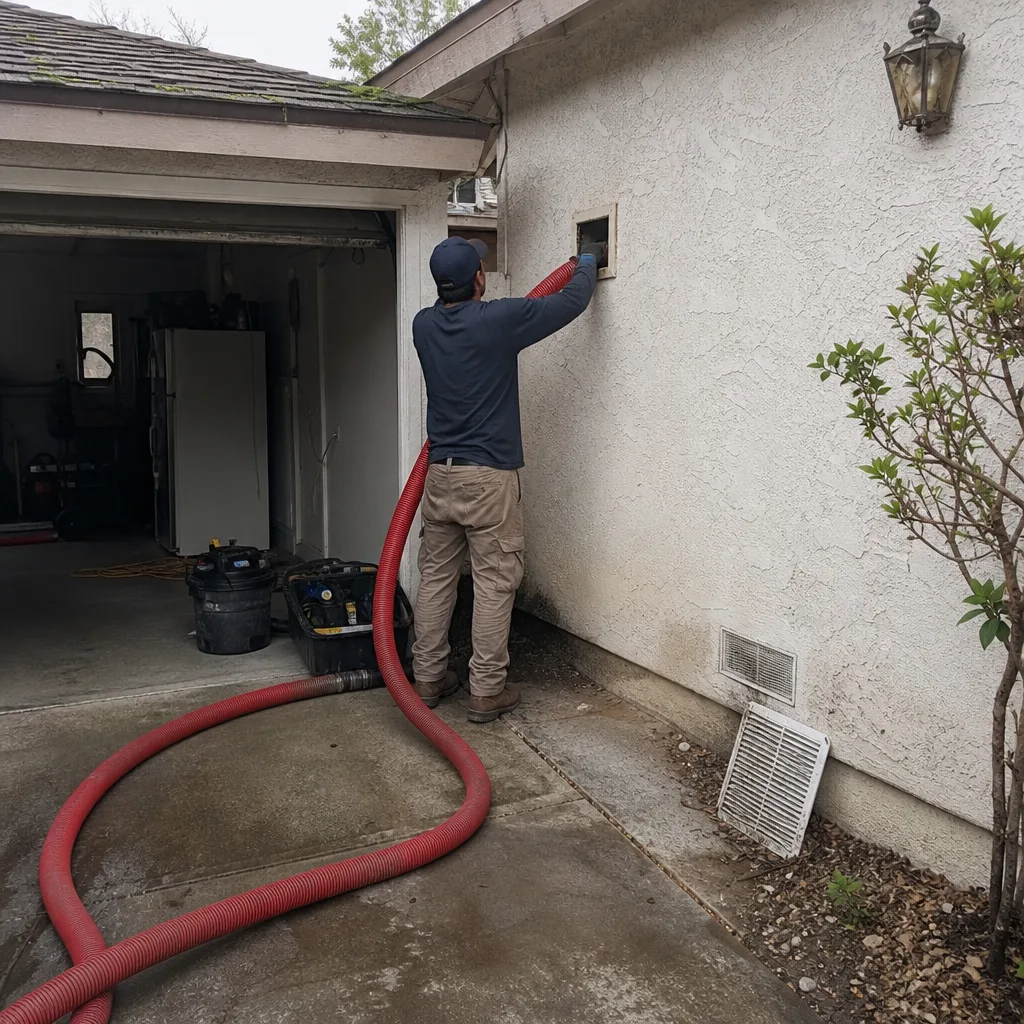 Before
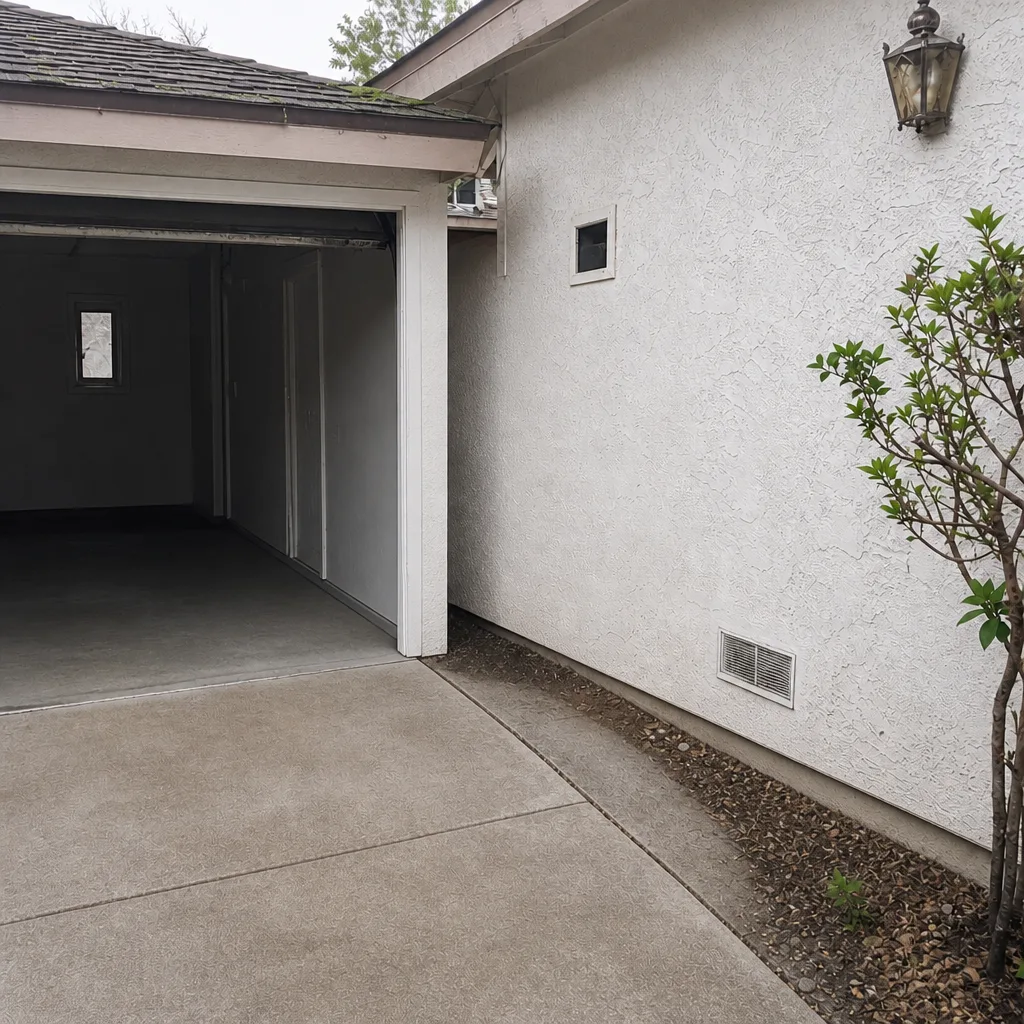 After
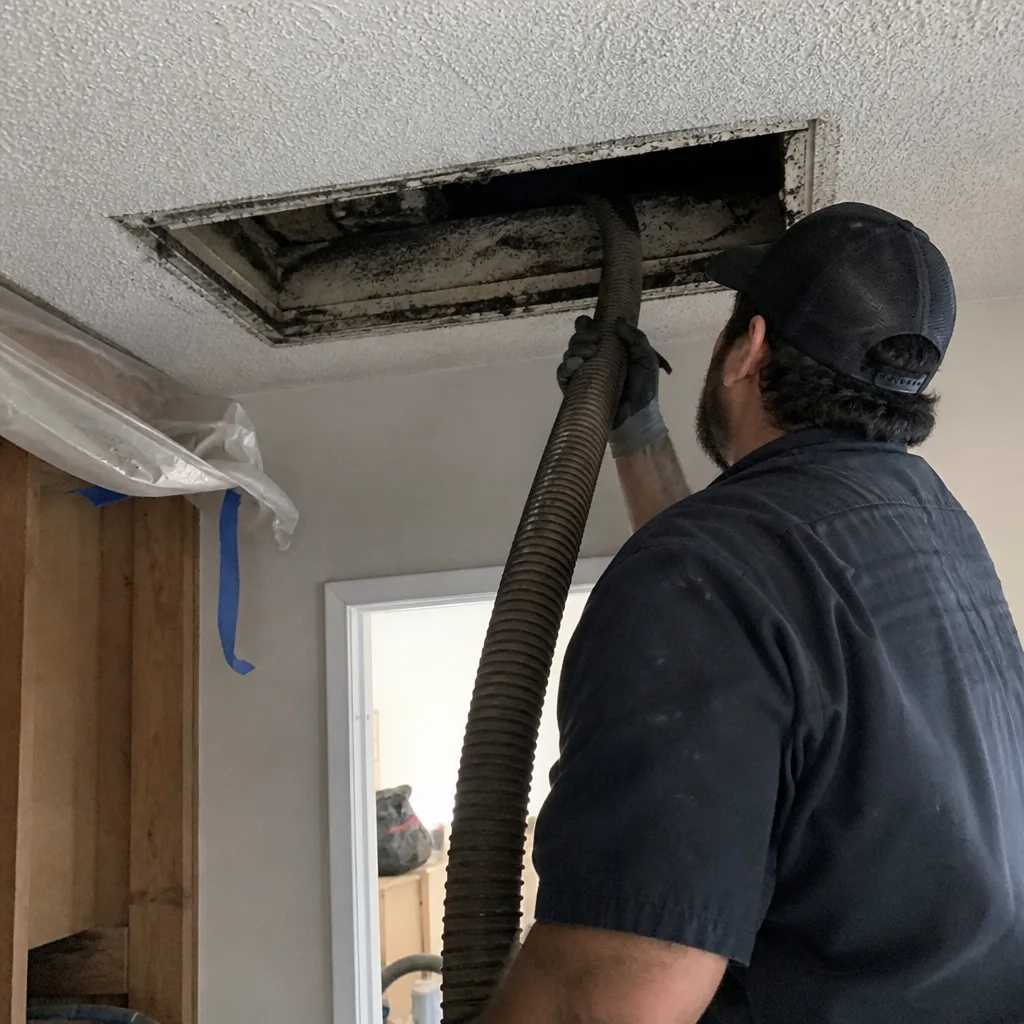 Before
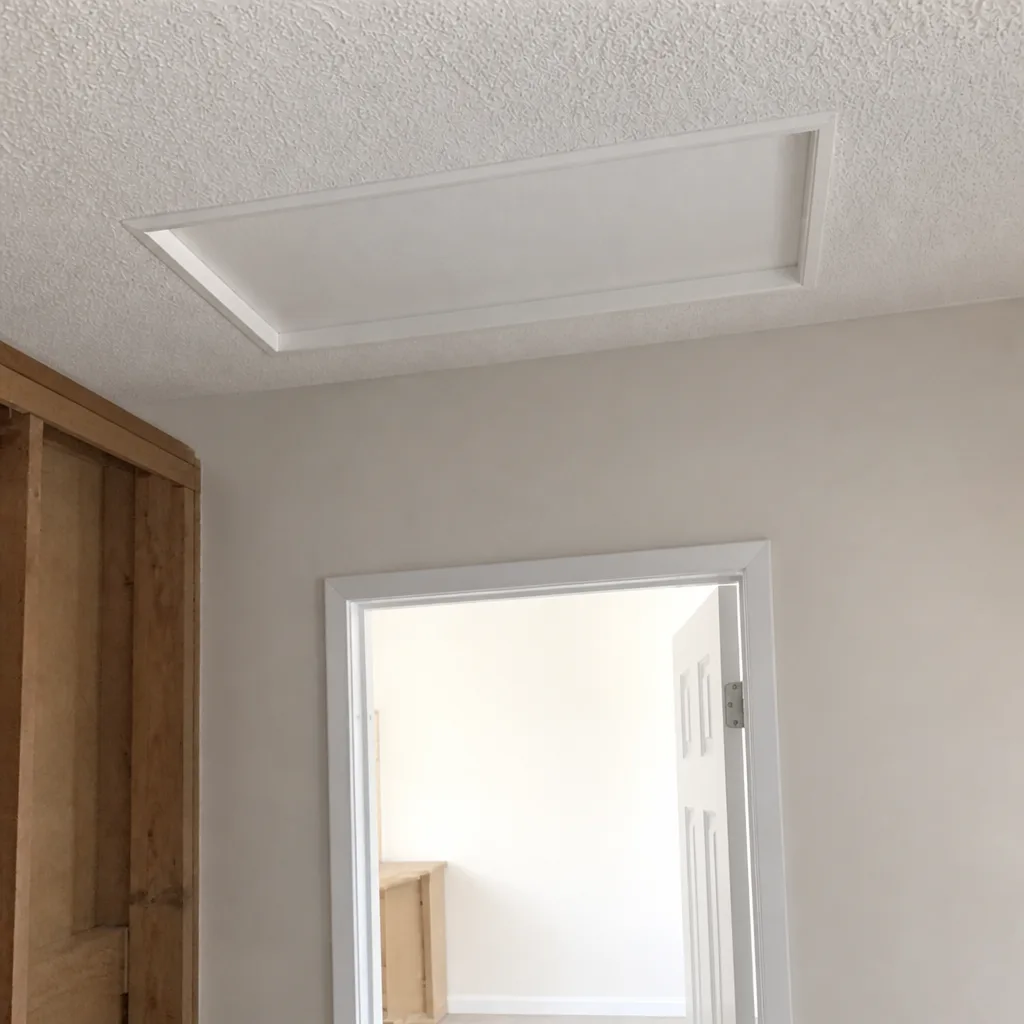 After
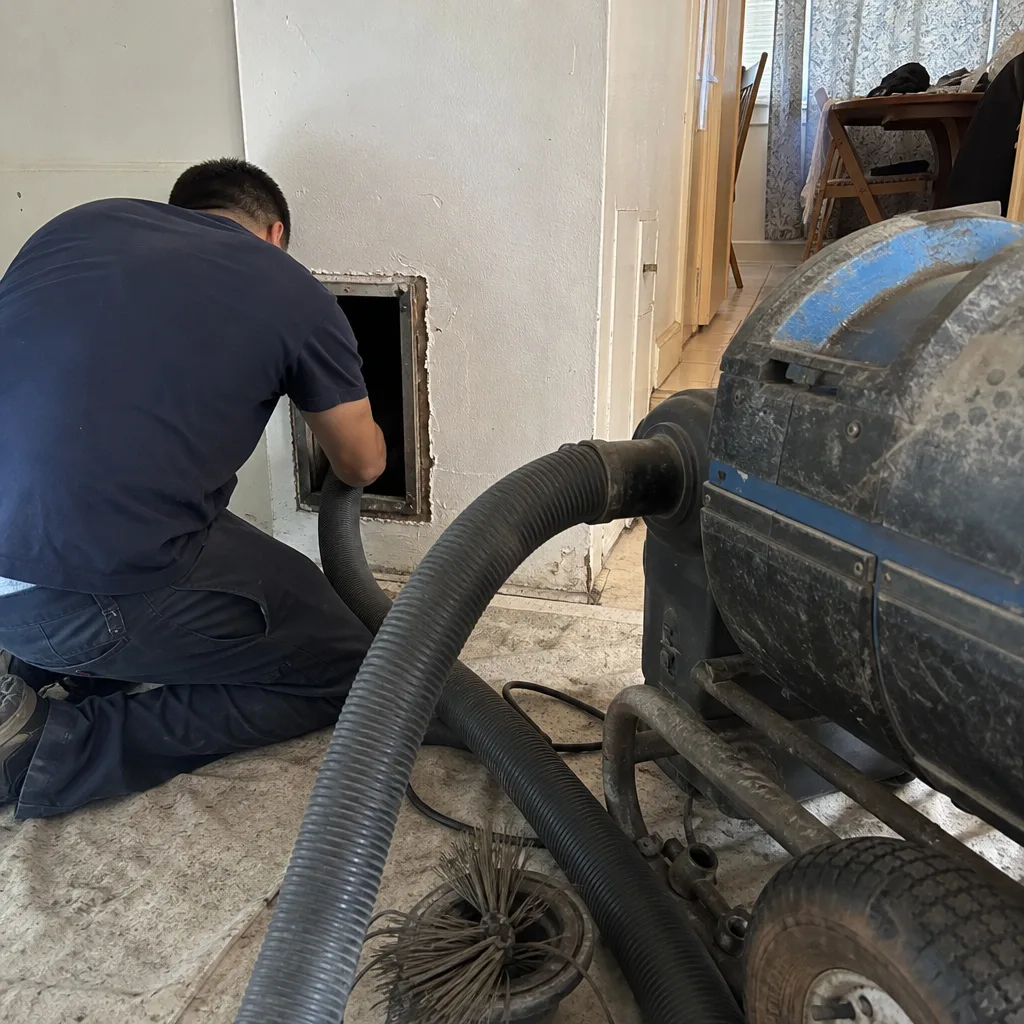 Before
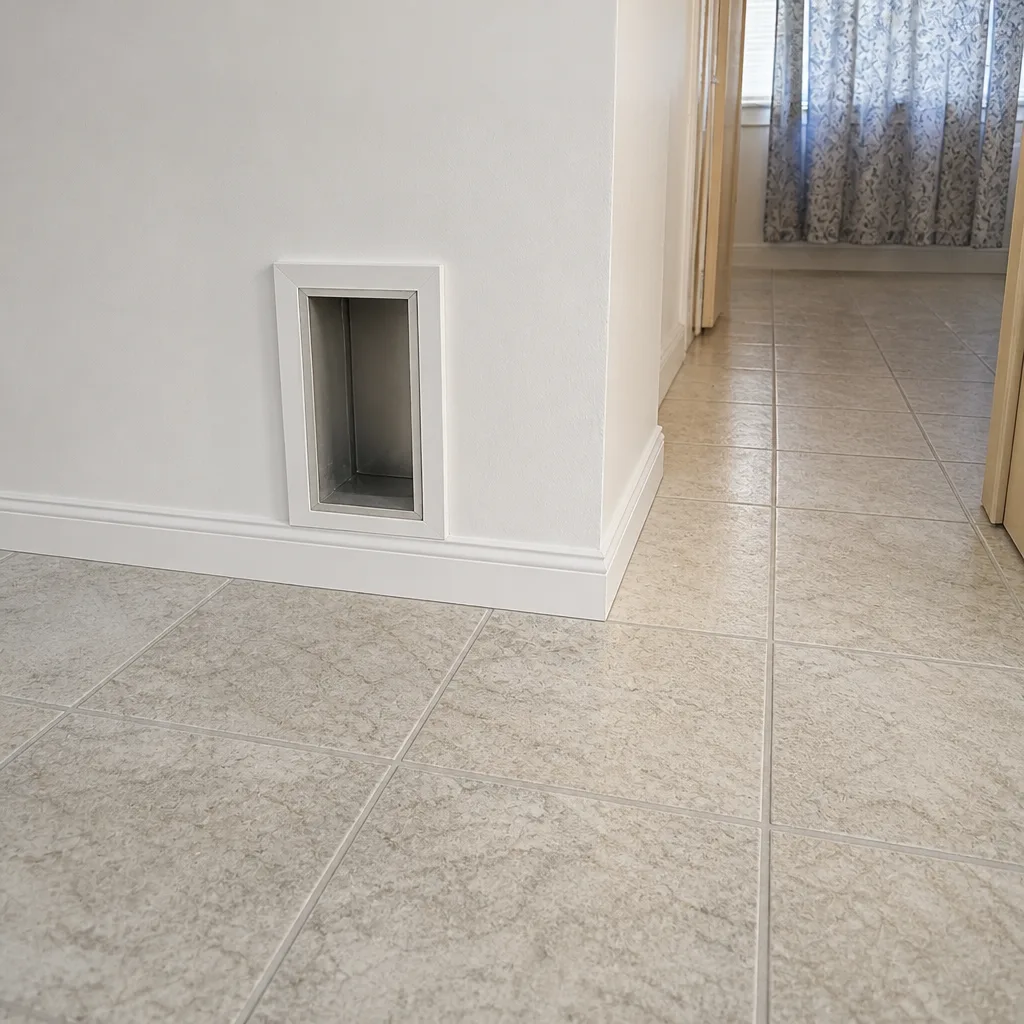 After
When to Call a Professional
You should call when the symptom persists after basic checks, when the odor is clearly organic or decomposing, when dust returns within weeks of cleaning, or when you cannot identify the cause of weak airflow after walking through the steps above. You should also call if you have simply never had the ducts inspected and the home is more than a decade old; buildup does not always announce itself. Duct Cleaning Upland offers free estimates in Upland. Call (855) 382-4830. We answer 24/7. Fast dispatch from 7am to 7pm, Sunday through Friday.
Frequently Asked Questions
Expect to pay based on the size of the home, the number of returns, and the accessibility of the ductwork, with most residential jobs in Upland falling between $400 and $900 when quoted properly. The written estimate sets the final price, and it should be based on an inspection, not a phone pitch. Call (855) 382-4830 for an exact quote. Estimates are free.
Cheap quotes almost always describe a different service: a quick vacuum-out with consumer-grade equipment, no agitation, no camera inspection, no sealing, and no attention to the return side. The Rotobrush and Nikro systems we run are built for commercial and remediation work, and the difference is not cosmetic. If a price seems too good to be true for a whole-house cleaning in Upland, compare the equipment list before you compare the number.
Ask for before-and-after photos of the duct interiors from the camera inspection. A professional can provide them, and you should expect to see the same sections of duct before the cleaning and after it. If a company cannot show you the before and after, you have no way to verify what happened inside your walls. We photograph every job as a matter of practice.
Most homes in Upland need a thorough cleaning every three to five years, less often if the system is sealed and the filtration is good, more often if there are pets, recent renovations, or a history of return leakage. Anyone telling you it should be done annually without seeing your system is selling a subscription, not a service.
Yes, if the system is recirculating fine particulate through a bypassed filter or a leaky return. But the fix is often filtration and sealing as much as cleaning. This is why we install and service Honeywell and Aprilaire whole-home filtration: cleaning removes what is already there, and a proper filter keeps it from coming back.
Cleaning removes accumulated debris from the inside surfaces of the ducts. Repair fixes the structural problems: gaps, disconnections, crushed sections, deteriorated liner, and leaking seams. Many Upland homes need both, but they are separate scopes of work with separate pricing. A camera inspection tells you which one applies. Call (855) 382-4830 and tell us the symptom; we will tell you which scope fits.
The Bottom Line
Duct problems in Upland are diagnosable, and the diagnosis should drive the quote. Weak airflow, odors, dust, and allergy symptoms each point to different mechanical causes, and the steps in this guide let you narrow those causes before anyone arrives with a vacuum. Static pressure, return-side inspection, and camera work separate a real cleaning from a guesswork estimate, and honest companies build their scopes around what those diagnostics reveal. If the answer is cleaning, expect commercial-grade equipment and before-and-after proof. If the answer is repair, coil service, or filtration, expect to be told that directly. Clean ducts and a plan to keep them clean is the whole point, and that plan starts with finding the actual problem.
Written by the team at Duct Cleaning Upland, serving Upland since 2012.