
Last updated November 4, 2026
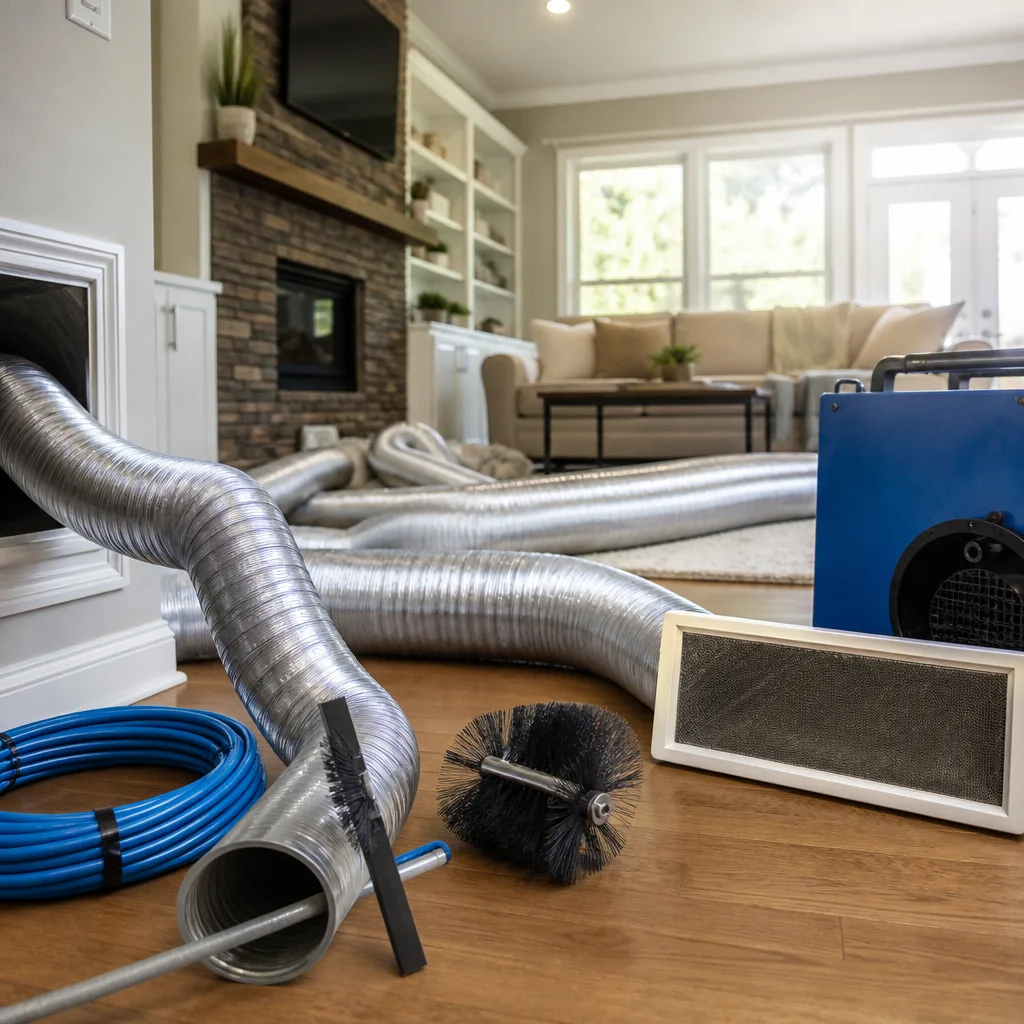 Whole-home duct cleaning
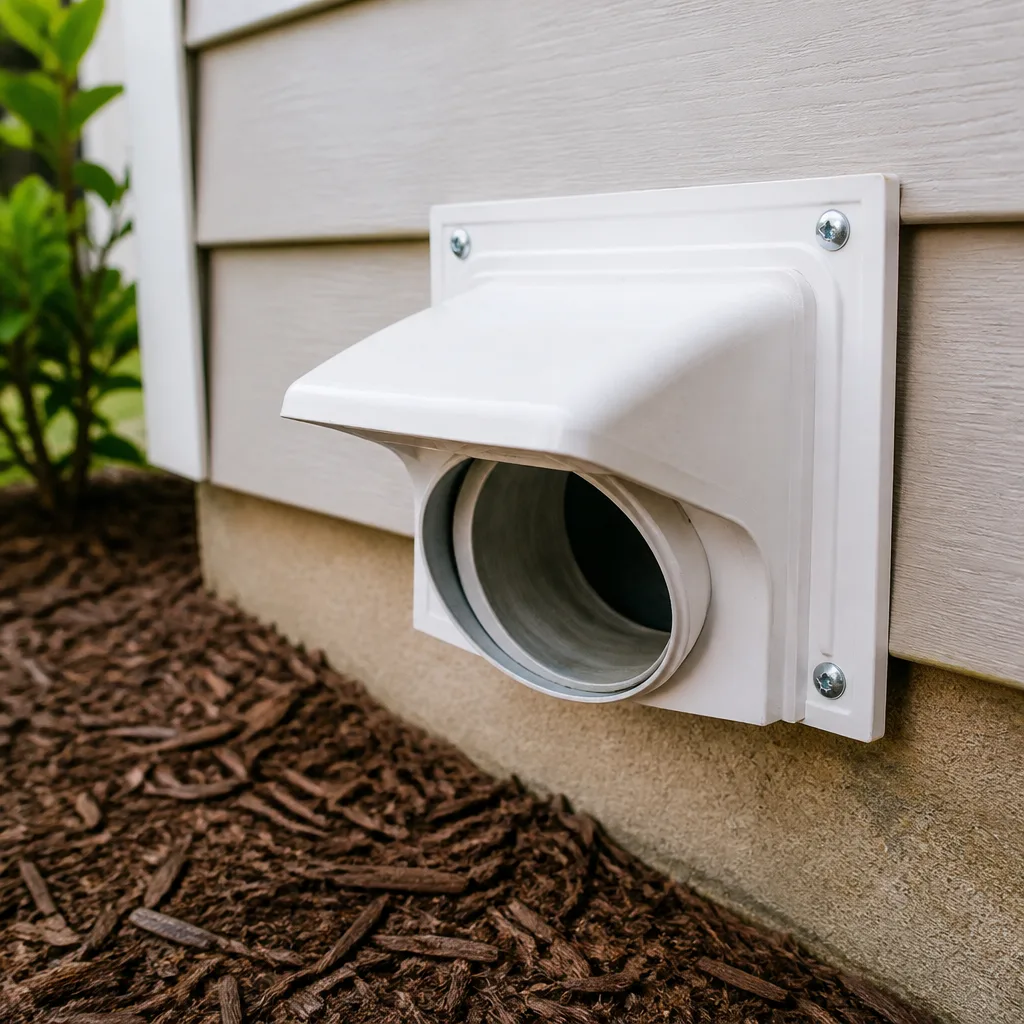 Dryer vent cleaning
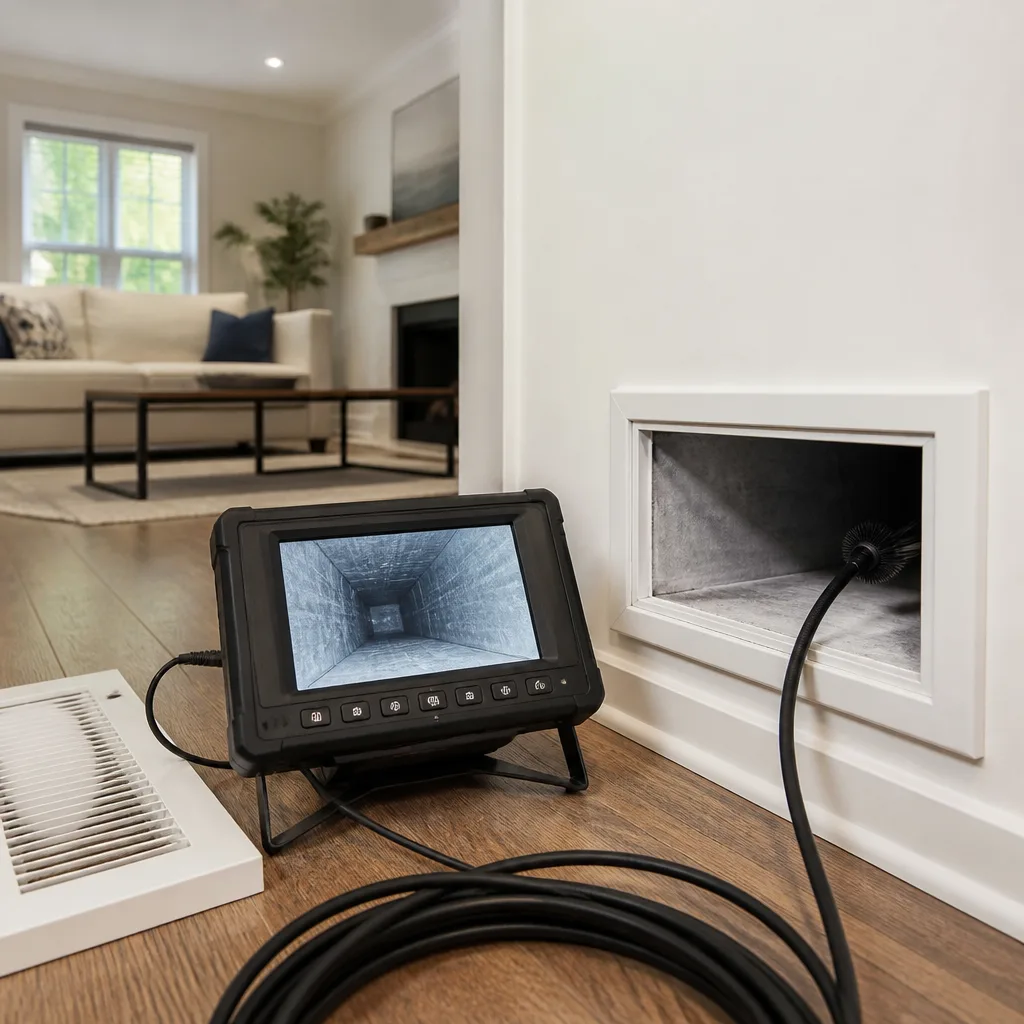 Camera inspection
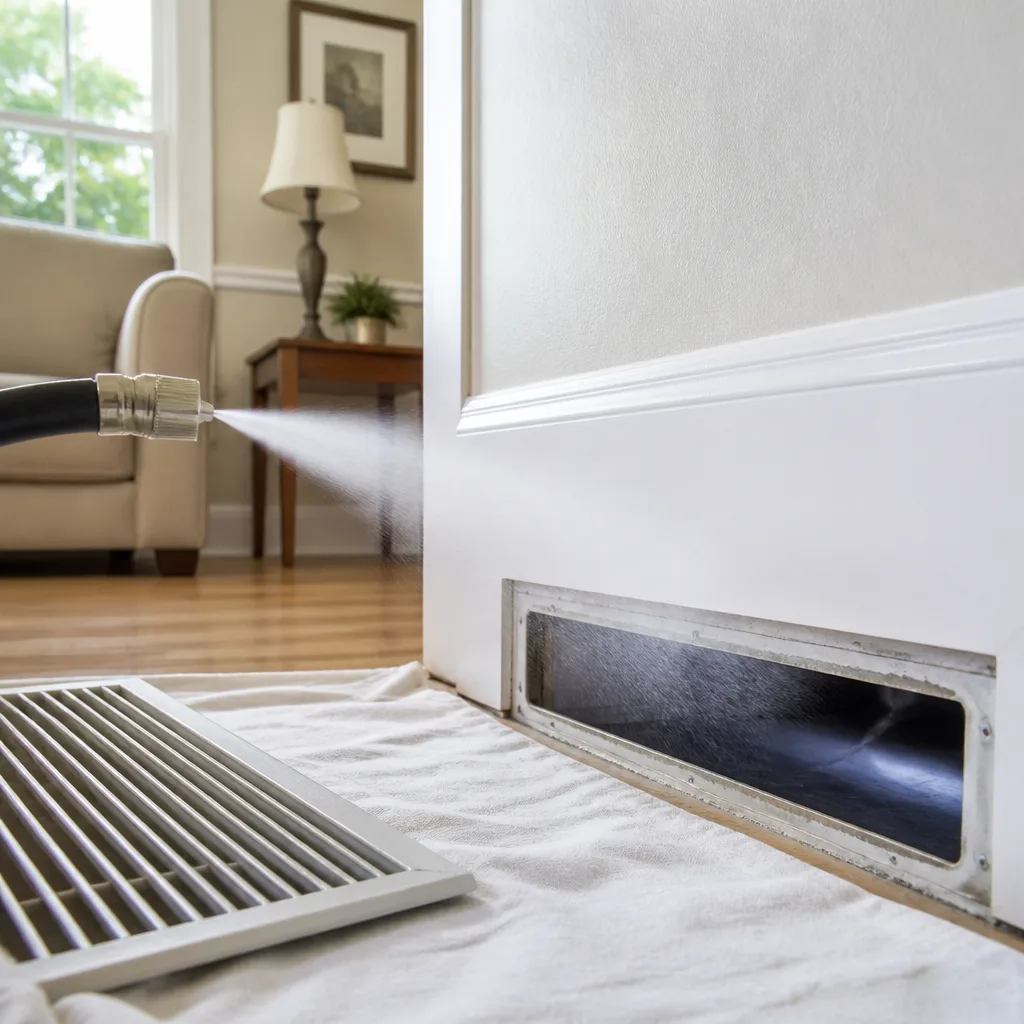 Sanitizing & deodorizing
Whole-system duct and dryer vent check with before-and-after photos - you see exactly what came out of your vents
That "$99 whole-house special" is a bait ad - the real number appears once they are in your hallway, or the "clean" is a shop-vac at the register. We photograph the inside of your ducts before and after instead.
Air Duct Cleaning Permits, Codes & Inspections in Upland, CA: What You Need to Know
Most homeowners in Upland assume that if a contractor is standing in their living room with a vacuum hose, they’ve cleared every legal hurdle. That assumption is how people end up with unpermitted duct modifications, voided insurance claims, and remediation bills they never saw coming. The truth is more nuanced: the cleaning itself rarely triggers a permit, but the moment a technician reaches for a screwdriver to remove a section of duct, cut an access panel, or “fix that gap while we’re here,” you’ve crossed into territory governed by the California Contractors State License Board, San Bernardino County building codes, and possibly your HOA’s governing documents. This guide walks you through exactly where those lines are drawn so you can hire with confidence and know when to stop a job that’s going sideways.
Quick Answer
Air duct cleaning itself does not require a permit in Upland, CA, and the state of California does not require a contractor’s license to perform cleaning-only work. However, any repair, replacement, modification, or new access panel involving your ductwork, air handler, or HVAC system does require a C-20 Warm-Air Heating, Ventilating and Air-Conditioning Contractor license, and structural modifications like cutting into walls or ceilings may require a building permit from San Bernardino County. The practical takeaway: verify your contractor’s license class before they touch anything beyond cleaning, and if mold is discovered, a different set of rules applies under California Health & Safety Code.
Styles & brands we work with
- Whole-home duct cleaning
- Dryer vent cleaning
- Camera inspection
- Sanitizing & deodorizing
Table of Contents
- California CSLB Licensing: What Cleaning Does and Doesn’t Require
- When San Bernardino County Permits Actually Apply
- How to Verify a C-20 License in 60 Seconds
- Mold Discovery: The California Disclosure Line You Can’t Ignore
- HOA Rules in Upland’s Planned Communities
- Access Panels and Air Handler Work: The Permit Trigger Most People Miss
- Common Mistakes to Avoid
- When to Call a Professional
- Frequently Asked Questions
- The Bottom Line
California CSLB Licensing: What Cleaning Does and Doesn’t Require
Here’s the foundational distinction that drives everything else: under California law, air duct cleaning is classified as a maintenance activity, not a construction trade. The Contractors State License Board (CSLB) does not issue a license class for “duct cleaner,” and no license is required to push a rotating brush through a duct run, apply negative air pressure, or vacuum out debris. This is why you’ll see companies advertising duct cleaning with no license number on their truck, and in many cases, that’s entirely legal.
But the moment the scope shifts from cleaning to repair, the legal ground changes completely. Replacing a damaged section of flex duct, sealing a disconnected joint with mastic, fabricating a new sheet-metal transition, or touching the air handler cabinet in any way that affects airflow are all activities the CSLB explicitly assigns to the C-20 classification: Warm-Air Heating, Ventilating and Air-Conditioning Contractor. That classification covers “the fabrication, installation, repair, and alteration of warm-air heating, ventilating, and air-conditioning systems,” which is a far broader scope than most homeowners realize.
In our experience, the confusion compounds because many cleaning companies do have some license, just not the right one for the repair work they sometimes perform. A general building contractor (B) license does not authorize HVAC modifications. A C-36 plumbing license doesn’t either. Only a C-20 covers the mechanical work on your duct system. If a cleaning technician finds a collapsed flex duct section and offers to “fix it while they’re in there,” and that tech is working under the company’s owner who holds only a B or C-36 license, the work is being performed illegally. That’s not an abstraction: it’s the difference between work that’s insured and work that leaves you holding the liability if the repair fails or, worse, contributes to a fire or indoor air quality problem.
Upland homeowners should ask one precise question before any work begins: “Does your company hold a C-20 license, and is the person doing the repair working under that license?” If the answer is no, the correct response is to let them clean and decline the repair. A legitimate operation will tell you the same thing.
When San Bernardino County Permits Actually Apply
Building permits are a separate layer from contractor licensing, and they’re triggered by physical changes to the structure, not by the act of cleaning. San Bernardino County, which has jurisdiction over Upland, issues building permits through its Land Use Services Department, and the county’s building code adopts the California Building Standards Code (Title 24). Here’s what that means in practice for a duct cleaning job.
Cleaning your existing ducts requires no building permit. Running a cable with a brush, a vacuum collection unit, and an air compressor through your registers is not construction. The ducts are not being altered, the air handler is not being moved, and no structural element of the home is being touched. This is true whether your home is a 1960s ranch in the Upland foothills or a newer build in one of the master-planned communities along the 210 corridor.
Permits enter the picture when the job involves what the county calls “alteration of a mechanical system.” That includes:
- Cutting a new access panel into a wall, ceiling, or chase to reach ductwork that isn’t accessible from the attic or crawlspace. This is structural modification, not cleaning.
- Modifying the air handler cabinet to attach new duct connections, change the return configuration, or install a media filter housing.
- Replacing more than a single section of duct where the work alters the system’s design, static pressure, or airflow balance.
- Any change to the combustion venting of a gas furnace, which is both a mechanical and a life-safety issue.
The practical test we tell customers is simple: if the work involves cutting, fabricating, modifying, or replacing anything other than the contaminants being removed from inside the existing ducts, ask whether a permit is needed. A good rule of thumb is that any job requiring a drywall patch afterward probably needed a permit before it started.
Upland’s housing stock matters here. Many homes in the older neighborhoods north of Foothill Boulevard have original ducts from the 1960s and 1970s, often with interior dimensions that don’t match modern filter sizes or airflow requirements. That doesn’t mean the ducts need replacing, but it does mean that when a homeowner is told “your ducts are too small and need to be redone,” that conversation should immediately shift to permit requirements, not just a handshake and a deposit.
How to Verify a C-20 License in 60 Seconds
The CSLB maintains a free, public license lookup tool that takes about a minute to use and tells you more about a contractor than any yelp review or truck decal ever will. Here’s the exact process for anyone in Upland who wants to verify before work starts.
- Go to the CSLB website and open the “Check a License” tool. You do not need an account or a login.
- Enter the contractor’s license number if you have it, or search by business name or individual name if you don’t. The database covers every licensed contractor in California.
- Look at the “Classification” field. You are looking for “C-20 – Warm-Air Heating, Ventilating and Air-Conditioning.” A B, C-36, C-39, or any other classification does not authorize duct repair or modification work.
- Check the license status. It should say “Active.” Anything else means the contractor cannot legally work in California this month.
- Check the “Workers’ Comp” field if the company has employees. A company doing mechanical work with employees and no workers’ comp coverage is a red flag, because an injured worker on your property can become your liability.
- Verify the personnel name on the license matches the person who will actually be on your job. Many companies front a licensed qualifier who never steps foot on a job site while unlicensed crews do the work.
Here’s the scenario we hear about more than any other from Upland homeowners: a company markets itself as a “full-service HVAC and duct cleaning” operation. The cleaning is performed by technicians, and if a repair comes up, the homeowner assumes the company is licensed to do it. When the homeowner runs the CSLB lookup, they find the company holds a general building license and a C-20, but the C-20 was added three years after the company started advertising HVAC repair work. Or they find the license is held in the owner’s name, but the owner has never been to the property and the person doing the work is a subcontractor with his own arrangement, which may or may not be legal under CSLB rules about subcontractor disclosure.
The verification takes one minute. The consequences of not verifying can take years to sort out.
Mold Discovery: The California Disclosure Line You Can’t Ignore
Mold is the topic that separates professional duct cleaners from everyone else with a truck and a ladder. Here’s the California-specific framework: mold remediation is not the same as mold cleaning, and the distinction has legal force under California Health & Safety Code Section 17920 and the associated standards the state recognizes for mold assessment and remediation.
The relevant standard in California is the IICRC S520, the reference document for professional mold remediation. IICRC stands for the Institute of Inspection, Cleaning and Restoration Certification, and it defines the difference between “cleaning” (which anyone can do) and “remediation” (which involves containment, negative air pressure, waste disposal protocols, and clearance verification). Once mold is visible on a surface inside your ducts, on the coil, or inside the air handler cabinet, and the affected area exceeds what the S520 standard treats as a small, contained condition, the job shifts from HVAC cleaning to mold remediation, and that work should be performed by an IICRC-certified remediator.
Here’s the part most homeowners in Upland never hear: a duct cleaning company that discovers mold during a cleaning has a disclosure obligation. They cannot simply “wipe it down and move on” and they cannot ignore it. The ethical and legal standard is to stop the work, tell the homeowner what was found and where, and recommend an assessment by a qualified mold professional. If the cleaning company is also a licensed remediator with the right certifications, they can quote the remediation work. If they are not, they should tell the homeowner to call someone who is.
We carry Abatement Technologies equipment for a reason. Abatement Technologies is the standard for containment and negative-air pressure in serious indoor air quality remediation work, which is the same category of equipment an IICRC remediator uses when mold is present. It is not consumer-grade equipment, and the capability matters because negative air pressure is what keeps mold spores from leaving the work area and settling into the rest of your home while the remediation is in progress. The distinction between “cleaning” and “remediation” isn’t semantic: it’s a containment issue that affects whether a mold problem gets solved or spread.
For Upland homeowners, the disclosure rule is worth understanding before you book. If a company finds mold and tells you nothing, you have a problem. If they find mold and immediately try to sell you a “mold treatment” without discussing containment, you have a bigger problem. The right conversation includes the words “IICRC,” “containment,” and “clearance testing.” If you don’t hear those, you’re talking to someone who isn’t equipped for the job they just found.
See the difference
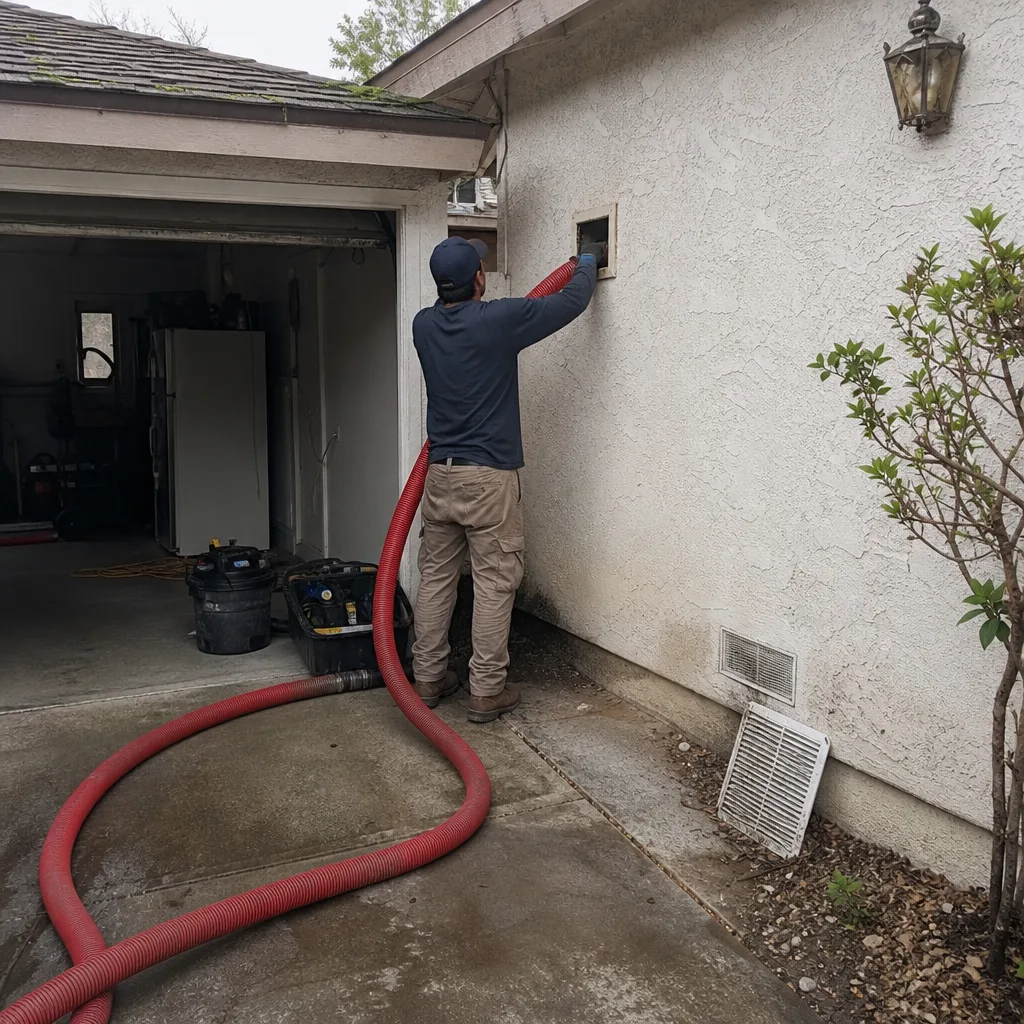 Before
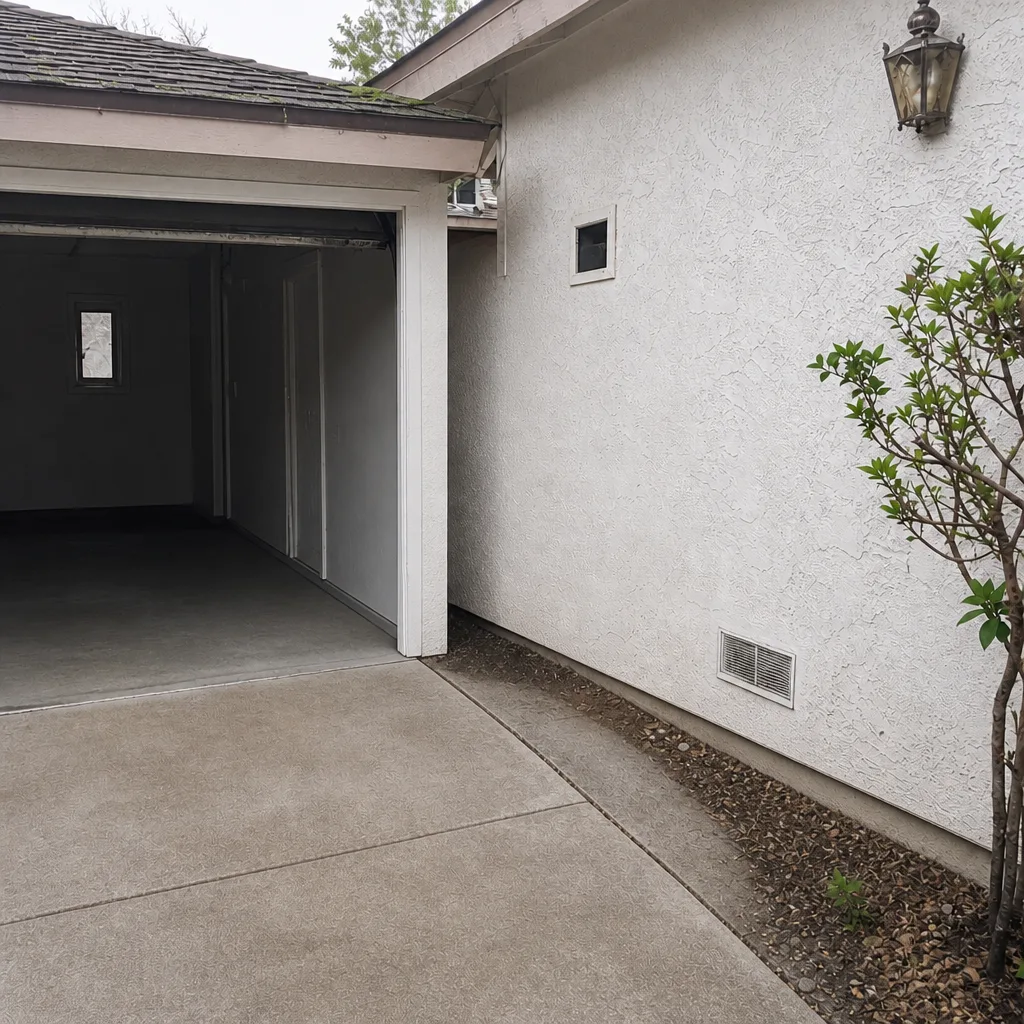 After
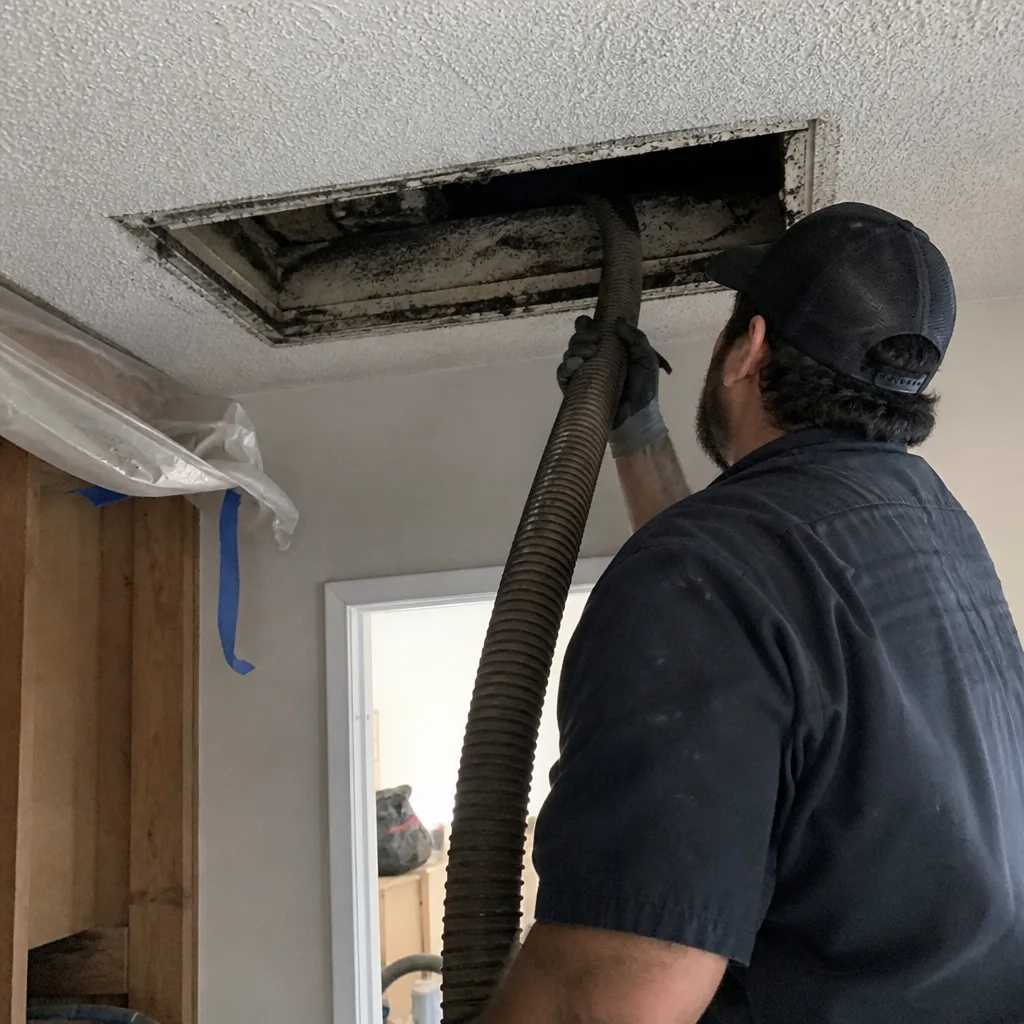 Before
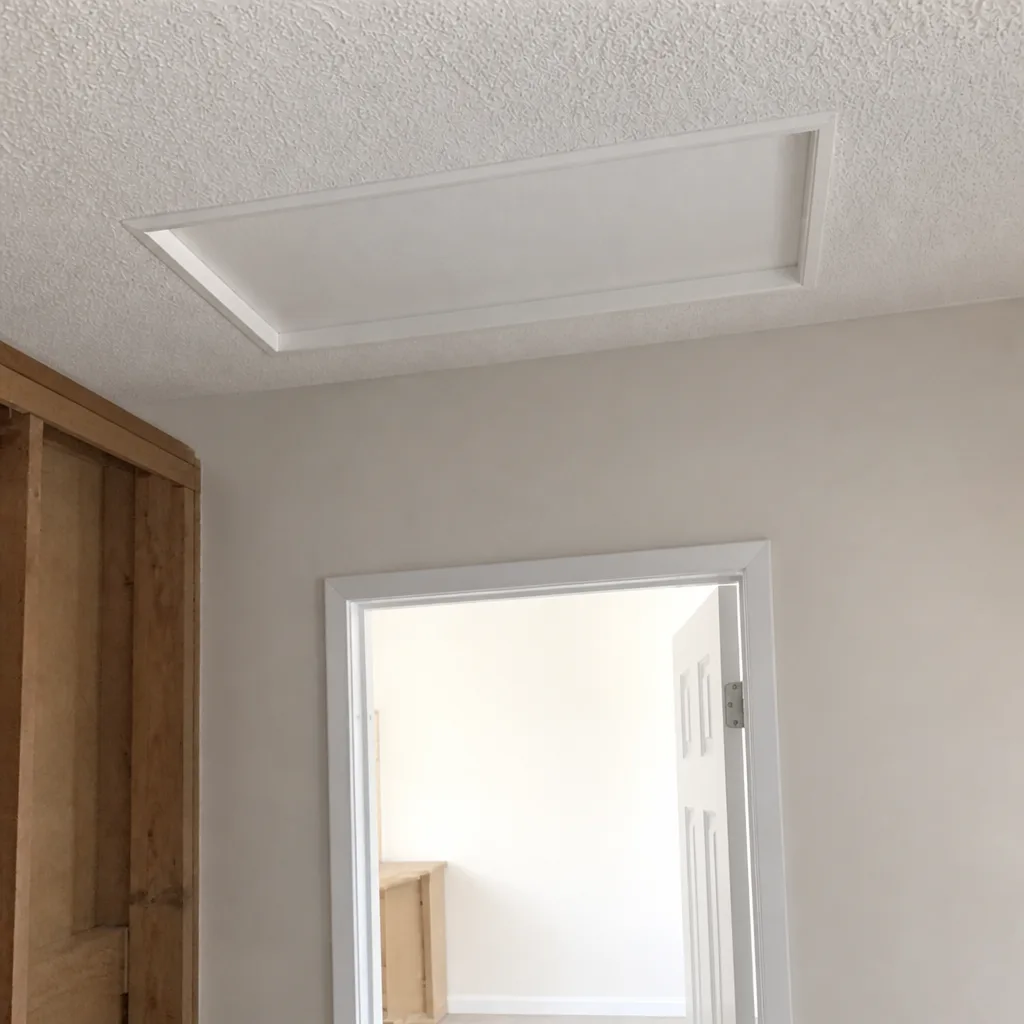 After
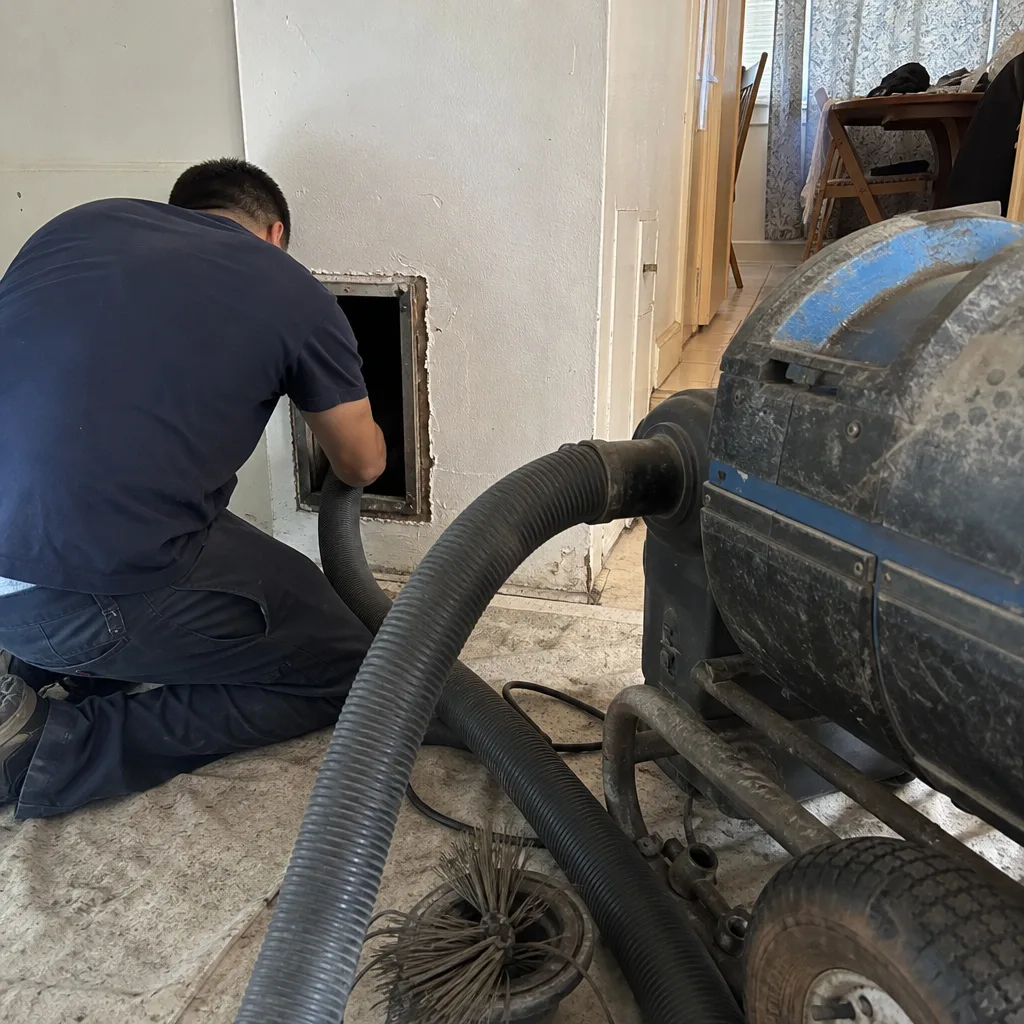 Before
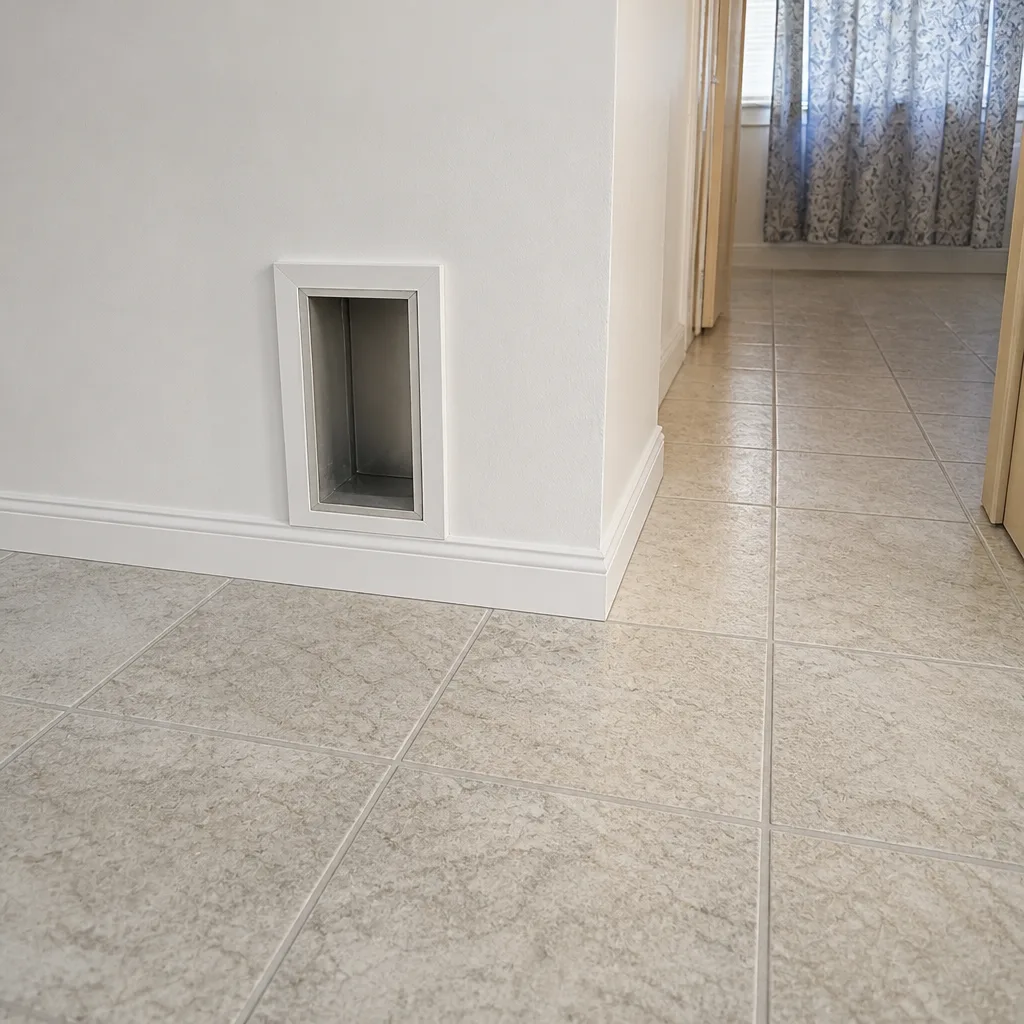 After
HOA Rules in Upland’s Planned Communities
Upland has a significant number of planned communities with active homeowners associations, and some of their CC&Rs affect how a duct cleaning job can be set up on your property. This is not about permits, but it can stop a job even when the work is fully legal and permitted.
The two areas where HOAs typically get involved:
- Exterior equipment placement. Some air duct cleaning methods require the vacuum collection unit to be placed on the driveway, in the yard, or even on the roof. A truck-mounted unit stays in the vehicle, but a portable collection unit like the kind we run with our air duct cleaning service can be placed in a driveway or on a walkway. If your development has rules about commercial equipment visible from the street or vehicles parked in driveways for extended periods, the setup needs to account for that. It’s rarely a dealbreaker, but it can mean moving the unit to the side yard or coordinating with the management company.
- Roof and attic access restrictions. Some duct systems in two-story Upland homes have no attic access except through the garage ceiling or a second-floor hallway hatch. If the only way to reach the return plenum is through an exterior roof access, and your HOA restricts access to the roof or requires prior approval for any work involving the roof surface, the job planning needs to include that approval. A duct cleaning company that shows up and starts putting ladders against the house without checking is the kind of thing that generates a violation notice before the job is even done.
The practical advice for any Upland homeowner in an HOA: pull your CC&Rs before you book the job, not after the company shows up. Look for the sections on exterior work, commercial vehicles, and any rules about contractors on the property. If anything is ambiguous, call your management company and ask one specific question: “What do I need to do before a duct cleaning contractor can use a portable vacuum unit on my property and access the attic from the exterior?” The answer usually takes five minutes, and it beats a notice in your mailbox.
Access Panels and Air Handler Work: The Permit Trigger Most People Miss
This is the most common way a legitimate cleaning turns into an unpermitted job, and it happens because the work seems too small to matter. It matters to the building department.
An access panel is a door or hatch cut into a wall, ceiling, or bulkhead to reach ductwork that isn’t otherwise accessible. Many homes in Upland, particularly older single-story homes with flat or low-slope roofs, have duct runs buried in hard ceilings with no attic access above them. The only way to inspect or clean those runs is to cut an access opening, which means cutting drywall, framing an opening, and installing a removable panel or register. That is structural modification, and San Bernardino County treats it as a mechanical alteration that requires a permit.
Air handler work triggers the same category of review. The air handler is the indoor unit that houses the blower motor, the evaporator coil, and often the heat exchanger, and it’s the point where the duct system begins. Any work that involves opening the cabinet, modifying the coil, replacing the blower motor, or changing the condensate drainage setup is C-20 work, and depending on the nature of the change, it can also require a permit through the county. Even something that looks trivial, like relocating a condensate line to improve drainage, can trigger review if it changes the mechanical configuration.
Why this matters in insurance terms: most homeowners policies exclude damage arising from work performed without required permits or by unlicensed contractors. If unpermitted access panel work leads to water intrusion or air leakage, and a resulting claim is filed, the insurer’s adjuster will ask for permits. No permit, no coverage. It’s that simple, and it’s the hidden cost of letting a well-meaning cleaning technician “just cut a small hole so we can reach that duct.”
The right sequence is one we’ve followed many times: identify that access is needed, tell the homeowner what’s required, agree on whether the cleaning company does the cleaning and a licensed C-20 contractor does the access work, or whether the cleaning company is itself licensed and permitted to do both. The wrong sequence is cutting first and asking questions later.
Common Mistakes to Avoid
- Assuming cleaning and repair are the same thing. They aren’t, and the legal distinction survives long after the invoice is paid. Cleaning is maintenance; repair is construction work requiring a C-20 license. If a company uses one word to describe the other, correct the record or end the conversation.
- Taking the company’s word for a license without verifying it. Truck decals and websites don’t prove anything. A sixty-second search on the CSLB lookup tool is the only verification that counts, and it should be done before work starts, not after.
- Letting a cleaning tech “fix a small thing” while they’re there. That small thing is usually a disconnected joint, a collapsed flex run, or a gap at the plenum, and all of those are C-20 repair work. If the person doing the work isn’t working under a C-20 license, the work is unlicensed, unpermitted, and potentially uninsurable.
- Ignoring mold because the cleaning company offered to “spray something on it.” Mold remediation in California means IICRC S520 standards, containment, and clearance testing. A spray bottle and a brush is not remediation, and it can make the problem worse by dispersing spores into the living space.
- Skipping the HOA check in a planned community. A job can be perfectly legal and still violate CC&Rs on exterior equipment or roof access. Check before you book, not after the truck is in the driveway.
- Believing that a permit is only needed for big remodeling jobs. San Bernardino County requires permits for mechanical alterations, including cutting access panels into ceilings or walls. The hole might be two feet by two feet, but it’s still a structural modification.
- Hiring the lowest bid without asking what license class the company holds. The low bid is often low because the company is only set up for cleaning and is quietly planning to refer any repair work to a friend, or because they don’t carry the right license at all. The estimate that’s fifty dollars higher from a properly licensed C-20 is the one that keeps you out of the insurance claims nightmare.
When to Call a Professional
The decision point is actually quite clear: if the work involves anything beyond running cleaning equipment through existing ducts, you need a professional, and not just any professional. You need someone who holds the right license and knows where the permitting line is. That means calling a specialist for air duct cleaning when the work is cleaning, and verifying a C-20 before any repair, modification, or access panel work is authorized. If you discover mold, call an IICRC-certified remediator. If you are unsure what kind of job you need, call someone who will tell you the truth about the distinction rather than blurring it. Duct Cleaning Upland offers free estimates in Upland, and we are a Duct Cleaning Upland specialist that carries commercial-grade equipment from Rotobrush, Nikro, and Abatement Technologies. Call (855) 382-4830. We answer 24/7. Fast dispatch from 7am to 7pm, Sunday through Friday.
Frequently Asked Questions
No. Air duct cleaning is classified as maintenance work under California law and does not require a building permit from San Bernardino County or any license from the CSLB. The work is purely removal of debris from existing ducts, and no structural or mechanical alteration is involved. Permits are only triggered if the job expands into repair, modification, or access panel installation. If your cleaning company begins talking about “fixing” something, that’s when the permit question becomes relevant. Call (855) 382-4830 to discuss what your specific job actually requires, and we’ll tell you straight what the scope involves.
A C-20 Warm-Air Heating, Ventilating and Air-Conditioning Contractor license is required for any repair, replacement, modification, or fabrication of ductwork, air handlers, or HVAC mechanical systems in California. A general building license, plumbing license, or any other classification does not authorize this work. The person doing the repair must be working under the C-20 holder’s supervision, and you can verify the license for free on the CSLB website. If a duct cleaning company offers to repair a collapsed duct section and does not hold a C-20, the work is being performed illegally.
Yes. Cutting an access panel into a wall, ceiling, or chase to reach ductwork is a structural modification to the building envelope, and it requires a building permit from San Bernardino County. The work involves cutting drywall, framing an opening, and installing a finished panel or register, which is alteration of a mechanical system under Title 24. A legitimate duct cleaning company will tell you this before the job, not after the hole is cut. If access is needed and the company doesn’t mention permits, find another company.
The company should stop the work, tell you what was found and where, and recommend an assessment by an IICRC-certified mold professional. Mold remediation in California follows the IICRC S520 standard, which requires containment, negative air pressure, and clearance verification. If the cleaning company recommends “wiping it down” or “spraying something” without discussing containment, they are not equipped for the job they just found, and you should decline the treatment and call a certified remediator. The distinction matters because mold spores dispersed by improper cleaning become a household-wide problem rather than a duct problem.
Some Upland planned communities have CC&Rs that restrict exterior equipment placement, commercial vehicles in driveways, and roof or attic access. A duct cleaning job that uses a portable vacuum collection unit in the driveway or needs roof access for an exterior return may require prior approval from the management company. The work itself is not restricted, but how it is set up on the property can be. Check your CC&Rs before booking, and ask your management company specifically about contractor equipment in driveways and roof access.
Use the free CSLB license lookup tool available on the California Contractors State License Board website. Enter the license number or business name, then check three things: the classification is C-20 for HVAC work, the status is “Active,” and the workers’ compensation field is satisfied if the company has employees. This takes about a minute and it is the only verification that carries legal weight. A company that hesitates to provide a license number, or whose number doesn’t match the name on the invoice, has already failed the first test.
No. Dryer vent cleaning is maintenance of an existing exhaust system and does not require a permit or a contractor’s license in California. The work involves removing lint and debris from the vent run and restoring airflow, which is analogous to cleaning a chimney or a gutter. If the vent run itself is damaged, disconnected, or needs to be replaced, that is separate work with its own licensing and permitting considerations. Our dryer vent cleaning is a dedicated service that follows fire-safety best practices, and we treat it as the fire hazard it is, not as an afterthought to a duct job.
The Bottom Line
The permit picture in Upland comes down to a simple line: cleaning is maintenance, and repair is construction. Know where that line is, and you know how to hire. Air duct cleaning needs no permit and no license. Duct repair, replacement, modification, access panel installation, and air handler work all require a C-20 license, and some of it requires a San Bernardino County building permit. Mold changes the rules again, and the standard becomes IICRC containment and clearance, not a spray and a promise. Upland’s older housing stock and active HOAs add their own complications, but none of them are mysterious once you know the questions to ask. The goal isn’t to avoid the work; it’s to make sure the right person is doing it, with the right credentials, under the right rules.
Written by the team at Duct Cleaning Upland, serving Upland since 2012.